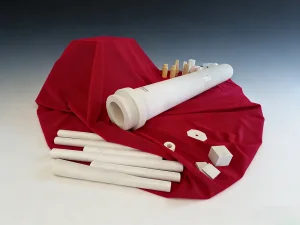
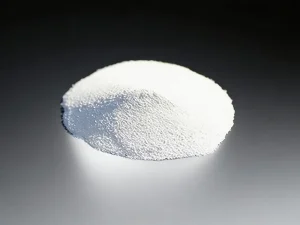
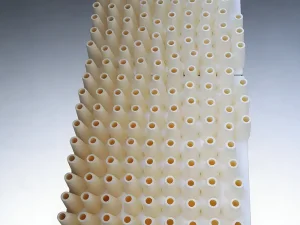
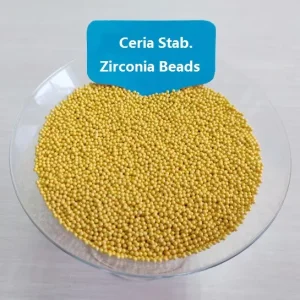
Explore our high-performance advanced ceramic products engineered for high thermal stress, severe abrasion, and aggressive chemical processing.
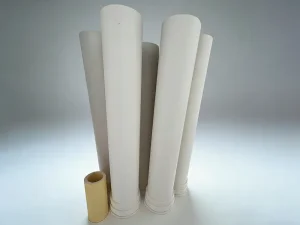
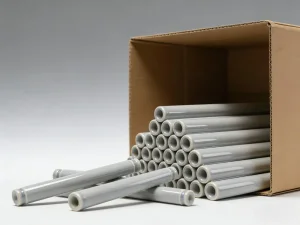
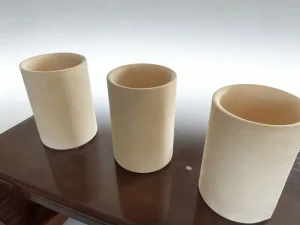
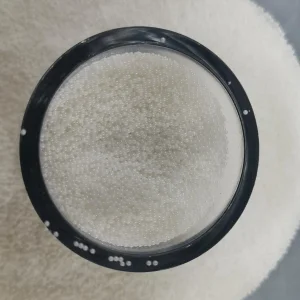
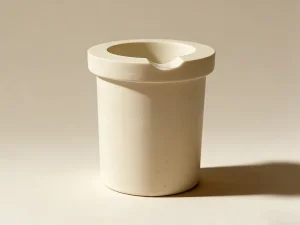
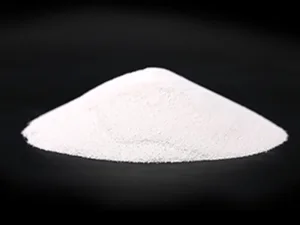
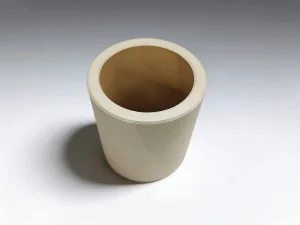
Founded in 2003, Yixing Qiangguang Ceramic Materials Co., Ltd. stands as a premier China Silicon Carbide (SiC) Ceramic Manufacturer and turnkey solution provider dedicated to the continuous research, development, precision synthesis, and industrial application of high-performance technical ceramics.
As one of the few domestic manufacturers in China possessing a fully integrated industrial value chain, Qiangguang executes complete control over every manufacturing stage—spanning sub-micron powder preparation, spray drying, cold isostatic pressing (CIP), reaction/pressureless sintering, to multi-axis CNC diamond ultra-precision machining and optical-grade grinding.
Our comprehensive technical ceramic portfolio incorporates Silicon Carbide (SiC), Silicon Nitride (Si3N4), Zirconia (ZrO2), Yttria-Stabilized Zirconia (YSZ), High-Purity Alumina (Al2O3), Magnesia (MgO), Aluminum Nitride (AlN), Boron Nitride (BN), and Aluminum Titanate, serving demanding industrial environments worldwide.
Analysis of international procurement trends, semiconductor supply chain migration, and extreme-environment engineering requirements.
With the migration to 300mm silicon wafer processing and wide-bandgap (WBG) power electronics (SiC/GaN), thermal stability up to 1350°C and ultra-low particle contamination have made Sintered Silicon Carbide (SSiC) the non-negotiable material for wafer boats, epitaxy rings, and plasma etch components.
Global chemical refining and petrochemical processing plants are replacing traditional alloy seals with Reaction Bonded (RBSiC) and Pressureless (SSiC) ceramic seal rings to eliminate unscheduled downtime caused by hydrofluoric, nitric, and sulfuric acid corrosion.
From solar cell diffusion tubes to lightweight spaceborne optical mirrors and hypersonics protection, SiC's low density (3.10–3.15 g/cm³) combined with high elastic modulus (410 GPa) offers unparalleled stiffness-to-weight structural ratios.
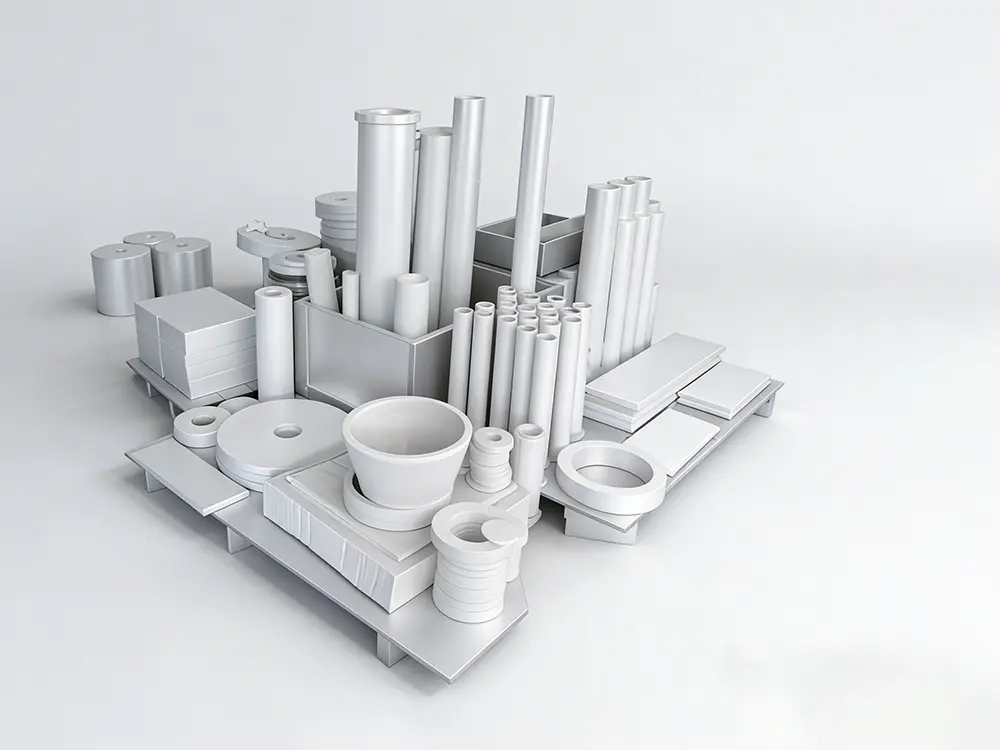
Silicon Carbide ceramics exist in distinct thermodynamic formulations, each tuned for specific mechanical and thermal boundaries. Understanding these technical routes is essential for optimal procurement selection:
Quantitative comparison of technical ceramic properties verified according to ASTM and ISO testing standards.
| Physical Property Standard | Pressureless SiC (SSiC) | Reaction Bonded (RBSiC) | Silicon Nitride (Si3N4) | Yttria Zirconia (YSZ) | High Purity Alumina (99.8%) |
|---|---|---|---|---|---|
| Density (g/cm³) | 3.12 – 3.15 | 3.02 – 3.08 | 3.20 – 3.25 | 6.05 | 3.92 – 3.96 |
| Flexural Strength (MPa) | 400 – 450 | 250 – 300 | 750 – 900 | 1000 – 1200 | 350 – 400 |
| Vickers Hardness (HV0.5) | 2500 – 2800 | 2000 – 2200 | 1500 – 1700 | 1200 – 1300 | 1600 – 1800 |
| Thermal Conductivity (W/m·K) | 110 – 130 | 140 – 160 | 25 – 35 | 2.5 – 3.0 | 30 – 35 |
| Max Operating Temp (°C) | 1600°C | 1380°C | 1400°C | 1000°C | 1700°C |
| Coefficient of Thermal Expansion (10⁻⁶/K) | 4.0 | 4.3 | 3.2 | 10.3 | 8.0 |
| Acid & Alkali Resistance | Outstanding (HF safe) | Very High | High | Moderate | High |
Custom engineering solutions tailored for extreme operational challenges across major industrial sectors.
Ultra-pure SSiC and RBSiC components engineered for high-temperature furnace tubes, wafer paddles, cantilever beams, chemical mechanical planarization (CMP) retaining rings, and plasma etching focus rings requiring sub-micron dimensional tolerance and zero micro-particle shedding.
Silicon Carbide seal faces, bushings, sleeve bearings, and pump impellers designed for chemical metering pumps, aggressive slurry transport, desulfurization systems (FGD), and high-pressure oil & gas mechanical seals experiencing dry running or severe abrasive fluids.
RBSiC/SiSiC beams, burner nozzles, roller tubes, and saggars for energy-efficient ceramic kilns, lithium-battery cathode sintering furnaces, and powder metallurgy lines operating up to 1380°C with minimum sag under heavy load.
Adhering strictly to our core principle of "creating value for customers", Yixing Qiangguang Ceramic Materials Co., Ltd. provides customized, cost-efficient, and engineered ceramic solutions tailored to individual buyer specifications. Our quality management system features full-process traceability, computerized CMM dimensional inspection, X-ray flaw detection, and ultrasonic testing.
Benefiting from superior microstructural density, minimal dimensional deviation, and batch-to-batch consistency, our advanced ceramic products are trusted across high-end industrial sectors including food & medical devices, new energy vehicles (NEVs), laser optics & semiconductors, petrochemical processing, powder metallurgy, national defense, and aerospace engineering.
At present, Qiangguang's technical ceramic components are deployed extensively across domestic industrial hubs and exported directly to global partners in Italy, the United Kingdom, Australia, Japan, Malaysia, Thailand, Hungary, and numerous other international regions.
Committed to supplying enterprise-grade advanced ceramics at reasonable, factory-direct prices, Qiangguang warmly welcomes strategic OEM/ODM partnerships, research institution collaborations, and long-term industrial supply commitments worldwide.
Clear answers to crucial engineering, material selection, and procurement questions.
SSiC (Pressureless Sintered Silicon Carbide) is sintered without free metal silicon, rendering it chemically inert to hydrofluoric acid and operating continuously up to 1600°C. RBSiC (Reaction Bonded Silicon Carbide) contains 8-12% free silicon, which caps its maximum operating temperature at 1380°C and reduces resistance to strong alkalis, but allows complex large-scale casting with zero firing shrinkage.
We utilize high-rigidity CNC diamond grinding centers, ultrasonic machining equipment, and optical polishing apparatus. For critical semiconductor and seal applications, we achieve dimensional tolerances within ±0.002 mm, flatness within 0.3 µm, and surface roughness down to Ra 0.05 µm.
Yes. Thanks to SiC's extremely high thermal conductivity (110–160 W/m·K) and low coefficient of thermal expansion (4.0 x 10⁻⁶/K), it resists thermal shock significantly better than alumina and oxide ceramics. However, for extreme cyclic shock below 1200°C, Silicon Nitride (Si3N4) may also be evaluated depending on flexural toughness demands.
To receive an optimized engineering evaluation and factory direct quote, please provide: 2D/3D CAD drawings (STEP/DWG), target operating temperature, medium chemical composition (acidic/alkali/abrasive), mechanical loading parameters, and required annual quantities.
Discover our extended line of specialized powders, structural ceramics, and thermal barriers for severe engineering applications.