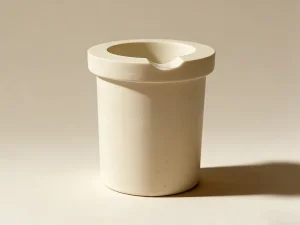
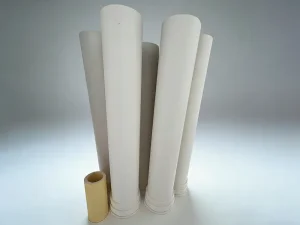
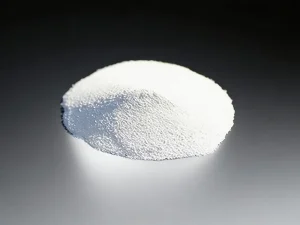
Explore our high-purity alumina, magnesium-stabilized zirconia, aluminum nitride, and structural ceramic formulations designed for critical operational environments.
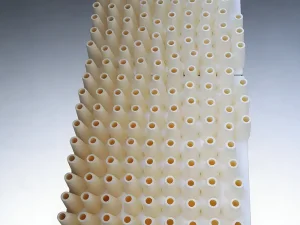
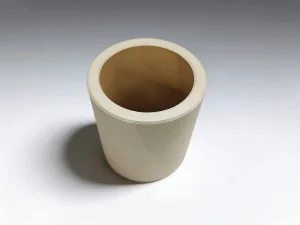
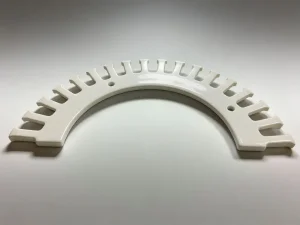
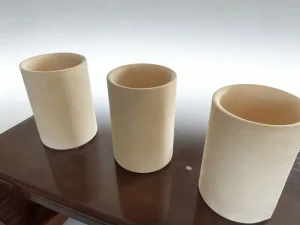
Leading China's technical ceramic industry since 2003 through vertically integrated powder synthesis, precision sintering, and state-of-the-art diamond machining.
Founded in 2003, Yixing Qiangguang Ceramic Materials Co., Ltd. is a professional provider dedicated to the research and development (R&D), manufacturing, and application solutions of high-performance advanced ceramic materials. It is among the few enterprises in China that possess a complete industrial chain, covering key links from powder forming, sintering and precision machining to the provision of integrated application solutions.
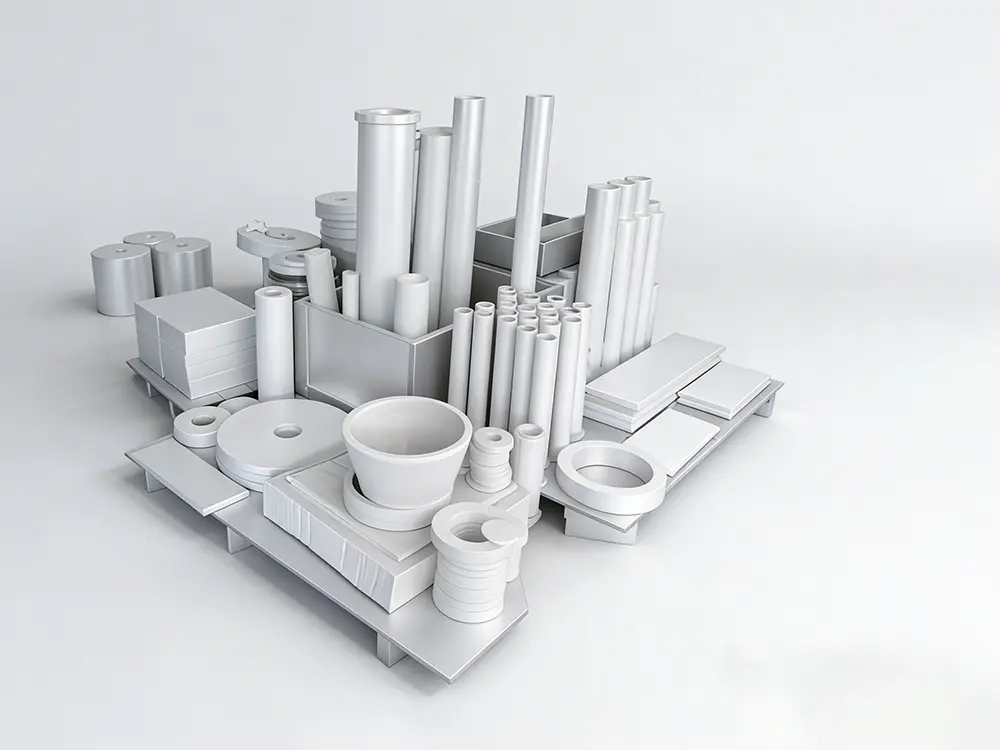
The company is also a rare domestic manufacturer engaged in the R&D, production, and supply of a comprehensive portfolio of ceramic materials. Its product range covers zirconia, yttria, alumina, magnesia, aluminum nitride, boron nitride, silicon nitride, silicon carbide, aluminum titanate, titania ceramics, and other key ceramic materials for rigorous industrial use.
Benefiting from excellent product performance and stable quality, its products are extensively utilized in various high-end fields, such as food and medical industries, new energy vehicles, laser semiconductors, petrochemical engineering, powder metallurgy, national defense and military, as well as aerospace sectors.
Adhering to the core principle of "creating value for customers", Qiangguang provides customized and cost-efficient advanced ceramic solutions tailored to the specific demands of different customers. It is supported by high-quality after-sales services and a strict full-process tracking system, which effectively enhances cooperation efficiency and promotes continuous quality improvement.
Understanding the crystallographic, electrical, thermal, and mechanical advantages of Titanium Dioxide (TiO₂) and Titania-composite engineering ceramics.
Titania (TiO₂) ceramics exhibit an extraordinarily high dielectric constant (εr ≈ 85–170 depending on rutile crystal orientation) combined with extremely low dielectric loss factors. This makes them paramount for high-frequency RF capacitors, microwave resonators, and semiconductor electrostatic chuck (ESC) sub-components requiring stable dielectric insulation under thermal stress.
When engineered into Aluminum Titanate (Al₂TiO₅) or titania-stabilized matrices, the material demonstrates near-zero thermal expansion coefficients (CTE < 1.5 × 10⁻⁶/K). This remarkable property enables components to withstand violent thermal cycles exceeding 1,000°C without micro-cracking, ideal for molten metal handling, ceramic engine components, and exhaust manifolds.
Rutile titania ceramics possess immune chemical stability against concentrated acids, alkalis, and reactive plasma gas mixtures. In semiconductor etching chambers and chemical processing valves, titania-rich surfaces resist erosion and prevent trace contamination, maintaining structural integrity across pH ranges from 1 to 14.
| Material Formulation | Density (g/cm³) | Flexural Strength (MPa) | Thermal Conductivity (W/m·K) | Dielectric Constant (1 MHz) | Max Working Temp (°C) |
|---|---|---|---|---|---|
| Titania (TiO₂ High Rutile) | 4.20 – 4.25 | 280 – 350 | 11.7 | 85 – 110 | 1,450 |
| Aluminum Titanate (Al₂TiO₅) | 3.30 – 3.60 | 40 – 80 | 1.5 – 3.0 | 12 – 18 | 1,600 |
| High-Purity Alumina (99.8% Al₂O₃) | 3.92 – 3.96 | 380 – 450 | 30.0 | 9.8 | 1,700 |
| Yttria-Stabilized Zirconia (Y-TZP) | 6.05 – 6.08 | 1,000 – 1,200 | 2.5 – 3.0 | 28.0 | 1,300 |
| Aluminum Nitride (AlN) | 3.26 – 3.30 | 320 – 400 | 170 – 230 | 8.8 | 1,650 |
Addressing the rigorous engineering requirements of global Tier-1 OEMs, research institutes, and manufacturing facilities across critical industries.
Modern semiconductor processing demands materials with controlled surface resistivity, minimal particle generation, and high thermal stability. Our titania-doped alumina and pure rutile components are engineered for dielectric windows, plasma spray protective coatings, and wafer end-effectors where particle shedding would cause catastrophic yield loss.
Biocompatibility and wear resistance make titania ceramic coatings and zirconia-titania composites vital for orthopedic implants, dental prosthetics, and surgical cutting instruments. Qiangguang enforces strict ISO 13485 cleanroom protocols and powder purity verification to eliminate cytotoxicity risk.
In electric vehicle (EV) battery packs and hydrogen fuel cells, thermal barrier components formulated from aluminum titanate provide exceptional insulation between power modules. Their thermal shock resistance ensures zero mechanical failure during rapid battery discharge and charge cycles.
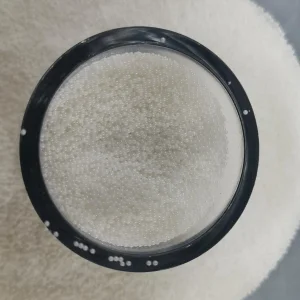
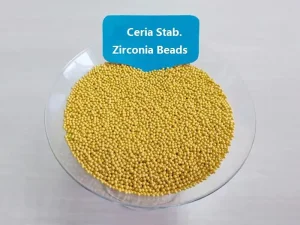
In ultra-fine wet grinding of paints, inks, microelectronics slurries, and battery cathode materials, titania and zirconia beads manufactured by Qiangguang offer ultra-low wear rates (ppm levels), preserving absolute liquid purity and high energy transfer efficiency.
Delivering seamless cross-border supply chain operations, robust QA inspection documentation, and tailored localized technical support worldwide.
At present, Yixing Qiangguang Ceramic Materials Co., Ltd.'s products are sold across domestic high-tech hubs and exported extensively to international markets including Italy, the United Kingdom, Australia, Japan, Malaysia, Thailand, Hungary, and additional regions across Europe and North America.
Our complete industrial tracking system guarantees full traceable documentation from raw titanium/zirconium powder lot certification to 3D CMM dimensional inspection reports. We maintain strict compliance with international frameworks including ISO 9001 quality management, ISO 13485 medical device quality systems, RoHS environmental standards, and REACH chemical safety mandates.
Advancing next-generation ceramic engineering through additive manufacturing, nano-phase modification, and zero-carbon sintering processes.
Implementation of spark plasma sintering (SPS) and dopant-inhibited grain growth strategies to produce rutile titania ceramics with grain sizes < 100 nm, dramatically enhancing flexural strength beyond 450 MPa and improving micro-hardness for extreme wear environments.
Development of high-solids ceramic photopolymer slurries enabling toolless 3D printing of complex internal cooling channels within titania semiconductor components, reducing custom prototype lead times by 75%.
Pioneering green energy electric high-temperature kilns coupled with 100% closed-loop ceramic powder waste reclamation, meeting the stringent ESG criteria of Tier-1 international automotive and aerospace corporations.
Clear answers to procurement, engineering, and manufacturing questions to streamline your sourcing decisions.
Pure Titania (TiO₂) is primarily selected for its elevated dielectric constant (εr up to 170), electrical insulation properties, and high chemical corrosion resistance in semiconductor and electronic applications. In contrast, Aluminum Titanate (Al₂TiO₅) is engineered specifically for extreme thermal shock resistance due to its anisotropic, near-zero coefficient of thermal expansion, making it ideal for molten non-ferrous metal contact, furnace tubes, and engine thermal insulation.
Through our state-of-the-art multi-axis CNC diamond grinding, ultrasonic machining, and double-sided lapping equipment, we routinely achieve dimensional tolerances of ±0.002 mm (±2 microns), concentricity down to 0.003 mm, and surface smoothness of Ra < 0.05 µm for demanding semiconductor and aerospace applications.
We operate a fully integrated industrial supply chain starting from internal raw powder preparation, cold isostatic pressing (CIP), precise temperature-controlled sintering, to final diamond polishing. Every batch undergoes strict quality control under ISO 9001 procedures, including laser particle size analysis, X-ray diffraction (XRD), CMM dimensional verification, and density testing.
Yes, our engineering R&D team regularly collaborates with international partners to transform DWG, STEP, or IGES CAD models into finished technical ceramic components. We offer rapid prototyping services with lead times as short as 2 to 3 weeks for initial engineering evaluation.
Our manufacturing systems adhere to ISO 9001:2015 and ISO 13485 for medical-grade components. All raw ceramic materials comply with EU RoHS 3 (Directive 2015/863) and REACH environmental protection directives, ensuring zero hazardous substances for global export.
Explore our yttria-stabilized zirconia, magnesium oxide ceramics, aluminum nitride, and calcium-stabilized powders engineered for peak industrial reliability.