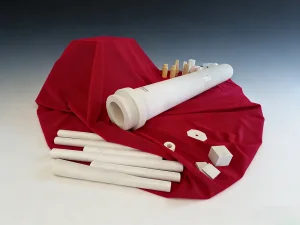
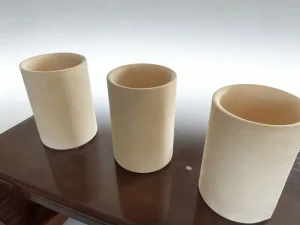
Explore our factory-direct zirconia and structural ceramic components engineered for ultra-high hardness, extreme wear resistance, and thermal durability.
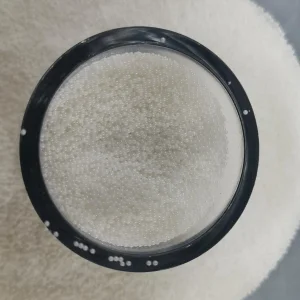
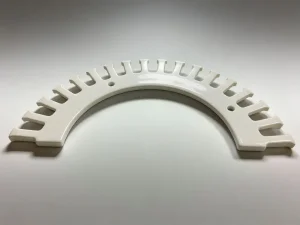
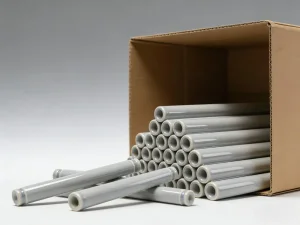
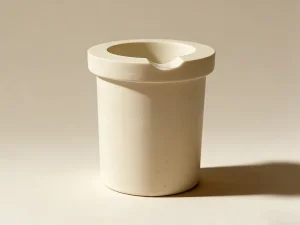
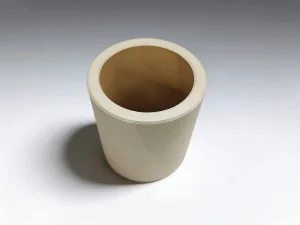
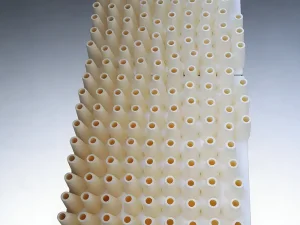
Zirconium Dioxide (ZrO2), commonly recognized as Zirconia Ceramic, represents one of the most mechanically resilient and thermally stable technical ceramics available in modern material science. Unlike traditional oxide ceramics such as alumina (Al2O3), pure zirconia undergoes crystallographic phase transformations during heating and cooling cycles—transitioning from monoclinic (m-ZrO2) at room temperature to tetragonal (t-ZrO2) at 1170°C, and cubic (c-ZrO2) above 2370°C.
To exploit its superior mechanical capabilities, stabilizing oxides such as Yttria (Y2O3), Magnesia (MgO), or Calcia (CaO) are alloyed into the crystal lattice. This process creates Yttria-Stabilized Tetragonal Zirconia Polycrystal (Y-TZP) and Magnesium-Stabilized Zirconia (MSZ). The primary physical mechanism behind zirconia’s world-renowned toughness is Stress-Induced Phase Transformation Toughening (PTT). When a tensile stress micro-crack propagates through the material, tetragonal grains surrounding the crack tip transform into the monoclinic phase, accompanied by a 3% to 5% volume expansion. This expansion exerts localized compressive stress on the crack tip, effectively dampening energy propagation and halting micro-crack growth.
E-E-A-T Enterprise Insight: Founded in 2003, Yixing Qiangguang Ceramic Materials Co., Ltd. is a professional provider dedicated to the research and development (R&D), manufacturing, and application solutions of high-performance advanced ceramic materials. It is among the few enterprises in China that possess a complete industrial chain, covering key links from powder forming, sintering and precision machining to the provision of integrated application solutions.
Because of these distinctive properties—unmatched fracture toughness (>7-10 MPa·m^1/2), high flexural strength (>1000 MPa), exceptional wear resistance, chemical inertness, and thermal insulation capabilities—the demand for China zirconia ceramic uses across global manufacturing sectors has grown exponentially.
From aerospace thermal protection to micro-electronics handling and biomedical joint implants, zirconia ceramics solve extreme engineering challenges where metal and plastics fail.
Precision-machined Y-TZP components serve as semiconductor wafer end-effectors, vacuum chucks, insulation rings, and plasma-resistant components. Zirconia's low particle generation, extreme dimensional stability, and high dielectric strength prevent electrical breakdown and wafer contamination during plasma etching.
Biocompatible Yttria-Stabilized Zirconia is widely utilized in medical implants, artificial hip joint heads, dental crowns, and orthopedic screws. Its human tissue compatibility, non-allergenic nature, aesthetic tooth-like translucency, and resistance to hydrothermal aging make it superior to titanium alloys.
Zirconia ceramic valve balls, seats, plungers, and slurry pump bushings thrive in corrosive acid and alkaline environments. With zero corrosion degradation and high resistance to cavitation erosion, zirconia extends component lifespans by up to 10 times compared to duplex stainless steels.
In modern New Energy Vehicles (NEVs), zirconia ceramics serve as high-voltage insulation sleeves, thermal runaway barriers for lithium-ion battery modules, oxygen sensor substrates, and high-efficiency water pump shaft sleeves capable of enduring continuous high-friction rotation.
Zirconia-based YSZ coatings act as Thermal Barrier Coatings (TBCs) on gas turbine blades and rocket nozzle liners. Due to its exceptionally low thermal conductivity (~2.0 W/m·K) and high coefficient of thermal expansion matching superalloys, zirconia shields metal structures from severe melting temperatures.
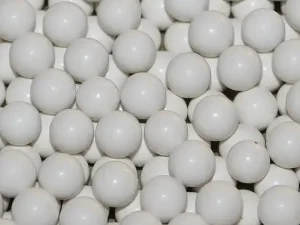
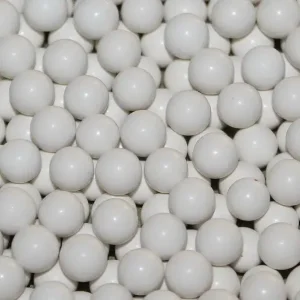
High-density Yttria-Stabilized Zirconia beads (6.0 g/cm³) are the industry standard for sub-micron and nano-scale wet grinding in horizontal bead mills. Used in battery cathode slurry synthesis, titanium dioxide paints, ink jet pigments, and pharmaceutical micronization without product contamination.
When sourcing advanced technical ceramics globally, procurement executives look for three key pillars: scalability, mechanical consistency, and cost-competitiveness. China’s advanced ceramic ecosystem, anchored in industrial hubs such as Yixing, provides unmatched structural capabilities across the entire manufacturing value chain.
Yixing Qiangguang Ceramic Materials Co., Ltd. stands out as a premier enterprise in China possessing a end-to-end industrial model. Unlike simple machining workshops, Qiangguang controls every phase of production:
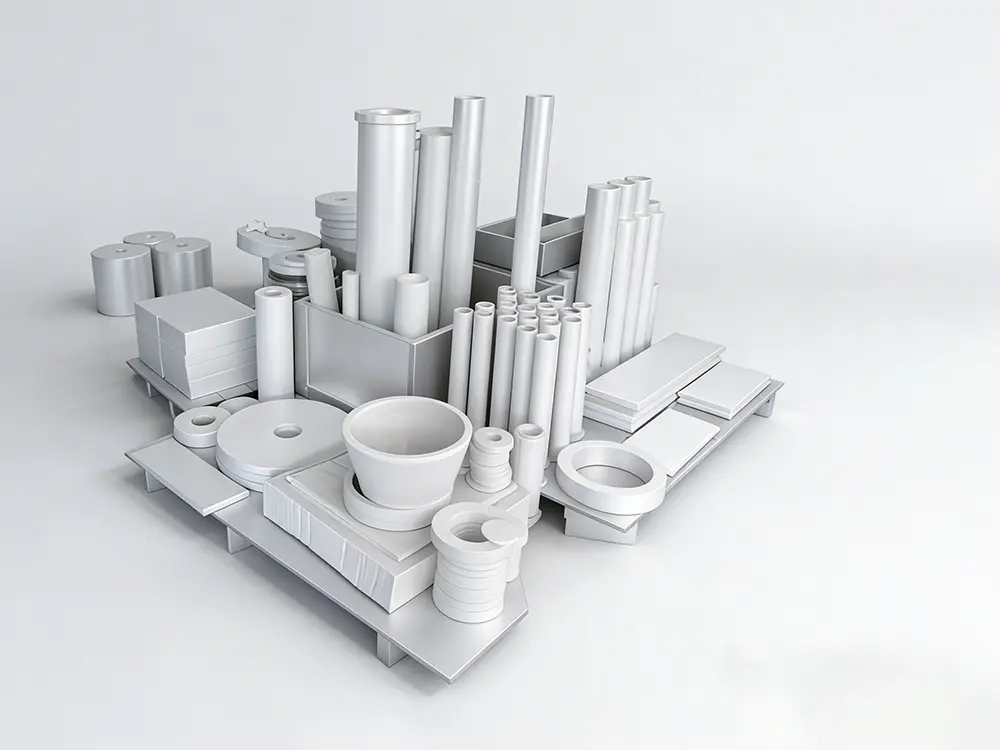
Comprehensive Portfolio: Beyond zirconia, Qiangguang manufactures a full suite of structural materials including Yttria, Alumina, Magnesia, Aluminum Nitride (AlN), Boron Nitride (BN), Silicon Nitride (Si3N4), Silicon Carbide (SiC), and Aluminum Titanate.
Engineering comparison of Yttria-Stabilized Zirconia against alternative technical ceramic substrates to guide material selection for demanding OEM applications.
| Physical / Mechanical Property | Y-TZP (Yttria Zirconia) | Mg-PSZ (Magnesia Zirconia) | Alumina (99.5% Al2O3) | Silicon Nitride (Si3N4) | Aluminum Nitride (AlN) |
|---|---|---|---|---|---|
| Density (g/cm³) | 6.05 | 5.74 | 3.92 | 3.25 | 3.30 |
| Flexural Strength (MPa) | 1000 - 1200 | 600 - 800 | 380 - 450 | 850 - 1000 | 320 - 400 |
| Fracture Toughness (MPa·m^1/2) | 8.0 - 12.0 | 10.0 - 15.0 | 4.0 - 5.0 | 6.5 - 8.0 | 2.5 - 3.5 |
| Hardness (HV 0.5) | 1250 - 1350 | 1100 - 1200 | 1600 - 1700 | 1500 - 1600 | 1100 - 1200 |
| Thermal Conductivity (W/m·K) | 2.0 - 2.5 | 2.5 - 3.0 | 28 - 32 | 25 - 35 | 170 - 200 |
| Thermal Expansion (x10^-6/K) | 10.5 | 10.0 | 8.0 | 3.2 | 4.5 |
| Max Working Temp (°C) | 1000 | 1200 | 1600 | 1400 | 1100 |
Delivering high-reliability advanced ceramics with rigorous international quality standards and seamless logistics execution.
Every production batch of zirconia components undergoes rigid non-destructive ultrasonic testing, CMM dimensional measurement, density verification via Archimedes method, and surface roughness scanning (Ra < 0.01 µm for polished seals). Complete chemical tracing is guaranteed.
Our engineering products adhere strictly to international manufacturing standards including ISO 9001 quality management systems, ISO 13485 medical device compliance, RoHS, REACH chemical directives, and ASTM C1161 structural ceramic testing guidelines.
Adhering to the core principle of "creating value for customers", Qiangguang provides customized and cost-efficient advanced ceramic solutions. At present, our products are exported to Italy, the United Kingdom, Australia, Japan, Malaysia, Thailand, Hungary, and other countries and regions worldwide.
How next-generation material science innovations are shaping the future of industrial ceramics over the next decade.
Stereolithography (SLA) and Digital Light Processing (DLP) 3D printing of YSZ slurry enable complex lattice structures, internal cooling channels, and customized biomedical implants previously unmachinable by traditional diamond tools.
Yttria-Stabilized Zirconia acts as the primary solid electrolyte membrane in SOFCs and hydrogen electrolyzers due to its superior oxygen ion conductivity (O2-) at elevated temperatures (700°C–1000°C).
Transitioning from micro-grain powders to sub-50nm zirconia grains dramatically increases room-temperature superplasticity and wear longevity while suppressing low-temperature degradation (LTD) in humid environments.
Clear technical answers to help engineers, quality auditors, and procurement managers evaluate zirconia ceramic implementations.
Alumina relies purely on ionic/covalent bond strength, rendering it prone to brittle fracture under shock. Y-TZP utilizes Phase Transformation Toughening (PTT). When tensile stress initiates a crack, surrounding tetragonal crystals expand into monoclinic crystals, creating localized compressive forces that lock the crack tip and stop failure.
Hydrothermal aging occurs in warm, humid environments (100°C-300°C) when water molecules penetrate the lattice, inducing spontaneous tetragonal-to-monoclinic phase changes. To prevent LTD, Yixing Qiangguang optimizes dopant homogeneity (e.g., adding small mole fractions of Al2O3 or adjusting Y2O3 ratio to 3mol%) and controls grain size below 0.3 µm.
No. In its fully sintered state, zirconia has a Mohs hardness of 8.5+ and cannot be cut with carbide or HSS tooling. Machining must be performed either in the green/brown presintered state with specialized cutters or post-sintering using diamond-impregnated grinding wheels, CNC diamond wire, ultrasonic machining, or EDM (for conductive ceramics).
We manufacture custom rods, tubes, plates, valve balls, precision plungers, thread guides, micro-nozzles, extrusion dies, and complex custom geometries according to customer STEP/IGES CAD drawings. Custom tolerances can be achieved down to ±0.001mm with optical surface finishes (Ra < 0.01 µm).
China factories offer a vertically integrated supply chain—from abundant raw zirconium mineral refining to high-capacity sintering facilities. Sourcing directly from certified manufacturers like Yixing Qiangguang cuts procurement costs by 30% to 50% while guaranteeing equivalent or superior mechanical properties, full batch traceability, and agile tooling turnaround times.
Mg-PSZ exhibits superior thermal shock resistance and higher fracture toughness at elevated temperatures (above 500°C to 1000°C) compared to Y-TZP. However, Y-TZP offers higher room-temperature flexural strength and finer surface polishability. MSZ is favored for heavy industrial valves, metal extrusion dies, and high-temp plungers.
Browse our complete line of engineering ceramics including Silicon Nitride, Aluminium Titanate, and High-Purity Alumina factory products.