Explore our premier collection of engineered industrial ceramic components and specialized raw materials.
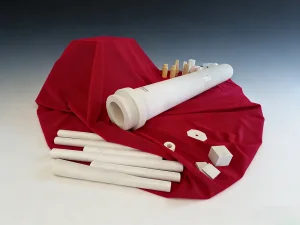
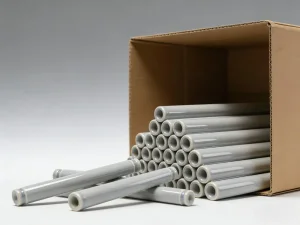
In contemporary industrial engineering, Alumina Ceramic Material (Aluminum Oxide, Al2O3) stands as the foundational backbone of technical ceramics. Valued for its extreme hardness, exceptional dielectric properties, high mechanical strength, and superior thermal stability, high-purity alumina ceramics have transitioned from legacy refractory roles to critical components in semiconductor manufacturing, electric vehicle (EV) powertrain systems, aerospace thermal shielding, and biomedical devices.
According to recent macroeconomic industrial reports, the global market for technical ceramics is projected to expand at a CAGR of 6.8% over the next decade, driven largely by the surging demand for ultra-high-purity sub-micron alumina powders and precision-machined structural ceramics. B2B procurement directors and design engineers increasingly require wholesale suppliers capable of maintaining strict dimensional tolerances (down to ±0.001 mm), consistent phase purity, and scalable batch manufacturing.
Founded in 2003, Yixing Qiangguang Ceramic Materials Co., Ltd. represents the apex of Chinese advanced ceramic manufacturing expertise. Operating across a fully vertically integrated industrial matrix, the company controls every phase of production—from raw powder synthesis, spray drying, and cold isostatic pressing (CIP), to high-temperature vacuum sintering and sub-micron diamond grinding.
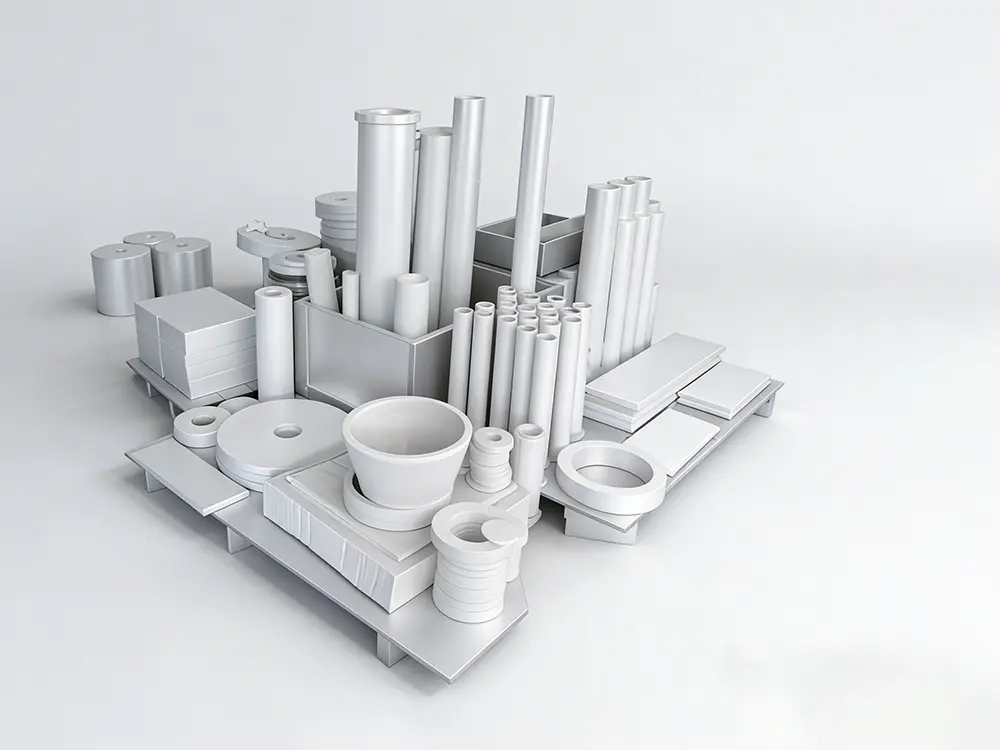
Unlike standard specialized facilities, Qiangguang is among the rare global manufacturers engineering a comprehensive portfolio of technical ceramics, including:
Adhering firmly to the core operating philosophy of "creating enduring value for global engineering partners," Qiangguang provides turnkey OEM/ODM customized ceramic solutions. Every batch of material undergoes rigorous non-destructive testing (NDT), X-ray diffraction (XRD) phase analysis, and laser diffraction grain size distribution checks.
Today, Qiangguang’s high-precision ceramic components are routinely exported to tier-1 manufacturing hubs across Italy, the United Kingdom, Australia, Japan, Malaysia, Thailand, Hungary, and the Americas, maintaining a reputation for zero-defect supply chains and highly competitive factory-direct pricing.
Selecting the appropriate alumina ceramic formulation requires balancing mechanical toughness, dielectric strength, thermal conductivity, and cost effectiveness. Standard industrial alumina is categorized by its chemical purity percentage, which directly governs grain boundary dynamics, secondary phase glass content, and final physical characteristics.
| Property Parameter | 95% Al2O3 (Structural) | 99% Al2O3 (Wear/Chemical) | 99.5% Al2O3 (High Precision) | 99.9% Al2O3 (Semiconductor/Ultra) |
|---|---|---|---|---|
| Density (g/cm³) | 3.65 - 3.70 | 3.88 - 3.92 | 3.93 - 3.95 | > 3.96 |
| Flexural Strength (MPa) | 300 - 330 | 350 - 380 | 380 - 420 | > 450 |
| Hardness (Vickers HV0.5) | 12.5 GPa | 15.0 GPa | 16.5 GPa | > 18.0 GPa |
| Thermal Conductivity (W/m·K) | 18 - 22 | 28 - 30 | 32 - 35 | 36 - 40 |
| Dielectric Strength (kV/mm) | 15 | 18 | 20 | > 22 |
| Maximum Working Temp (°C) | 1450 | 1600 | 1700 | 1750 |
Utilizes silicate glass phases at grain boundaries to lower sintering temperatures. Excellent for spark plug insulators, electrical terminal blocks, wear pads, and general mechanical seals requiring high cost efficiency.
Minimal glass phase. Features high mechanical strength, superior corrosion resistance to acids/alkalis, and excellent wear resistance. Widely used in chemical pump impellers, ceramic valve discs, and textile guides.
Near-zero grain boundary impurities. Exhibits optical translucency, extreme plasma resistance, and maximum dielectric performance. Crucial for semiconductor wafer end-effectors, plasma etch rings, and sapphire growth crucibles.
Transforming raw sub-micron alumina powders into zero-defect, high-precision structural components requires sophisticated physical and thermal processing steps. Yixing Qiangguang employs a state-of-the-art manufacturing matrix engineered to guarantee isotropic density and eliminate micro-voids.
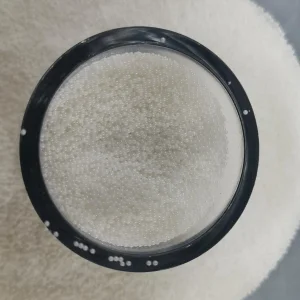
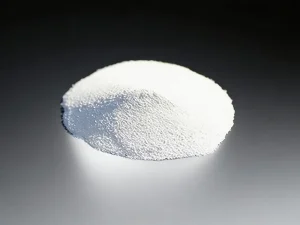
High-purity raw powders are wet-milled with proprietary organic binders to achieve uniform particle size distribution (PSD). Atomized spray drying yields spherical, free-flowing granules essential for consistent mold filling and uniform green-state density.
Components are shaped using Cold Isostatic Pressing (CIP) at pressures exceeding 200 MPa, or via high-speed dry pressing and Ceramic Injection Molding (CIM) for complex geometric profiles like threaded nozzles and micro-turbines.
Sintering takes place in computer-controlled electric kilns at temperatures ranging from 1550°C to 1750°C. Sintering curves are tailored to control grain growth, achieving theoretical densities up to 99.5% with zero residual porosity.
Post-sintering ceramics require diamond tooling due to their extreme hardness. Qiangguang utilizes 5-axis CNC diamond grinding, ultrasonic drilling, and wire-EDM to achieve dimensional tolerances of ±0.001 mm and surface roughness (Ra) down to 0.05 µm.
For electronic and high-vacuum applications, components undergo Chemical-Mechanical Polishing (CMP) or Mo-Mn/DBC (Direct Bonded Copper) metallization, enabling robust brazing to copper, stainless steel, or Kovar alloys.
100% quality inspection using Coordinate Measuring Machines (CMM), optical interferometry, acoustic resonance testing, and helium leak detection ensures total compliance with global ISO and ASTM aerospace-grade standards.
Alumina ceramic materials provide distinct performance improvements across extreme industrial operating environments where metals and polymers fail. Below is a breakdown of core localized application scenarios serviced by Qiangguang ceramics:
High-purity (99.9%) alumina components act as critical insulative and plasma-resistant elements inside wafer processing chambers. Key parts include vacuum electrostatic chucks (ESC), wafer handling end-effectors, sub-micron dielectric substrates, and high-frequency RF insulator rings.
In electric drive systems and high-voltage battery packs, alumina ceramics act as safety-critical electrical barriers. Alumina ceramic seals in high-voltage DC contactors prevent thermal runaway and electrical arcing under high ampacity conditions.
Because alumina is chemically inert to acid and alkaline erosion, it is extensively used in chemical dosing pumps, mechanical seal rings, ceramic valve cores, and mud pump sleeves used in deep-sea offshore oil drilling.
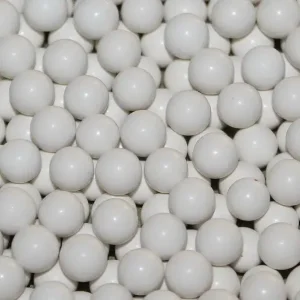
Alumina ceramic grinding media (beads and balls) and high-density wear-resistant ceramic tiles line ball mills, cyclones, and pneumatic conveyance pipes, minimizing product contamination in lithium battery cathode synthesis and mineral processing.
As manufacturing paradigms move toward extreme miniaturization, energy efficiency, and AI-driven quality management, advanced ceramic materials are undergoing rapid evolution. Key technology frontiers include:
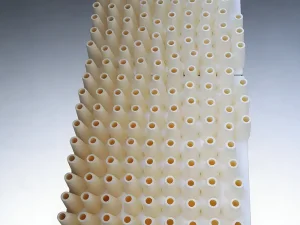
Stereolithography (SLA) and Digital Light Processing (DLP) of alumina slurries enable the creation of complex internal cooling channels and lattice structures previously impossible via traditional pressing or green machining.
Dispersing sub-micron zirconia particles within an alumina matrix triggers stress-induced phase transformation toughening, doubling fracture toughness (KIc) up to 8.5 MPa·m½ while retaining alumina's cost efficiency.
Integration of machine learning models in kiln thermal management allows real-time adjustment of firing curves, ensuring zero micro-cracking and nano-scale grain control for next-gen optical and semiconductor components.
Detailed technical answers to common queries raised by procurement managers, materials engineers, and OEM buyers.
Explore our extended industrial ceramic portfolio, including specialized zirconia powders and nitrides.