The global advanced ceramic materials industry is undergoing a paradigm shift driven by stringent thermal, mechanical, electrical, and chemical operating requirements across third-generation semiconductor packaging, aerospace propulsion, electric vehicle (EV) powertrains, precision medical devices, and extreme-environment chemical processing. Modern industrial engineering no longer relies solely on traditional metallic alloys or polymeric structures; high-purity, structural technical ceramics have emerged as critical structural enablements capable of enduring environments where mechanical failure or thermal degradation is otherwise guaranteed.
As global enterprises navigate severe supply chain vulnerabilities and accelerating technology lifecycles, sourcing directly from verified China ceramic industry process manufacturers has become a strategic priority. China's technical ceramic manufacturing sector has transformed from low-margin raw powder processing into a fully integrated, high-precision industrial ecosystem. Through continuous R&D investments, advanced cold/hot isostatic pressing (CIP/HIP) capabilities, sub-micron spark plasma sintering (SPS), and 5-axis diamond CNC micro-grinding, leading Chinese manufacturers deliver international-standard components at unmatched total cost of ownership (TCO).
Founded in 2003, Yixing Qiangguang Ceramic Materials Co., Ltd. is a professional provider dedicated to the research and development (R&D), manufacturing, and application solutions of high-performance advanced ceramic materials. It is among the few enterprises in China that possess a complete industrial chain, covering key links from powder forming, sintering and precision machining to the provision of integrated application solutions.
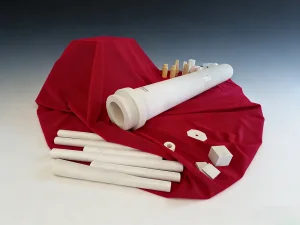
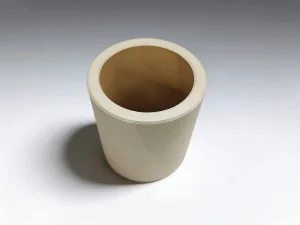
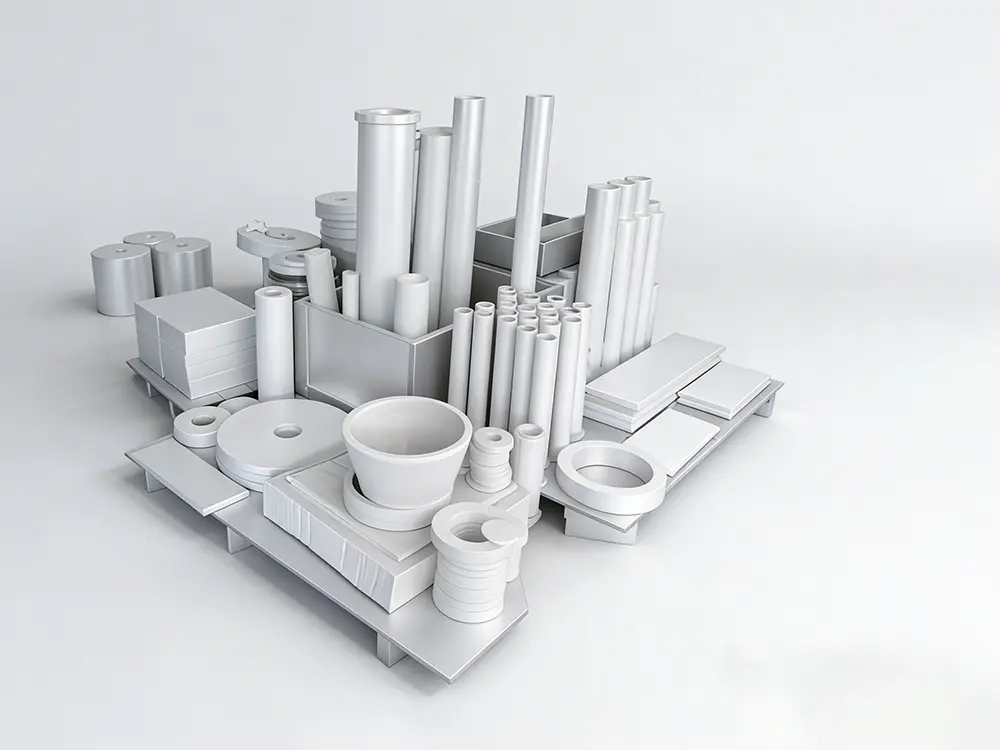
The company is also a rare domestic manufacturer engaged in the R&D, production, and supply of a comprehensive portfolio of ceramic materials. Its product range covers zirconia, yttria, alumina, magnesia, aluminum nitride, boron nitride, silicon nitride, silicon carbide, aluminum titanate and other key ceramic materials for industrial use.
Benefiting from excellent product performance and stable quality, its products are extensively utilized in various high-end fields, such as food and medical industries, new energy vehicles, laser semiconductors, petrochemical engineering, powder metallurgy, national defense and military, as well as aerospace sectors.
Adhering to the core principle of "creating value for customers", Qiangguang provides customized and cost-efficient advanced ceramic solutions tailored to the specific demands of different customers. It is supported by high-quality after-sales services and a strict full-process tracking system, which effectively enhances cooperation efficiency and promotes continuous quality improvement.
At present, the company's products are sold well across the country and exported to Italy, the United Kingdom, Australia, Japan, Malaysia, Thailand, Hungary and other countries and regions. Committed to delivering high-quality products at reasonable prices, Qiangguang sincerely looks forward to establishing long-term and stable cooperative relations with global partners.
By retaining full internal operational ownership across powder formulation, spray drying, green body pressing, high-temperature firing, diamond grinding, and quality verification, we guarantee total batch consistency, zero micro-structural flaws, and full material traceability.
Selecting the optimal ceramic substrate requires a rigorous evaluation of thermal, dielectric, tribological, and chemical properties. Below is an engineering overview of the primary technical ceramic matrices manufactured in our industrial facility:
| Ceramic Material | Chemical Formula | Density (g/cm³) | Thermal Conductivity (W/m·K) | Flexural Strength (MPa) | Dielectric Strength (kV/mm) | Primary Industrial Utility |
|---|---|---|---|---|---|---|
| High-Purity Alumina | Al₂O₃ (96%-99.9%) | 3.75 - 3.98 | 25 - 35 | 350 - 450 | 15 - 20 | Insulators, Substrates, Wear Rings, Wear Balls |
| Aluminum Nitride | AlN | 3.26 | 170 - 230 | 320 - 400 | 18 - 22 | Semiconductor Heaters, LED Substrates, Heat Sinks |
| Silicon Nitride | Si₃N₄ | 3.22 | 30 - 90 | 800 - 1100 | 15 - 18 | EV Bearings, Cutting Tools, Engine Valves |
| Yttria-Stabilized Zirconia | Y-TZP (ZrO₂) | 6.05 | 2.5 - 3.0 | 1000 - 1400 | 10 - 12 | Medical Implants, Structural Blades, Grinding Media |
| Aluminium Titanate | Al₂TiO₅ | 3.30 - 3.60 | 1.5 - 2.5 | 30 - 80 | 8 - 10 | Non-ferrous Foundry Tubes, Thermal Shock Risers |
Aluminum Nitride stands out for its extraordinarily high thermal conductivity paired with high electrical resistivity. AlN’s coefficient of thermal expansion (CTE) matches silicon wafers precisely ($4.5 \times 10^{-6}/K$), rendering it the ideal material for high-power semiconductor packaging, heat spreaders, microelectronics, and RF power devices.
Offering exceptional fracture toughness ($K_{1c} > 7.5 \text{ MPa}\cdot\text{m}^{1/2}$) and mechanical resistance at elevated temperatures, $Si_3N_4$ is the material of choice for high-stress dynamic components, including hybrid EV ceramic bearings, turbine blades, and high-frequency cutting inserts.
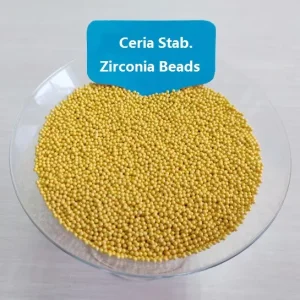
By doping Zirconia with stabilizing oxides such as Yttria ($Y_2O_3$), Magnesia ($MgO$), Ceria ($CeO_2$), or Calcium ($CaO$), we induce stress-induced phase transformation toughening. This eliminates micro-cracks during high-stress operations, creating self-healing mechanical components and ultra-wear-resistant grinding beads.
Our factory utilizes state-of-the-art ceramic powder processing, cold/hot forming, vacuum sintering, and diamond finishing equipment. Below is our systematic 5-stage manufacturing pipeline:
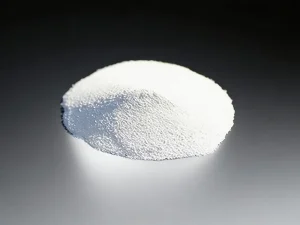
High-purity raw powders are wet-milled with sub-micron media and combined with custom organic binders. Spray drying produces ultra-spherical, free-flowing granulates designed for consistent packing density during green body forming.
Utilizing Dry/Wet Bag Cold Isostatic Pressing (CIP) at pressure levels exceeding 200 MPa, we eliminate localized density gradients. This guarantees uniform volumetric shrinkage during firing and eliminates internal micro-voids.
Green bodies undergo debinding followed by vacuum, pressureless, or Hot Isostatic Pressing (HIP) sintering at temperatures reaching 1600°C–2000°C under inert gas atmospheres ($N_2, Ar$) to achieve near-theoretical densities (>99.5%).
Because sintered ceramics exhibit extreme hardness (Mohs 8.5–9), we utilize 5-axis CNC diamond grinding, ultrasonic drilling, and wire-EDM to yield dimensional tolerances down to $\pm 0.001 \text{ mm}$ and surface roughness of $Ra < 0.05 \mu m$.
For semiconductor and high-voltage applications, components undergo Direct Copper Bonding (DCB), Active Metal Brazing (AMB), or thick-film screen printing to form robust metal-to-ceramic hermetic joints.
Every lot is subjected to 3D Coordinate Measuring Machine (CMM) verification, C-mode Scanning Acoustic Microscopy (C-SAM) for internal flaw detection, helium leak testing, and dielectric breakdown testing.
Global procurement directors face expanding macro-economic challenges, including raw material inflation, lead time delays, and strict tolerance requirements. Partnering with top-tier Chinese ceramic manufacturers yields key structural advantages:
China commands the world's largest reserves and processing hubs for rare-earth dopants (Yttrium, Cerium) and high-purity alumina/silica precursor minerals. Direct local access ensures raw material price stability and continuous batch availability.
Our in-house tooling workshops and agile engineering teams reduce custom mold fabrication and prototype validation timelines from 12-16 weeks down to 14-21 days, drastically accelerating your time-to-market.
Automated continuous tunnel kilns, high-capacity CIP units, and integrated diamond tooling reduce per-unit overhead by 30%-50% compared to Western manufacturing facilities, without compromising structural or mechanical integrity.
Engineered ceramics replace traditional alloys across hostile industrial operational environments. Key macro application domains include:
High-purity AlN substrates and Al₂O₃ wafer chucks deliver extreme thermal dissipation, precise dielectric isolation, and zero outgassing in plasma-etching and sub-nanometer lithography chambers.
Silicon Nitride ($Si_3N_4$) ceramic bearing balls prevent electrical fluting in 800V high-rpm EV electric motors, while Alumina/Zirconia components protect thermal management valves and sensor housings.
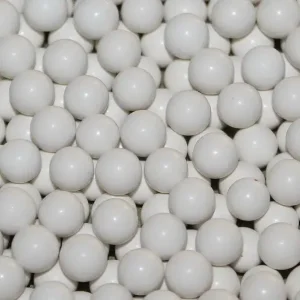
Ceria and Yttria-stabilized Zirconia beads, along with Alumina wear liners, provide extreme abrasion resistance in micro-grinding, slurry valves, oilfield drilling, and mineral milling operations.
Aluminium Titanate and Silicon Carbide structures withstand radical thermal cycling, high-velocity particulate impact, and extreme oxidation inside rocket nozzle inserts and gas turbine combustors.
Biocompatible Y-TZP Zirconia offers high flexural strength ($>1000 \text{ MPa}$) and zero cytotoxicity, making it ideal for joint replacement prosthetics, dental abutments, and surgical cutter blades.
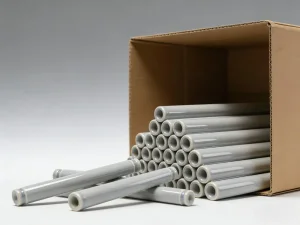
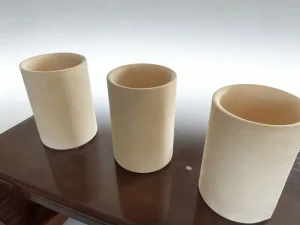
Aluminium Titanate riser tubes exhibit low wetability with molten aluminum and low thermal expansion, eliminating thermal shock cracking during continuous non-ferrous die casting.
To satisfy the strict quality requirements of global Tier-1 automotive, semiconductor, and industrial partners, Yixing Qiangguang executes a rigorous zero-defect quality framework aligned with international engineering standards:
Our quality management system governs every operational phase. Detailed control plans, Failure Mode and Effects Analysis (FMEA), and full lot-traceability logs are maintained for a minimum of 10 years.
All raw powders and post-processing chemicals strictly conform to EU RoHS 3 (Directive 2015/863) and REACH regulation (EC No 1907/2006), ensuring toxic heavy-metal-free operations.
Flexural strength is verified via 4-point bending tests (ASTM C1161), fracture toughness via chevron-notched beam techniques (ASTM C1421), and density via Archimedes helium pycnometry (ASTM C373).
As technological demands evolve, the advanced ceramics industry is expanding into new engineering frontiers:
Lithography-based Ceramic Manufacturing (LCM) and Stereolithography (SLA) enable complex internal cooling channels within $Si_3N_4$ and Alumina components that were previously un-machinable.
Combining machine learning algorithms with sintering furnace diagnostics allows real-time grain-boundary tuning, maximizing dielectric strength while reducing micro-porosity.
Transitioning from conventional electrical/gas heating to hydrogen-fueled high-temperature kilns minimizes carbon footprints across large-scale technical ceramic fabrication.
Alumina provides higher thermal conductivity, superior electrical insulation, and exceptional hardness at lower material costs. Zirconia offers far higher flexural strength, superior fracture toughness ($K_{1c}$), and a coefficient of thermal expansion closer to steel, making it ideal for high-stress impact environments.
Aluminum Nitride exhibits a thermal conductivity of 170–230 W/m·K—nearly 7 to 8 times higher than 99% Alumina (25–30 W/m·K)—while maintaining high electrical insulation. It matches the thermal expansion coefficient of Silicon, reducing thermal stress in high-power semiconductor packaging.
CIP applies equal hydraulic pressure from all directions, eliminating internal density gradients common in uniaxial die pressing. This results in uniform shrinkage during sintering, higher mechanical strength, and zero internal micro-cracks.
Through multi-axis CNC diamond grinding and lapping, we routinely achieve dimensional tolerances of $\pm 0.001 \text{ mm}$, flatness within $0.0005 \text{ mm}$, and mirror surface finishes down to $Ra < 0.01 \mu m$.
Yes. Aluminium Titanate features an extremely low coefficient of thermal expansion and high thermal shock resistance, making it uniquely resistant to cracking when submerged in molten aluminum or zinc alloys.
Standard custom prototype components require 2 to 3 weeks including mold tooling and green machining. Serial volume production orders are typically fulfilled within 4 to 6 weeks, supported by rapid air/sea logistics.
We utilize X-Ray Fluorescence (XRF) and ICP-OES for elemental purity verification, paired with Scanning Acoustic Microscopy (C-SAM) and X-ray Computed Tomography (CT) to detect sub-surface voids or micro-cracks.
Yes, we provide Direct Copper Bonding (DCB), Active Metal Brazing (AMB), Mo-Mn (Molybdenum-Manganese) metallization, and Thin/Thick Film Nickel-Gold plating for high-vacuum and hermetic sealing applications.