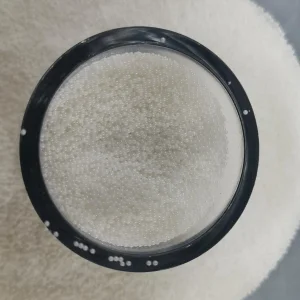
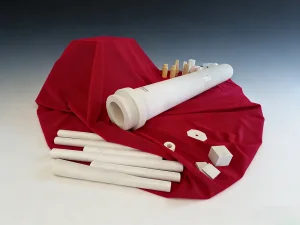
Explore our factory-direct wholesale engineered ceramics, manufactured to micro-inch tolerances with state-of-the-art sintering technology.
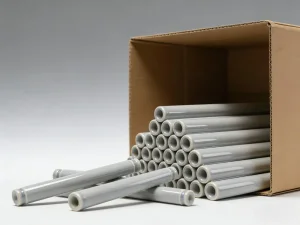
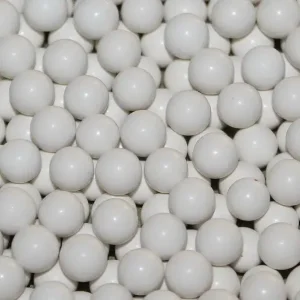

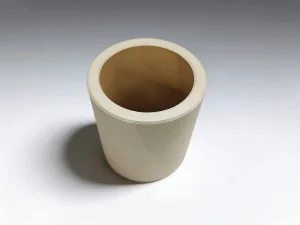
How structural and functional ceramics are overriding legacy metallic alloys across high-tech, semiconductor, and severe chemical manufacturing landscapes.
In modern high-precision engineering, conventional metal alloys such as titanium, stainless steel, and nickel-based superalloys are increasingly reaching their mechanical, thermal, and chemical limits. Modern industrial applications—ranging from sub-micron semiconductor lithography wafer chucks to extreme-pressure petrochemical valves and hyper-velocity aerospace turbines—demand structural components capable of maintaining zero dimensional distortion under catastrophic temperatures, corrosive chemical media, and hyper-frictional abrasion.
This requirement has accelerated the global adoption of Technical Ceramics (Advanced Ceramics). As reported in international material science indices, the global technical ceramics market is projected to surpass USD 24.8 Billion by 2030, growing at a CAGR of 7.2%. Drivers behind this demand include the rapid rollout of New Energy Vehicles (NEVs), next-generation 3nm semiconductor packaging, clean hydrogen power generation, and advanced bio-implants.
Engineered ceramics—specifically synthesized compounds of Nitrides, Oxides, and Carbides—exhibit physical properties that directly eliminate key mechanical failure modes: stress-corrosion cracking, high-temperature creep, electrical breakdown, and galling wear.
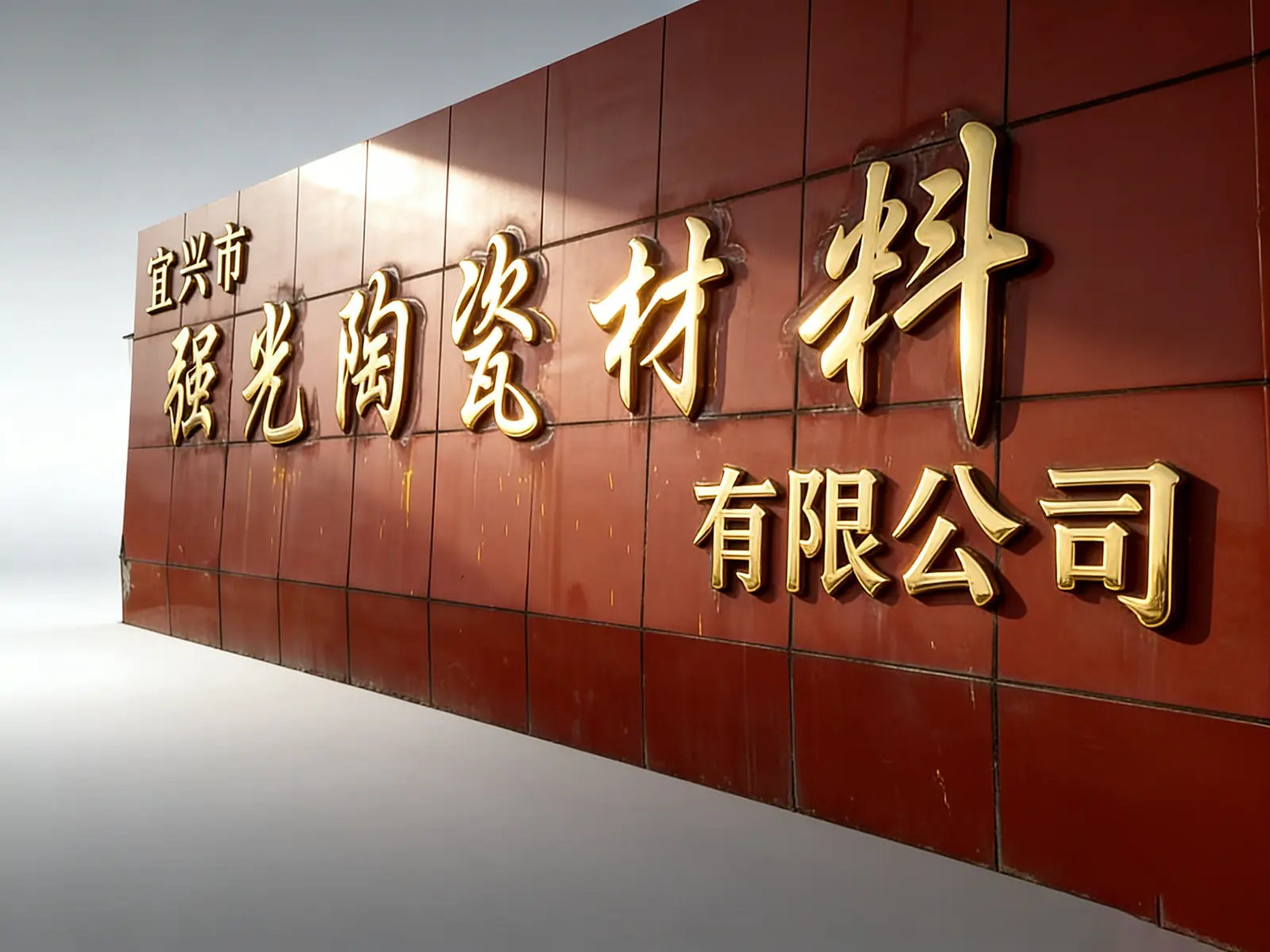
Comprehensive material classification covering oxide, nitride, and carbide ceramic matrices engineered for extreme physical stress.
Renowned for exceptional fracture toughness ($6.0-8.5 \text{ MPa}\cdot\text{m}^{1/2}$) and thermal shock resistance. Widely utilized in high-speed EV traction motor bearings, gas turbine components, and non-ferrous molten metal handling due to its low friction coefficient and immunity to thermal fatigue.
Available from 95% to 99.99% purity. Alumina exhibits superb electrical insulation ($>15 \text{ kV/mm}$), extreme hardness (Vickers 1500-1800), and high chemical resistance. It serves as the primary material for semiconductor processing equipment, wear liners, and high-voltage feedthroughs.
Engineered via Yttria (3YSZ / Y-TZP), Ceria (Ce-TZP), or Magnesia (Mg-PSZ) stabilization. Phase-transformation toughening provides steel-like flexural strength ($>1000 \text{ MPa}$) and high damage tolerance, ideal for structural plungers, bio-implants, and severe grinding media.
Offering extraordinary thermal conductivity ($180-230 \text{ W/m}\cdot\text{K}$) coupled with low thermal expansion coefficients ($4.5 \times 10^{-6}/\text{K}$). Crucial for power semiconductor substrates, laser heat sinks, and thermal management modules operating in aggressive plasma environments.
Specialized high-temperature refractories and machineable ceramics. Magnesia provides unmatched stability in slag-rich molten environments, while Hexagonal Boron Nitride (h-BN) acts as a self-lubricating thermal conductor for vacuum furnaces and plasma arc shields.
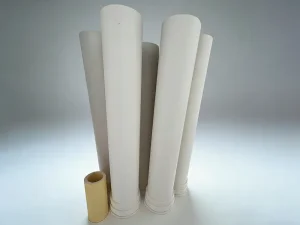
Characterized by near-zero thermal expansion coefficient and outstanding non-wetting properties against molten aluminum and non-ferrous alloys. Essential for low-pressure die casting riser tubes, dosing nozzles, and thermal shock barriers.
| Material Formulation | Density (g/cm³) | Flexural Strength (MPa) | Fracture Toughness (MPa·m¹/²) | Thermal Conductivity (W/m·K) | Max Work Temp (°C) | Hardness (Vickers HV) |
|---|---|---|---|---|---|---|
| Silicon Nitride (Si3N4) | 3.25 | 850 - 1000 | 6.5 - 8.5 | 30 - 35 | 1400 | 1600 |
| 99.5% Alumina (Al2O3) | 3.92 | 380 - 450 | 4.0 - 4.5 | 28 - 32 | 1650 | 1700 |
| Y-TZP Zirconia (3YSZ) | 6.05 | 1000 - 1200 | 7.0 - 10.0 | 2.5 - 3.0 | 1000 | 1250 |
| Sintered Silicon Carbide (SSiC) | 3.15 | 400 - 500 | 3.5 - 4.0 | 120 - 140 | 1600 | 2400 |
| Aluminum Nitride (AlN) | 3.30 | 320 - 400 | 2.8 - 3.2 | 170 - 200 | 1100 | 1100 |
| Aluminum Titanate (Al2TiO5) | 3.40 - 3.60 | 45 - 75 | 1.5 - 2.0 | 1.5 - 2.0 | 1400 | 800 |
Empowering global enterprises with scalable precision manufacturing and rapid custom OEM/ODM delivery.
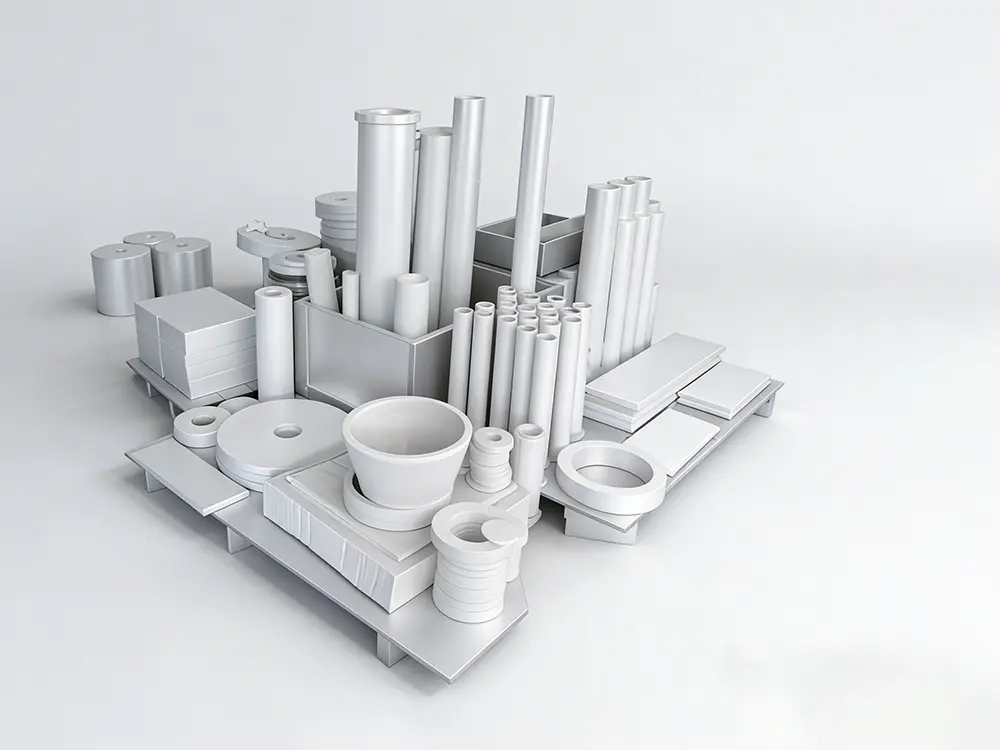
Founded in 2003, Yixing Qiangguang Ceramic Materials Co., Ltd. stands as a premier enterprise dedicated to the research, development, precision manufacturing, and customized application engineering of high-performance advanced technical ceramic materials. Positioned at the heart of China’s high-tech manufacturing cluster, Qiangguang is among the elite subset of global manufacturers that maintain a completely integrated vertical supply chain.
Our end-to-end industrial chain encompasses every crucial manufacturing milestone: pure powder synthesis, spray drying granulation, green body shaping (Cold Isostatic Pressing - CIP, Hot Isostatic Pressing - HIP, Injection Molding, Tape Casting), high-temperature vacuum sintering, and CNC diamond ultra-precision machining.
Unlike specialized niche processors, Qiangguang supplies a full-spectrum material matrix including zirconia, yttria, alumina, magnesia, aluminum nitride, boron nitride, silicon nitride, silicon carbide, aluminum titanate, and multi-component refractory compounds tailored to challenging thermal, wear, and electrical requirements.
Adhering to our core principle of "creating value for customers", Qiangguang delivers tailored and cost-efficient advanced ceramic solutions. Supported by a rigorous full-process quality tracking protocol and advanced coordinate measuring machines (CMM), we ensure consistent lot-to-lot stability and seamless long-term supply resilience.
Benefiting from superior material performance, competitive pricing, and certified quality management systems, our structural and functional ceramics are exported worldwide to key industrial markets across North America, Europe, and Asia-Pacific.
How technical ceramic components resolve operational friction, chemical degradation, and electrical breakdown in field environments.
High-purity Alumina and Aluminum Nitride components serve as electrostatic wafer chucks (ESC), plasma etching rings, gas distribution plates, and high-power laser heat sinks requiring sub-micron dimensional stability and high breakdown voltage.
Silicon Nitride ceramic balls used in hybrid ceramic bearings for electric vehicle (EV) traction motors prevent electrical fluting/pitting caused by high-voltage inverter currents, extending bearing lifespans by up to 10x over steel bearings.
High-density Yttria-Stabilized Zirconia (3YSZ) and Alumina-Toughened Zirconia (ATZ) are bio-inert, non-magnetic, and chemically stable, serving as femoral head implants, dental prosthetics, micro-fluidic pumps, and ultra-sharp surgical cutters.
Zirconia and Silicon Carbide valve trims, metering plungers, and seal rings resist extreme mechanical abrasion, cavitation erosion, and concentrated acidic/alkaline corrosion in offshore drilling and chemical synthesis pipelines.
Ultra-High Temperature Ceramics (UHTCs) and Silicon Carbide matrices used in missile radomes, armor plating, thermal protection tiles, and high-altitude propulsion nozzles withstand thermal shocks exceeding 1600°C.
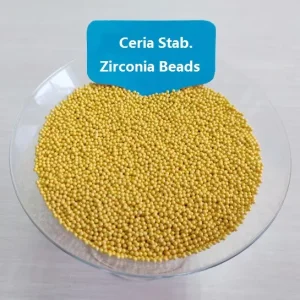
Engineered Ceria and Yttria stabilized zirconia beads ($0.1\text{mm} - 50\text{mm}$) enable sub-micron ultrafine grinding of lithium battery cathode materials, CMP slurry, pharmaceutical powders, and printing inks with minimal wear media contamination.
Essential checklist for enterprise procurement managers when evaluating wholesale advanced technical ceramic manufacturers.
Sub-micron grain size distribution is paramount to achieving high fracture toughness and dielectric strength. Inferior raw powders with trace metallic impurities create localized stress concentration points, causing premature structural failure under cyclical loading. Verify raw powder spectrographic test reports (ICP-MS).
Components produced via Cold Isostatic Pressing (CIP) or Hot Isostatic Pressing (HIP) achieve densities exceeding 99.5% of theoretical density. Low porosity prevents internal micro-cracking, fluid absorption in ultra-clean vacuums, and dielectric leakage under high electrical potential.
For precision dynamic components such as ceramic shaft sleeves, plungers, and optical mounts, surface roughness ($Ra$) must achieve micro-inch values ($Ra < 0.05 \mu m$). Ensure your manufacturer uses multi-axis CNC diamond grinding and ultrasonic finishing tools.
Partner with factories possessing complete vertical integration—from raw material formulation to final inspection. Direct factory partnerships eliminate distributor markups, guarantee raw material batch traceability, and shorten prototyping lead times by up to 50%.
Expert insights addressing key engineering queries regarding material selection, machining feasibility, and custom OEM manufacturing.
Explore our wholesale powders, ceramic micro-beads, and refractory components engineered for extreme environments.