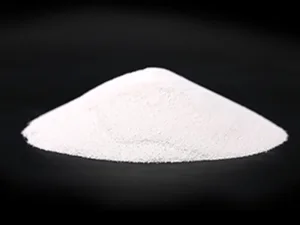
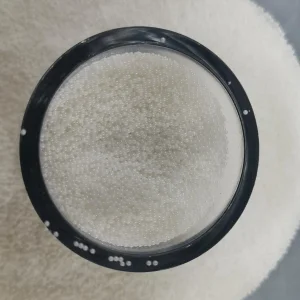
Direct factory supply for high-purity alumina, zirconia powders, structural components, and extreme condition engineering products.
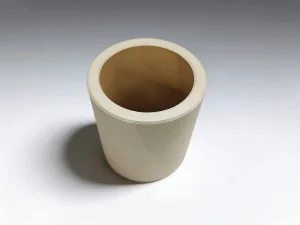
Analyzing macroeconomic shifts, material transformation, and factory OEM dynamics in next-generation structural molding.
The global wholesale molding industry is undergoing a systemic transition. Legacy polymers and metallic casting processes are increasingly reaching physical limits under extreme operating environments—such as ultra-high operating temperatures, corrosive chemical atmospheres, high dielectric breakdown pressures, and hyper-abrasive wear regimes. In response, Tier-1 manufacturing hubs and wholesale procurement networks are pivoting toward Advanced Technical Ceramics Molding.
Technical ceramic molding combines powder metallurgy, chemical synthesis, precision injection molding (CIM), cold/hot isostatic pressing (CIP/HIP), and high-temperature atmospheric sintering. The global industrial ceramic molding market, valued at over USD 35 Billion, is projected to maintain a strong CAGR of over 7.8% through 2032, propelled by demand in semiconductor manufacturing, new energy vehicles (NEVs), aerospace thermal barrier coatings, biomedical implants, and high-efficiency chemical milling systems.
Transitioning from tool steel and titanium alloys to Yttria-Stabilized Zirconia (YSZ) and Silicon Nitride (Si3N4) to maximize component lifespan under extreme friction and heat.
Modern molding factories employ multi-axis diamond CNC grinding to reach micro-inch surface polishes and sub-micron dimensional tolerances ($\pm 0.001\text{ mm}$).
China’s advanced ceramics hubs, such as Yixing, combine complete raw material preparation, mold design, precision sintering, and global export infrastructure.
A fully integrated industrial chain for high-performance advanced ceramic materials and engineering molding solutions.
Founded in 2003, Yixing Qiangguang Ceramic Materials Co., Ltd. is a professional provider dedicated to the research and development (R&D), manufacturing, and application solutions of high-performance advanced ceramic materials. It is among the few enterprises in China that possess a complete industrial chain, covering key links from powder forming, sintering and precision machining to the provision of integrated application solutions.
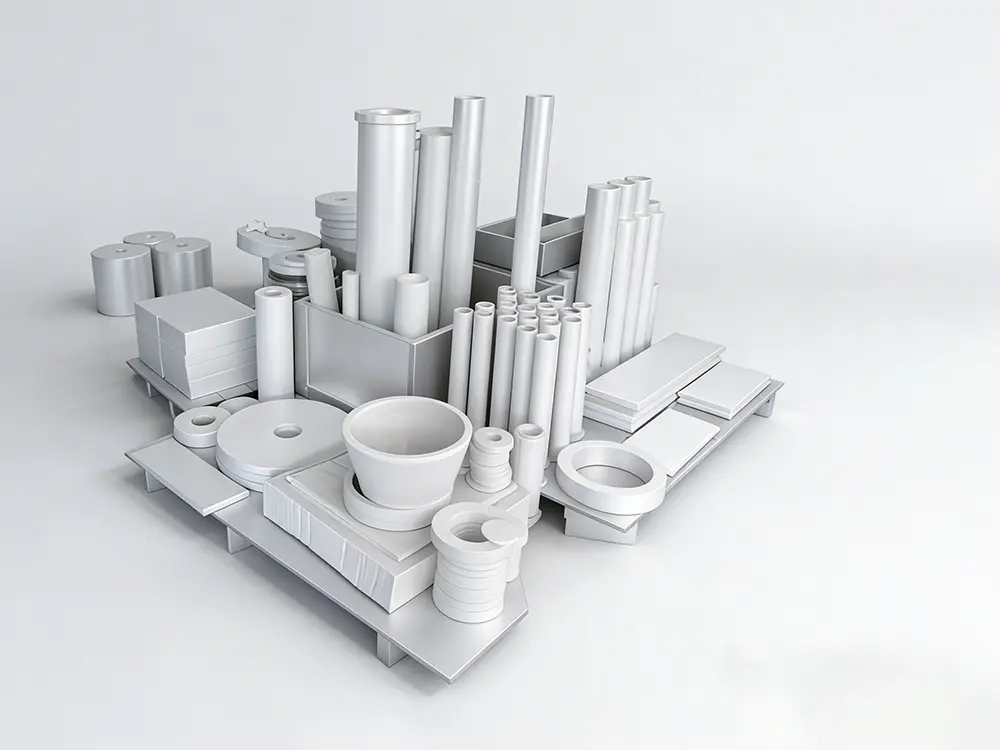
The company is also a rare domestic manufacturer engaged in the R&D, production, and supply of a comprehensive portfolio of ceramic materials. Its product range covers zirconia, yttria, alumina, magnesia, aluminum nitride, boron nitride, silicon nitride, silicon carbide, aluminum titanate and other key ceramic materials for industrial use.
Benefiting from excellent product performance and stable quality, its products are extensively utilized in various high-end fields, such as food and medical industries, new energy vehicles, laser semiconductors, petrochemical engineering, powder metallurgy, national defense and military, as well as aerospace sectors.
Adhering to the core principle of "creating value for customers", Qiangguang provides customized and cost-efficient advanced ceramic solutions tailored to the specific demands of different customers. It is supported by high-quality after-sales services and a strict full-process tracking system, which effectively enhances cooperation efficiency and promotes continuous quality improvement.
At present, the company's products are sold well across the country and exported to Italy, the United Kingdom, Australia, Japan, Malaysia, Thailand, Hungary and other countries and regions. Committed to delivering high-quality products at reasonable prices, Qiangguang sincerely looks forward to establishing long-term and stable cooperative relations with global partners.
An authoritative engineering analysis of key advanced ceramic compounds utilized in specialized industrial molding applications.
Ranging from 95% to 99.8% purity. Provides exceptional electrical resistivity ($>10^{14}\text{ }\Omega\cdot\text{cm}$), high hardness ($15-18\text{ GPa}$), and strong thermal stability. Widely used for electronic substrates, spark plug insulators, and wear-resistant pump seals.
Yttria (YSZ), Ceria (CSZ), and Magnesia (Mg-SZ) stabilized ceramics leverage phase transformation toughening ($t \rightarrow m$). Yields supreme fracture toughness ($K_{IC} > 8-10\text{ MPa}\cdot\text{m}^{1/2}$), steel-like thermal expansion, and outstanding biocompatibility.
Offers unmatched resistance to thermal shock, high flexural strength ($>850\text{ MPa}$), and low specific gravity ($3.2\text{ g/cm}^3$). Key choice for high-speed ceramic bearing balls, turbine components, and metal casting rollers.
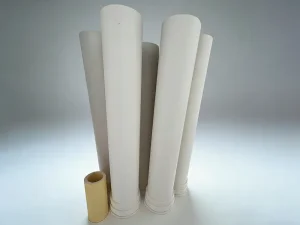
Characterized by near-zero thermal expansion coefficient and high non-wettability by molten metals. Crucial for non-ferrous foundry application such as low-pressure die casting riser tubes, nozzles, and thermal insulation rings.
| Material Specification | Density ($\text{g/cm}^3$) | Flexural Strength ($\text{MPa}$) | Fracture Toughness ($K_{IC}$) | Thermal Conductivity ($\text{W/m}\cdot\text{K}$) | Max Operating Temp (°C) |
|---|---|---|---|---|---|
| Alumina ($\text{Al}_2\text{O}_3, 99.5\%$) | 3.92 | 380 | 4.5 | 30 | 1650 |
| Y-TZP Zirconia ($\text{ZrO}_2$) | 6.05 | 1100 | 9.0 | 2.5 | 1200 |
| Silicon Nitride ($\text{Si}_3\text{N}_4$) | 3.24 | 850 | 7.0 | 32 | 1400 |
| Aluminium Titanate ($\text{Al}_2\text{TiO}_5$) | 3.40 | 40 | 1.8 | 1.5 | 1450 |
| Magnesia Ceramics ($\text{MgO}$) | 3.58 | 220 | 2.8 | 45 | 2200 |
How technical ceramic molded parts deliver information gain and reliability across high-tech domains.
High-purity alumina wafer end-effectors, ceramic arms, and electrostatic chucks (ESC). Chemically inert to plasma etching and resilient against thermal cycling in CVD/ALD chambers.
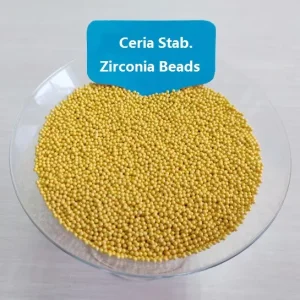
Ceria and Yttria-stabilized zirconia grinding beads enable nano-scale pulverization of cathode active materials (LFP/NCM) without metallic contamination, essential for energy density optimization.
Biocompatible zirconia and alumina formulations used in femoral head implants, dental abutments, and microfluidic medical diagnostic components requiring zero tissue toxicity.
Molded ceramic valve balls, seats, and pump liners that withstand concentrated acids, alkaline solutions, and abrasive slurries in oil refining and chemical processing.
Next-generation ceramic additive manufacturing, AI-driven microstructural modeling, and net-zero thermal processing.
Combining photopolymer 3D printing with precision debinding and sintering to yield complex internal cooling channels impossible with traditional press tooling.
Reducing sintering thermal cycles from hours to minutes while reducing factory carbon emissions by up to 60%, achieving ultra-dense grain structure without abnormal grain growth.
Real-time computer vision automated non-destructive testing (NDT) with ultrasonic and X-ray CT scanning to eliminate internal micro-voids prior to field installation.
Engineered answers addressing B2B buyer intent, material selection criteria, and customization workflows.
Advanced structural ceramics—such as Alumina ($\text{Al}_2\text{O}_3$), Yttria-Stabilized Zirconia (YSZ), and Silicon Nitride ($\text{Si}_3\text{N}_4$)—offer extreme hardness (up to 9 Mohs), extreme heat resistance ($>1400^\circ\text{C}$), superior chemical inertness, and zero thermal deformation under high pressure. Compared to plastics, ceramic components do not creep or degrade under UV or solvent exposure. Compared to hardened steel, ceramic parts offer lower density and zero magnetic interference while providing several times the wear life.
Yixing Qiangguang manages an end-to-end industrial chain starting from high-purity nanometer-scale spray-dried powders. We employ precision cold isostatic pressing (CIP) and controlled temperature atmosphere sintering up to 1750°C. Furthermore, post-sintering Hot Isostatic Pressing (HIP) is utilized for mission-critical parts to achieve near 100% theoretical density, eliminating internal micro-porosity and ensuring homogeneous mechanical strength.
For standard ceramic powders and stock grinding media (e.g., Ceria or Yttria stabilized beads), order fulfillment is typically within 7–14 days. For custom OEM/ODM tooling, mold fabrication takes approximately 15–20 days, followed by sample pressing, firing, precision CNC diamond grinding, and quality verification. Total turnaround for custom engineered parts ranges between 3 to 5 weeks depending on part geometry and tolerances.
Silicon Nitride ($\text{Si}_3\text{N}_4$) and Aluminium Titanate ($\text{Al}_2\text{TiO}_5$) are the industry standards for severe thermal shock applications. Silicon Nitride maintains high mechanical strength under rapid ambient-to-1000°C thermal cycles. Aluminium Titanate possesses a near-zero thermal expansion coefficient, preventing thermal fracture during contact with molten metals, making it ideal for non-ferrous foundry low-pressure casting riser tubes.
Y-TZP (Yttria-Stabilized) offers exceptionally high fracture toughness and fine grain size ($<0.5\text{ }\mu\text{m}$), making it ideal for high-speed agitator mills where particle contamination must be minimized. CSZ (Ceria-Stabilized) features higher specific density ($\approx 6.2\text{ g/cm}^3$), providing higher kinetic impact energy for milling high-viscosity slurries, calcium carbonate, and heavy mineral concentrates.
High-density zirconia beads, magnesia components, and silicon nitride solutions directly from factory production lines.