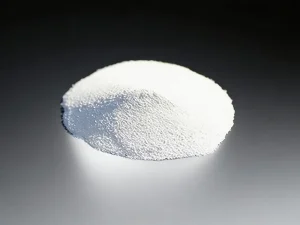
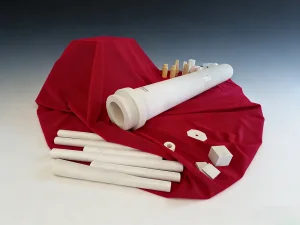
Explore our factory-direct technical ceramic powders, grinding media, and structural ceramic elements optimized for extreme thermal, chemical, and wear environments.
Integrity, Innovation, and End-to-End Quality Excellence in Advanced Industrial Ceramics Sintering and Precision Machining.
Founded in 2003, Yixing Qiangguang Ceramic Materials Co., Ltd. is a professional provider dedicated to the research and development (R&D), manufacturing, and application solutions of high-performance advanced ceramic materials. It is among the few enterprises in China that possess a complete industrial chain, covering key links from powder forming, sintering and precision machining to the provision of integrated application solutions.
The company is also a rare domestic manufacturer engaged in the R&D, production, and supply of a comprehensive portfolio of ceramic materials. Its product range covers zirconia, yttria, alumina, magnesia, aluminum nitride, boron nitride, silicon nitride, silicon carbide, aluminum titanate and other key ceramic materials for industrial use.
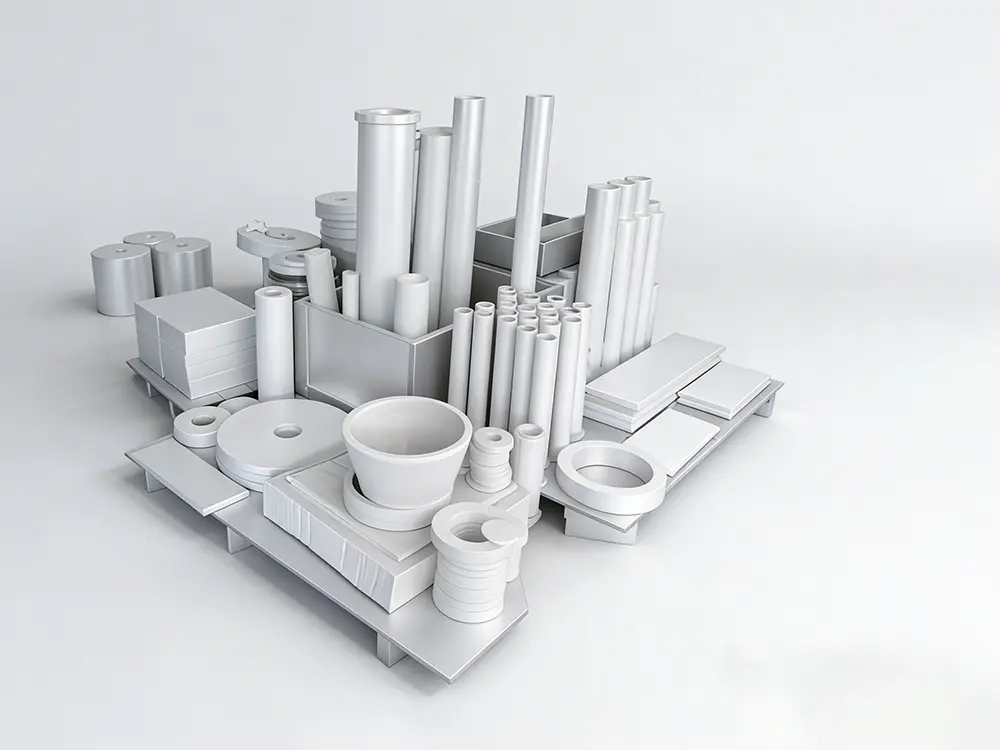
Benefiting from excellent product performance and stable quality, its products are extensively utilized in various high-end fields, such as food and medical industries, new energy vehicles, laser semiconductors, petrochemical engineering, powder metallurgy, national defense and military, as well as aerospace sectors.
Adhering to the core principle of "creating value for customers", Qiangguang provides customized and cost-efficient advanced ceramic solutions tailored to the specific demands of different customers. It is supported by high-quality after-sales services and a strict full-process tracking system, which effectively enhances cooperation efficiency and promotes continuous quality improvement.
At present, the company's products are sold well across the country and exported to Italy, the United Kingdom, Australia, Japan, Malaysia, Thailand, Hungary and other countries and regions. Committed to delivering high-quality products at reasonable prices, Qiangguang sincerely looks forward to establishing long-term and stable cooperative relations with global partners.
An end-to-end technical analysis for procurement directors, ceramic engineers, and industrial designers searching for optimized raw pottery materials, advanced oxides, and non-oxide ceramics.
The global demand for high-performance pottery materials—spanning traditional fine art ceramics, industrial refractory components, thermal management substrates, and ultra-hard wear media—has undergone a massive transformation over the past decade. China, and specifically specialized manufacturing clusters such as Yixing in Jiangsu Province, stands as the epicenter of this technological shift.
Chinese ceramic manufacturers operate with total industrial chain autonomy. From raw mineral refining (zirconium silicate, bauxite, magnesite) and nano-scale powder synthesis (spray drying, coprecipitation) to cold isostatic pressing (CIP), high-temperature sintering (vacuum, hot-pressing, gas-pressure), and CNC diamond grinding, every step is executed under one roof.
By leveraging vast industrial infrastructure and localized raw material access, factories like Yixing Qiangguang deliver 30% to 50% cost reductions compared to Western counterparts without compromising physical properties, microstructural density, or dimensional tolerances.
Equipped with multi-axis CNC tooling, laser etching, and 3D ceramic printing simulation tools, Chinese suppliers turn custom engineering drawings into high-density ceramic prototypes within 7 to 14 working days, ensuring ultra-fast time-to-market for international buyers.
When selecting pottery materials and technical ceramics for high-stress applications, mechanical, thermal, and electrical metrics dictate performance reliability. Below is an engineering performance overview of key materials provided by specialized China suppliers.
| Material Type | Chemical Formula | Density (g/cm³) | Flexural Strength (MPa) | Thermal Conductivity (W/m·K) | Max Operating Temp (°C) | Primary Industrial Application |
|---|---|---|---|---|---|---|
| Yttria-Stabilized Zirconia (YSZ) | ZrO₂ + Y₂O₃ | 6.00 - 6.05 | 900 - 1200 | 2.5 - 3.0 | 1350°C | Biomedical implants, cutting tools, precision valve balls |
| Calcium-Stabilized Zirconia | ZrO₂ + CaO | 5.50 - 5.80 | 650 - 850 | 2.0 - 2.8 | 1500°C | Thermal barrier coatings, refractory nozzles, oxygen sensors |
| High-Purity Alumina | Al₂O₃ (99.5% - 99.9%) | 3.92 - 3.98 | 350 - 450 | 30.0 - 35.0 | 1700°CGrinding media, electrical insulators, semiconductor parts | |
| Aluminum Nitride (AlN) | AlN | 3.26 - 3.30 | 320 - 400 | 170 - 230 | 1100°C (Inert) | High-power LED substrates, semiconductor heat sinks |
| Silicon Nitride | Si₃N₄ | 3.20 - 3.25 | 800 - 1000 | 30.0 - 40.0 | 1400°C | Automotive turbochargers, bearing balls, molten metal handling |
| Aluminium Titanate | Al₂TiO₅ | 3.30 - 3.60 | 40 - 80 | 1.5 - 2.5 | 1600°C | Low-pressure die casting riser tubes, thermal shock components |
| Magnesium Oxide (MgO) | MgO | 3.58 | 180 - 240 | 40.0 - 60.0 | 2400°C | Heating element insulation, crucibles for high-temp alloys |
The convergence of green technology, electric vehicles (EVs), and semiconductor miniaturization is creating unprecedented demand for specialized pottery materials and engineering ceramics. Key technological vectors include:
Ultrafine, sub-micron, and nano-grain powders (such as nano-zirconia and high-purity alpha alumina) enable lower sintering temperatures while yielding near-zero porosity. This improves wear resistance by up to 300% in high-speed ultrafine wet grinding operations.
With the expansion of 5G, EV powertrains, and silicon carbide (SiC) power electronics, materials with high thermal conductivity and electrical insulation—such as Aluminum Nitride (AlN) and Silicon Nitride (Si3N4)—are replacing traditional toxic beryllia and lower-performing alumina substrates.
Leading factories in China are deploying continuous electric roller kilns and microwave sintering furnaces powered by renewable solar energy. This drastically reduces carbon intensity per ton of finished ceramic products, fulfilling international ESG compliance standards.
Advanced pottery materials and industrial ceramics are no longer confined to pottery wheels or traditional tableware. They represent the foundational backbone of modern heavy industry and advanced high-tech electronics.
From preventing abrasive wear in mineral slurry pumps to ensuring zero thermal expansion in aerospace optics, specialized ceramic formulations provide critical physical advantages that metals and polymers cannot match.
Aluminum Nitride (AlN) components and high-purity alumina ceramics serve as plasma-resistant chucks, wafer carriers, and laser insulating rings where plasma erosion resistance and thermal expansion matching with silicon are mandatory.
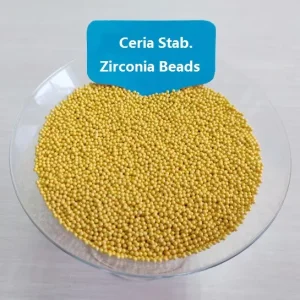
Ceria and Yttria stabilized zirconia beads are used in high-energy bead mills to grind cathode and anode slurry (LFP and NMC batteries) to sub-micron particle sizes, directly increasing battery energy density and charging speeds.
Zirconia and Silicon Nitride ceramic valve seats, plunger pumps, and mechanical seal rings resist aggressive acids, strong alkalis, and slurry cavitation, extending maintenance intervals by over 10x compared to stainless steel components.
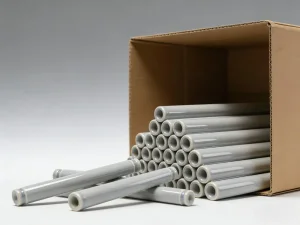
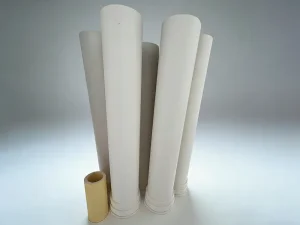
Aluminium Titanate (Al2TiO5) riser tubes and sprue bushings possess non-wetting properties against molten aluminum and magnesium alloys, preventing metallic contamination while offering immunity to extreme thermal shock.
Biocompatible Y-TZP zirconia powders and high-density alumina structural components are manufactured under ISO 13485 standards for hip joint implants, dental crowns, and precision surgical blade tools.
Boron Nitride and Magnesium Oxide ceramics serve as high-temperature crucibles and microwave shielding armor due to their high dielectrical strength, refractory stability, and extreme hardness under ballistic conditions.
For international procurement managers evaluating wholesale pottery material suppliers, establishing Total Cost of Ownership (TCO) and quality assurance mechanisms is paramount. Below is our recommended 4-stage vendor verification framework:
Verify raw powder purity via X-ray Fluorescence (XRF) and particle size distribution (PSD) laser diffraction testing.
Examine scanning electron microscopy (SEM) cross-sections to verify grain size uniformity and absence of micro-voids.
Perform 3-point flexural strength tests, Vickers hardness indentation, and hydrostatic pressure testing.
Ensure vacuum-sealed moisture-proof barrier packaging, shock-absorbing wooden cases, and ocean export compliance.
Calcium-stabilized zirconia (Ca-SZ) offers exceptional resistance to thermal shock at high temperatures up to 1500°C and is widely used in refractory nozzles and oxygen sensors. Yttria-stabilized zirconia (Y-TZP) provides superior mechanical flexural strength (up to 1200 MPa) and fracture toughness at room temperature, making it ideal for grinding media, biomedical implants, and structural components.
Yixing is internationally recognized as China's premier industrial ceramics hub. Factories like Yixing Qiangguang possess a complete supply chain integration—from raw material refinement to precision sintering and diamond machining. Sourcing directly from Yixing factories ensures 30-50% cost savings, strict ISO quality standards, and fast prototype execution.
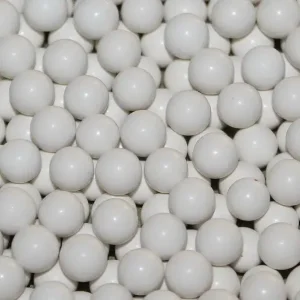
Grinding efficiency depends on material density, bead roundness, surface smoothness, and grain size distribution. Higher density (e.g., Zirconia 6.0 g/cm³ vs. Alumina 3.6-3.9 g/cm³) provides higher kinetic energy impact, reducing milling times in ultrafine grinding of inks, battery slurries, and minerals.
Aluminum Nitride features exceptionally high thermal conductivity (170-230 W/m·K)—nearly 7 to 8 times higher than Alumina—along with excellent electrical insulation and thermal expansion coefficient matched to silicon wafers. It is the premier choice for high-power LED substrates and semiconductor heat sinks.
Yes. Utilizing CNC diamond grinding, ultrasonic machining, and precision lapping, we achieve dimensional tolerances down to ±0.001 mm and surface roughness Ra ≤ 0.05 µm based on customer CAD drawings.
Standard ceramic powders and stock grinding media ship within 3 to 7 business days. Custom engineered structural ceramic components take approximately 2 to 4 weeks depending on mold complexity and sintering cycles.
Discover advanced oxide and non-oxide ceramics engineered for extreme operating conditions and global industrial applications.