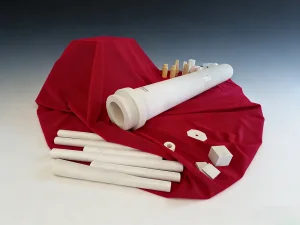
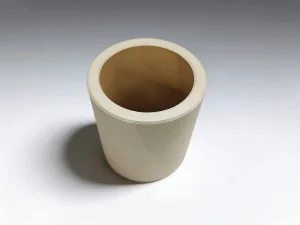
High-purity formulations, extreme thermal shock resistance, and precision sintered ceramic solutions direct from leading factory manufacturing lines.
An authoritative analysis of technical silicate ceramics, global wholesale supply chain dynamics, and advanced sintering physics for high-demand industrial OEM/ODM deployments.
In the contemporary landscape of high-performance materials engineering, silicate ceramics and advanced oxide matrices represent the bedrock of modern industrial systems. From electrical insulation in high-voltage power grids to thermal barrier components in aerospace propulsion and erosion-resistant media in ultra-fine wet grinding operations, silicate ceramic formulations provide an unmatched combination of mechanical strength, dielectric insulation, zero chemical reactivity, and high-temperature dimensional stability.
Global procurement teams searching for wholesale silicate ceramic factories and direct-from-manufacturer supply chains face increasingly stringent quality standards. As industries transition toward higher operating efficiency, microelectronic miniaturization, and aggressive chemical processing environments, traditional off-the-shelf ceramic formulations no longer satisfy rigorous performance benchmarks. Tier-1 buyers require fully integrated supply partners capable of controlling the material continuum from sub-micron powder synthesis and green body shaping to multi-stage atmosphere sintering and precision diamond grinding.
| Material Classification | Key Chemical Constituents | Dielectric Strength | Max Service Temp | Primary Industrial Vector |
|---|---|---|---|---|
| Steatite Ceramics | MgO · SiO₂ (Magnesium Silicate) | 25 - 30 kV/mm | 1,100°C - 1,250°C | Electrical Insulators, Heating Element Holders |
| Cordierite Ceramics | 2MgO · 2Al₂O₃ · 5SiO₂ | 15 - 20 kV/mm | 1,300°C - 1,380°C | Heat Exchangers, Honeycomb Catalyst Substrates |
| Mullite Ceramics | 3Al₂O₃ · 2SiO₂ (Aluminosilicate) | 18 - 22 kV/mm | 1,600°C - 1,700°C | Furnace Kiln Furniture, High-Temp Sheaths |
| Magnesium Oxide (MgO) | MgO Matrix (>99% Purity) | 20 - 28 kV/mm | 1,800°C - 2,200°C | Nuclear Fuel Cladding, Extreme Molten Metal Crucibles |
| Stabilized Zirconia (YSZ/CSZ) | ZrO₂ + Y₂O₃ / MgO / CaO | 10 - 15 kV/mm | 1,500°C - 2,400°C | Biomedical Implants, Precision Cutting Tools, Grinding Media |
Discover how Yixing Qiangguang Ceramic Materials Co., Ltd. bridges raw material innovation with multi-sector global deployments.
Founded in 2003, Yixing Qiangguang Ceramic Materials Co., Ltd. is a professional provider dedicated to the research and development (R&D), manufacturing, and application solutions of high-performance advanced ceramic materials. It is among the few enterprises in China that possess a complete industrial chain, covering key links from powder forming, sintering and precision machining to the provision of integrated application solutions.
The company is also a rare domestic manufacturer engaged in the R&D, production, and supply of a comprehensive portfolio of ceramic materials. Its product range covers zirconia, yttria, alumina, magnesia, aluminum nitride, boron nitride, silicon nitride, silicon carbide, aluminum titanate and other key ceramic materials for industrial use.
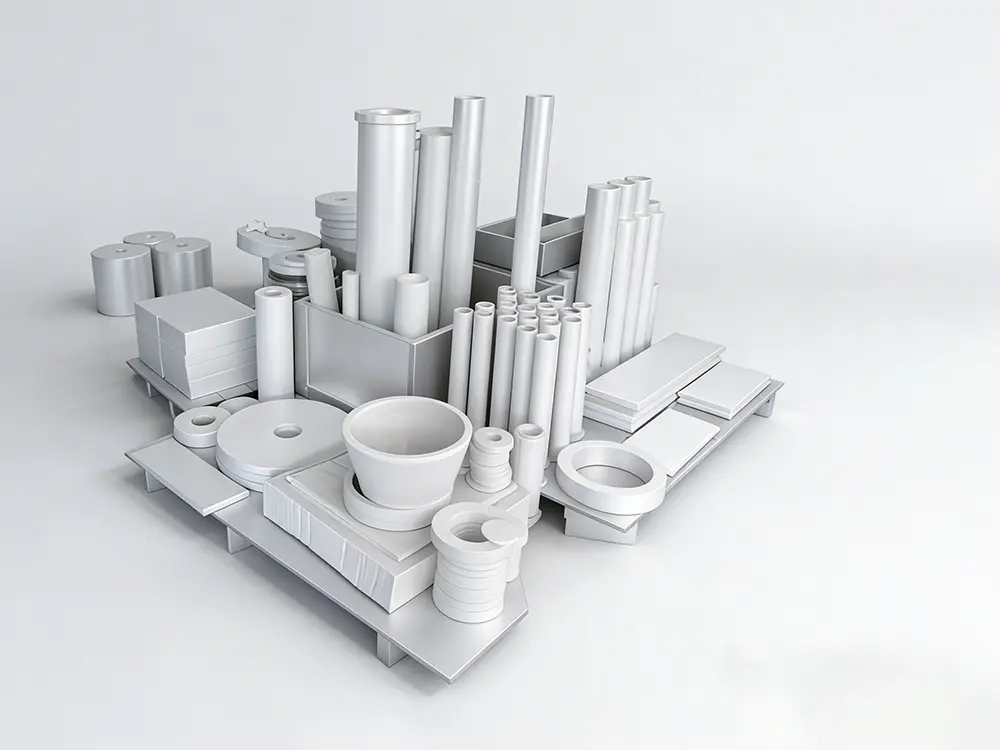
Benefiting from excellent product performance and stable quality, its products are extensively utilized in various high-end fields, such as food and medical industries, new energy vehicles, laser semiconductors, petrochemical engineering, powder metallurgy, national defense and military, as well as aerospace sectors.
Adhering to the core principle of "creating value for customers", Qiangguang provides customized and cost-efficient advanced ceramic solutions tailored to the specific demands of different customers. It is supported by high-quality after-sales services and a strict full-process tracking system, which effectively enhances cooperation efficiency and promotes continuous quality improvement.
At present, the company's products are sold well across the country and exported to Italy, the United Kingdom, Australia, Japan, Malaysia, Thailand, Hungary and other countries and regions. Committed to delivering high-quality products at reasonable prices, Qiangguang sincerely looks forward to establishing long-term and stable cooperative relations with global partners.
How advanced chemical stoichiometry, microstructural phase control, and precision sintering yield unyielding technical performance.
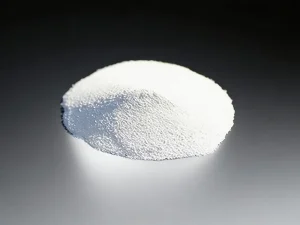
The chemical integrity of silicate and technical ceramics begins with raw material purity. Through chemical co-precipitation, spray drying, and specialized calcination, raw oxides are synthesized into highly reactive powders with narrow particle size distributions (D50 < 0.5 microns). This prevents grain growth anomalies during sintering, guaranteeing high Weibull modulus metrics and uniform mechanical load distribution.
To eliminate density gradients inherent to conventional uniaxial die pressing, wholesale silicate components utilize Cold Isostatic Pressing (CIP) at pressures reaching up to 250 MPa. CIP yields green compacts with near-perfect isotropic density, ensuring isotropic shrinkage during high-temperature consolidation and preventing internal micro-cracks.
Sintering is conducted in computer-controlled electric shuttle kilns and continuous tunnel furnaces at temperatures ranging from 1,400°C to 1,850°C. By precisely managing partial oxygen pressures, heating ramps, and dwell times, liquid-phase and solid-state sintering mechanisms achieve theoretical densities exceeding 99.5%, mitigating porosity and maximizing dielectric strength.
Post-sintering tolerances often require sub-micron precision. Using 5-axis high-speed CNC centers equipped with resin-bonded and electroplated diamond tooling, components are ground, lapped, and polished to achieve surface roughness values as fine as Ra < 0.05 µm, fulfilling strict dimensional requirements for semiconductor vacuum chucks and mechanical seals.
How custom silicate ceramic solutions solve extreme physical challenges across premier engineering sectors globally.
In plasma-enhanced chemical vapor deposition (PECVD) and reactive ion etching (RIE) chambers, components are exposed to aggressive fluorine and chlorine plasma alongside thermal cycles. High-purity Alumina, Yttria (Y₂O₃), and specialized Silicate formulations serve as end-effectors, gas distribution plates, and electrostatic chucks (ESC). Their structural stability prevents particle contamination, maximizing semiconductor wafer yields.
The rapid electrification of automotive mobility demands robust electrical isolation at high voltage ratings (800V+ platforms). Steatite and alumina ceramic relay covers, ceramic pyrofuse bodies, and thermal barrier inserts protect battery management systems (BMS) against catastrophic thermal runaway, maintaining mechanical integrity even under continuous vibration and moisture exposure.
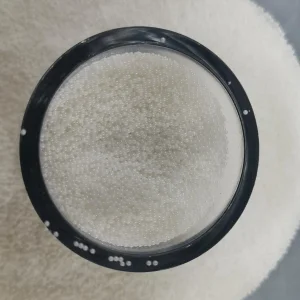
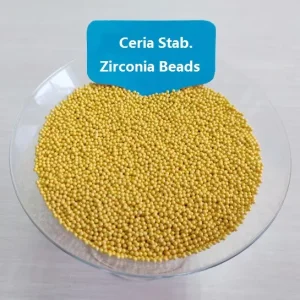
In wet grinding applications for lithium-ion battery cathode materials (e.g., LFP, NCM) and titanium dioxide pigments, media wear introduces harmful metallic contamination. Ceria-Stabilized and Yttria-Stabilized Zirconia beads, manufactured with pristine roundness and high specific gravity (>6.0 g/cm³), deliver rapid particle size reduction down to the nanometer scale with virtually zero wear loss.
Severe corrosive environments combining hot concentrated acids with abrasive slurry flows quickly destroy conventional alloy piping and valve trim. Silicate-bonded alumina and magnesium oxide refractory components provide long service lifetimes inside catalytic cracking units, molten aluminum degassing nozzles, and corrosive chemical dosing pumps.
Strategic development vectors driving the next decade of advanced ceramic material synthesis and industrial adoption.
Transitioning from traditional tooling to Stereolithography (SLA) and Binder Jetting allows the direct fabrication of complex internal cooling channels within silicate heat exchangers and light-weighted aerospace components without expensive tooling dies.
Incorporating continuous silicon carbide fibers and carbon nanotubes into oxide/silicate matrices significantly increases fracture toughness (K1c), transforming brittle ceramics into damage-tolerant structural components for hypersonic flight.
Future wholesale production facilities are adopting green hydrogen-fueled shuttle kilns and ultra-high-efficiency microwave sintering systems, reducing carbon footprints by up to 70% while drastically accelerating thermal densification cycles.
Expert technical answers addressing real-world engineering concerns, procurement metrics, and factory customization options.
While high-purity alumina offers superior hardness, silicate ceramics (such as steatite, cordierite, and mullite) provide vastly superior thermal shock resistance, lower thermal expansion coefficients, and significantly lower volumetric material costs. This makes silicate ceramics the economic and technical material of choice for high-volume electrical insulators, thermal baffles, and furnace kiln furniture where extreme mechanical impact is secondary to thermal cycles.
Dimensional consistency is governed by maintaining strictly controlled powder particle size distribution, automated dry pressing parameters, and continuous temperature profiling across our multi-zone kilns. Furthermore, critical geometric dimensions undergo 100% optical automated inspection, followed by 5-axis CNC diamond finishing when tight tolerances (±0.005mm) are specified by the customer.
Yttria-Stabilized Zirconia (YSZ) provides the highest flexural strength and fracture toughness at room temperature, making it ideal for cutting blades, structural pins, and dental/medical components. Ceria-Stabilized Zirconia (CSZ) excels in wet grinding media applications due to its high density and exceptional resistance to low-temperature degradation (hydrothermal aging). Magnesia-Stabilized Zirconia (MSZ) offers superior thermal shock resistance in high-temperature steel casting and metallurgical refractory nozzles.
We offer end-to-end custom manufacturing, starting from initial CAD design refinement, finite element thermal stress analysis (FEA), raw powder formula adaptation, custom mold tooling, green body machining, to final post-sintering surface treatments (glaze application, metallization, micro-polishing).
Export orders are packaged according to international ISTA transportation standards. Components are individually vacuum-sealed or encased in high-density customized EPE foam slots, packed into multi-layer reinforced corrugated master cartons, and bound to ISPM-15 compliant heat-treated fumigated wooden pallets or heavy-duty wooden crates to guarantee zero transit damage.
Explore our full line of factory-direct ceramic materials engineered for harsh environments, cutting tools, and high-precision machinery.