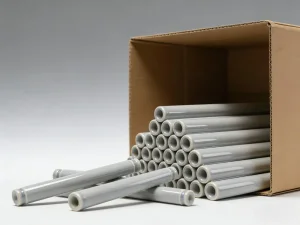
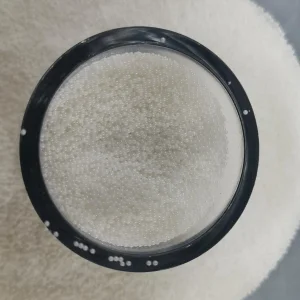
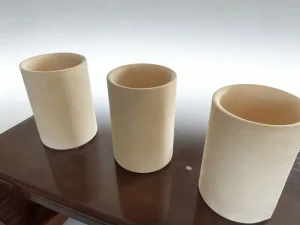
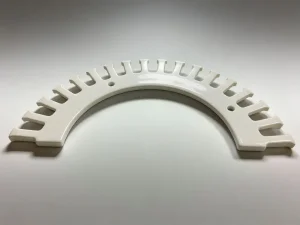
Explore our premium catalog of high-performance technical ceramics, directly sourced from our advanced manufacturing facility with custom tooling capabilities.
In modern power electronics, aerospace propulsion, semiconductor fabrication, and high-speed electric vehicle (EV) drivetrains, structural components are subjected to unprecedented electrical stress, mechanical loads, and violent thermal transients. Traditional insulating materials—such as alumina ceramics, structural polymers, and specialized glass-bonded composites—increasingly fail to meet the multi-physics requirements of next-generation power densities.
Silicon Nitride (Si3N4) Insulators represent a paradigm shift in technical ceramics. Engineered through advanced powder synthesis and precision sintering mechanisms, silicon nitride combines high dielectric breakdown strength, extraordinary fracture toughness (6.0 to 8.5 MPa·m1/2), exceptional thermal shock resistance (ΔT > 800°C), and chemical inertness under extreme corrosive environments.
The superior electrical and mechanical performance of silicon nitride stems from its covalent atomic bonding structure (β-Si3N4 phase elongated hexagonal grains). Unlike ionic oxides, covalent Si-N bonds yield an extremely stable lattice. OEM electrical insulators require strict control over sintering additives (such as Y2O3, Al2O3, MgO, and rare-earth oxides) to achieve 100% theoretical density while minimizing intergranular glass phase conduction at elevated temperatures.
Utilizes high-pressure nitrogen atmospheres (1 to 10 MPa) at temperatures between 1750°C and 1900°C. Prevents thermal decomposition of Si3N4, resulting in complex, near-net-shape insulating components with uniform grain boundaries.
Combines extreme thermal energy with omnidirectional argon gas pressures up to 200 MPa. Eliminates micro-porosity entirely, maximizing dielectric breakdown voltage and dynamic mechanical fatigue limits for mission-critical aerospace insulators.
Formed by nitriding silicon metal powder compacts. Provides outstanding dimensional accuracy with virtually zero volumetric shrinkage during firing, ideal for large-scale electrical shielding structures and intricate geometry insulators.
To assist procurement directors and design engineers in material selection, the table below compares key electromechanical metrics of Silicon Nitride (Si3N4) against conventional industrial technical ceramics.
| Physical / Electrical Metric | Silicon Nitride (Si3N4) | Alumina (99.5% Al2O3) | Zirconia (Y-TZP ZrO2) | Aluminum Nitride (AlN) |
|---|---|---|---|---|
| Density (g/cm³) | 3.20 – 3.30 | 3.90 – 3.95 | 6.00 – 6.05 | 3.26 – 3.30 |
| Dielectric Strength (kV/mm) | 15 – 25 | 10 – 15 | 9 – 12 | 12 – 18 |
| Flexural Strength (MPa) | 700 – 1100 | 350 – 450 | 900 – 1200 | 300 – 400 |
| Fracture Toughness (MPa·m½) | 6.5 – 8.5 | 3.5 – 4.5 | 5.0 – 9.0 | 2.5 – 3.5 |
| Thermal Conductivity (W/m·K) | 30 – 90 | 25 – 30 | 2.5 – 3.0 | 170 – 230 |
| Thermal Shock Resistance (ΔT °C) | 800 – 1000 | 200 | 350 | 350 |
| Max Operating Temperature (°C) | 1400 | 1600 | 1000 | 1150 |
As global industrial supply chains demand higher quality control, traceability, and lead-time predictability, vertically integrated manufacturing becomes essential. Yixing Qiangguang Ceramic Materials Co., Ltd. stands as an industry benchmark in advanced technical ceramic production.
Founded in 2003, Yixing Qiangguang Ceramic Materials Co., Ltd. is a professional provider dedicated to the research and development (R&D), manufacturing, and application solutions of high-performance advanced ceramic materials. It is among the few enterprises in China that possess a complete industrial chain, covering key links from powder forming, sintering, and precision machining to the provision of integrated application solutions.
The company is also a rare domestic manufacturer engaged in the R&D, production, and supply of a comprehensive portfolio of ceramic materials. Its product range covers zirconia, yttria, alumina, magnesia, aluminum nitride, boron nitride, silicon nitride, silicon carbide, aluminum titanate, and other key ceramic materials for industrial use.
Adhering to the core principle of "creating value for customers", Qiangguang provides customized and cost-efficient advanced ceramic solutions tailored to the specific demands of different customers. It is supported by high-quality after-sales services and a strict full-process tracking system, which effectively enhances cooperation efficiency and promotes continuous quality improvement.
Benefiting from excellent product performance and stable quality, its products are extensively utilized in various high-end fields, such as food and medical industries, new energy vehicles, laser semiconductors, petrochemical engineering, powder metallurgy, national defense and military, as well as aerospace sectors.
At present, the company's products are sold well across the country and exported to Italy, the United Kingdom, Australia, Japan, Malaysia, Thailand, Hungary and other countries and regions. Committed to delivering high-quality products at reasonable prices, Qiangguang sincerely looks forward to establishing long-term and stable cooperative relations with global partners.
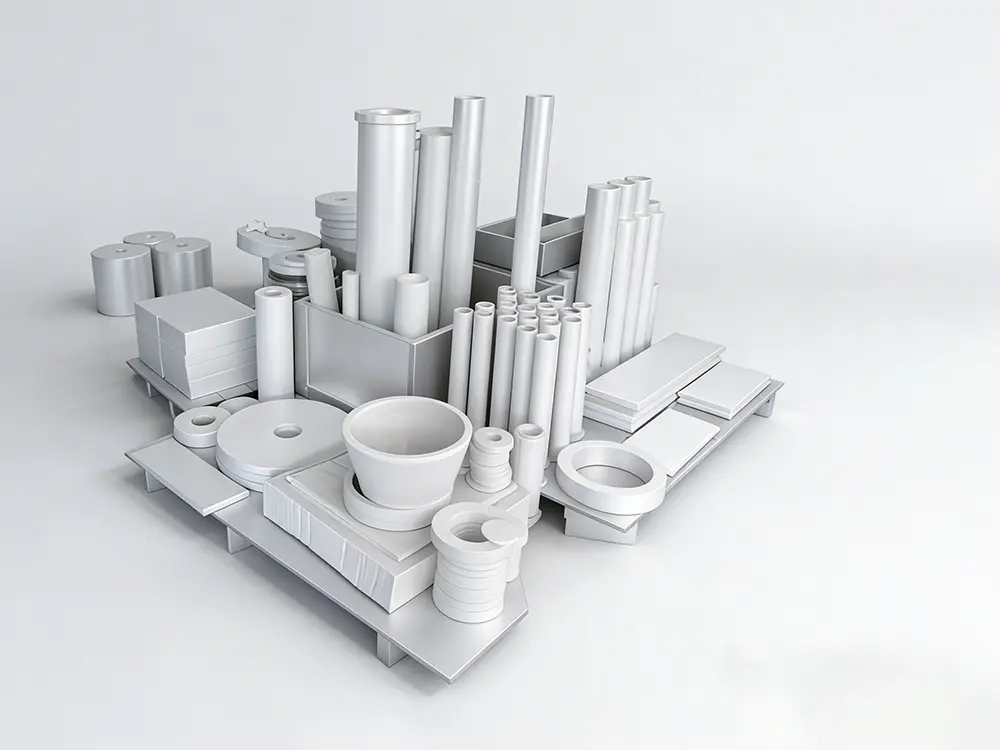
Silicon Nitride insulators are increasingly replacing organic polymers and traditional metal alloys in mission-critical applications across high-tech domains.
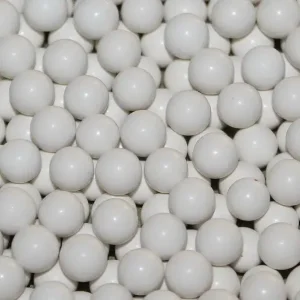
In 800V+ high-voltage EV architectures, electrical breakdown in electric motor bearings causes catastrophic parasitic current pitting (fluting). Silicon Nitride ceramic balls and insulating sleeves physically isolate high frequency switching voltages generated by SiC inverters, extending drivetrain lifespan beyond 500,000 km.
Plasma etching and CVD equipment require electrical isolation rings that withstand reactive fluorine and chlorine gases at high RF power. Silicon nitride insulators resist halogen plasma erosion while maintaining high dielectric resistivity, minimizing particle contamination on silicon wafers.
For hypersonic flight applications and aerospace sensor assemblies, Si3N4 serves as a structural insulator and radome window material. Its low dielectric loss tangent (&tan;δ < 0.002) allows uninterrupted high-frequency RF transmission across wide temperature operating envelopes.
Heavy power grid switchgears and high-voltage transformer bushings utilize Si3N4 stand-off insulators to eliminate electrical arc tracking. The non-wetting properties of Si3N4 prevent surface moisture contamination and sudden partial discharge breakdowns.
As power electronics push toward ultra-wide bandgap (UWBG) semiconductors like Gallium Oxide (Ga2O3) and Diamond substrates, technical requirements for dielectric insulators are intensifying. Research and development at our facility focuses on three key future milestones:
Development of stereolithography (SLA) and binder jetting technologies for Si3N4 slurries. Allows creation of complex internal cooling channels within insulating blocks, enabling direct liquid cooling of high-power modules.
By controlling oxygen impurity levels in the raw Si3N4 lattice below 0.5 wt% and refining grain boundary phases, next-generation substrates achieve thermal conductivities competing directly with Aluminum Nitride while retaining superior mechanical strength.
Incorporating graphene nano-platelets and carbon nanotubes at intergranular boundary phases to yield self-monitoring smart insulators capable of real-time electrical strain and temperature sensing.
When evaluating high-performance technical ceramic components, total cost of ownership (TCO) extends beyond initial piece price. Component failure in high-voltage or high-temperature systems often results in costly operational downtime, safety hazards, and brand reputation damage.
Silicon Nitride insulators offer up to 10x longer service life compared to conventional alumina in extreme tribological and thermal stress environments, drastically lowering maintenance cycles and system lifetime costs.
Every batch undergoes rigorous quality control checks: Ultrasonic non-destructive flaw testing, CMM dimensional verification (+/- 0.001 mm), dielectric breakdown voltage verification, and helium leak testing for hermetic seals.
Complete compliance with export standards for European, American, and Asian markets. Customized shock-proof wooden and foam vacuum packaging guarantees pristine component delivery across international routes.
Discover our broader catalog of advanced technical ceramic solutions engineered for high wear, extreme temperature, and corrosive chemical environments.