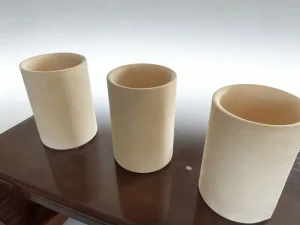
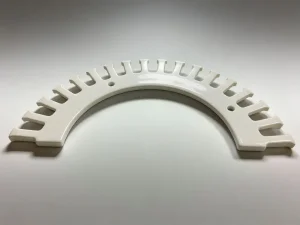
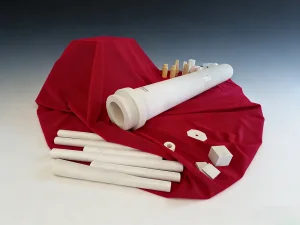
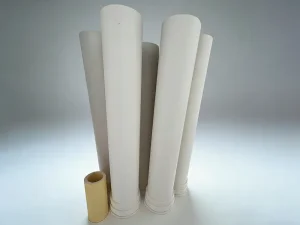
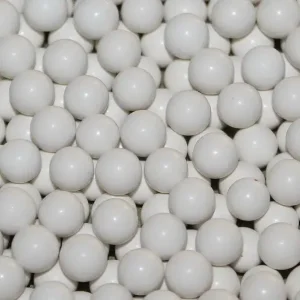
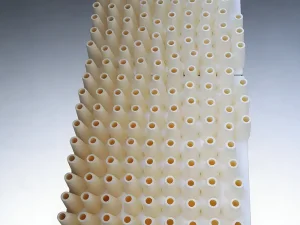
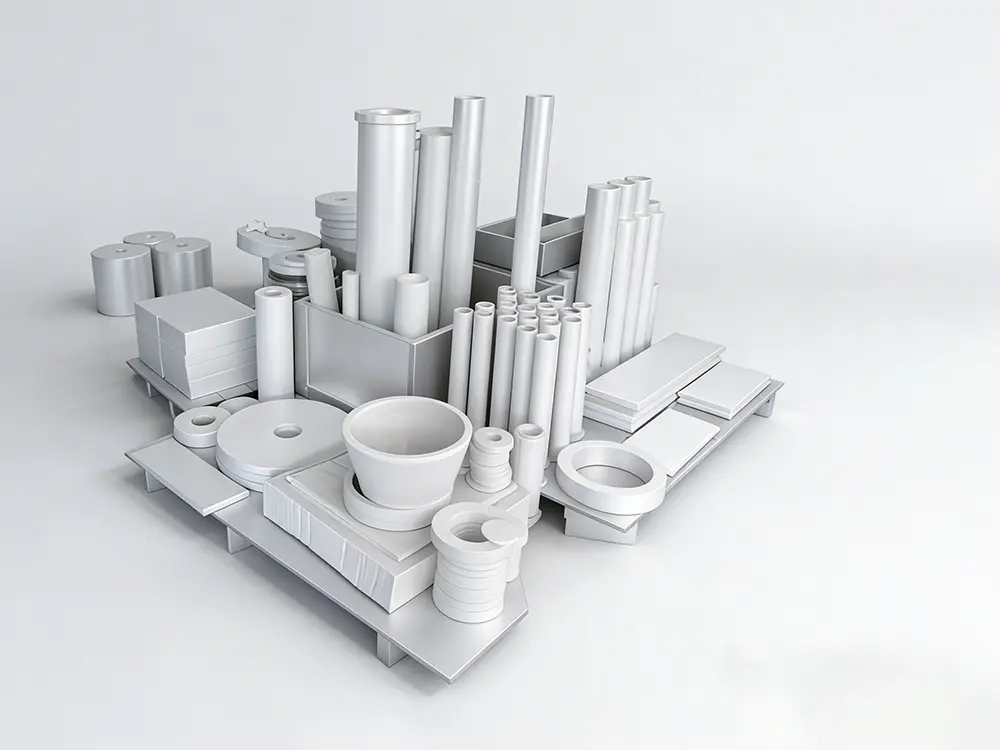
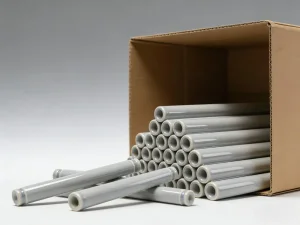
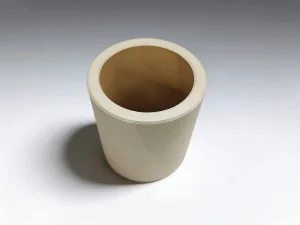
Explore our core product lines manufactured under rigorous quality control standards in our state-of-the-art Chinese factory.
As power densities in modern electronics, semiconductor processing, and high-frequency communication modules skyrocket, traditional ceramic materials face severe thermal bottlenecks. Aluminum Nitride (AlN) stands as the definitive material engineering solution.
Aluminum Nitride (AlN) is a covalent bond compound featuring a hexagonal wurtzite crystal structure. Renowned for its extraordinary combination of high thermal conductivity (ranging from 170 to 230 W/m·K in industrial production) and superior electrical resistivity (>1014 Ω·cm), AlN is the ideal substrate material for thermal dissipation in high-density power systems.
Unlike traditional ceramic substrates such as Alumina (Al2O3), which exhibits low thermal conductivity (~24-30 W/m·K), or Beryllium Oxide (BeO), which poses severe health and environmental hazards due to toxicity during processing, Aluminum Nitride offers a non-toxic, eco-friendly, and highly performant alternative.
Furthermore, AlN boasts a Coefficient of Thermal Expansion (CTE) of approximately 4.5 to 4.6 × 10⁻⁶/K between 20°C and 400°C. This closely matches the CTE of Silicon (3.5–4.0 × 10⁻⁶/K) and Gallium Nitride (GaN), minimizing interfacial thermal stress and structural fatigue during aggressive thermal cycling in high-power semiconductor packaging.
From mission-critical aerospace hardware to next-generation electric vehicles, discover how AlN ceramics drive system performance across high-tech domains.
In high-density plasma etch, chemical vapor deposition (CVD), and physical vapor deposition (PVD) chambers, AlN is used to produce Electrostatic Chucks (ESC), heater pedestals, and plasma rings. Its resistance to fluorine and chlorine radical plasma erosion coupled with uniform heat spreading prevents wafer warping and enhances micro-chip fabrication yields.
Modern EV traction inverters and power distribution units rely on Direct Bonded Copper (DBC) and Direct Plated Copper (DPC) AlN substrates. AlN rapidly dissipates extreme heat generated by Silicon Carbide (SiC) MOSFETs, expanding battery range, enabling ultra-fast charging, and ensuring zero thermal runaway risks under peak electric acceleration.
High-frequency telecommunications equipment, active electronically scanned array (AESA) radar systems, and satellite transceivers generate localized heat spikes. AlN's combination of low dielectric loss and outstanding thermal conductivity enables robust performance in RF power amplifiers, package bases, and micro-strip substrates.
Industrial laser diodes, UV-C sterilization emitters, and high-lumen automotive headlamps generate immense lumen densities. AlN submounts provide superior heat dissipation, preserving junction temperatures below critical limits, thereby preventing wavelength drift and extending operational lifespan by thousands of hours.
With artificial intelligence microprocessors surpassing 700W+ thermal design power (TDP), hybrid liquid-cooling plates and interposers utilize metallized AlN ceramics to transfer heat instantly into coolant channels without risks of electrical shorting or dielectric breakdown.
Avionics power supplies, hypersonic thermal barriers, and missile guidance units demand structural integrity under violent vibration and thermal shock. AlN retains high mechanical flexural strength and structural stability even at temperatures exceeding 1000°C in non-oxidizing environments.
Evaluate key technical metrics of Aluminum Nitride against standard technical ceramics used in thermal and structural applications.
| Material Property | Aluminum Nitride (AlN) | Alumina (Al₂O₃ 99.5%) | Beryllium Oxide (BeO) | Silicon Nitride (Si₃N₄) | Silicon Carbide (SiC) |
|---|---|---|---|---|---|
| Thermal Conductivity (W/m·K) | 170 - 230 | 24 - 30 | 250 - 280 | 60 - 90 | 120 - 170 |
| Coefficient of Thermal Expansion (10⁻⁶/K) | 4.5 - 4.6 | 6.8 - 8.0 | 8.0 | 3.2 | 4.0 |
| Dielectric Strength (kV/mm) | 15 - 20 | 15 | 12 | 15 | - (Semiconductor) |
| Flexural Strength (MPa) | 320 - 400 | 350 | 230 | 700 - 900 | 450 |
| Dielectric Constant (1 MHz) | 8.5 - 9.0 | 9.8 | 6.7 | 7.8 | 10.0 |
| Toxicity / Handling Hazards | Non-Toxic / Safe | Non-Toxic / Safe | Highly Toxic Powder | Non-Toxic / Safe | Non-Toxic / Safe |
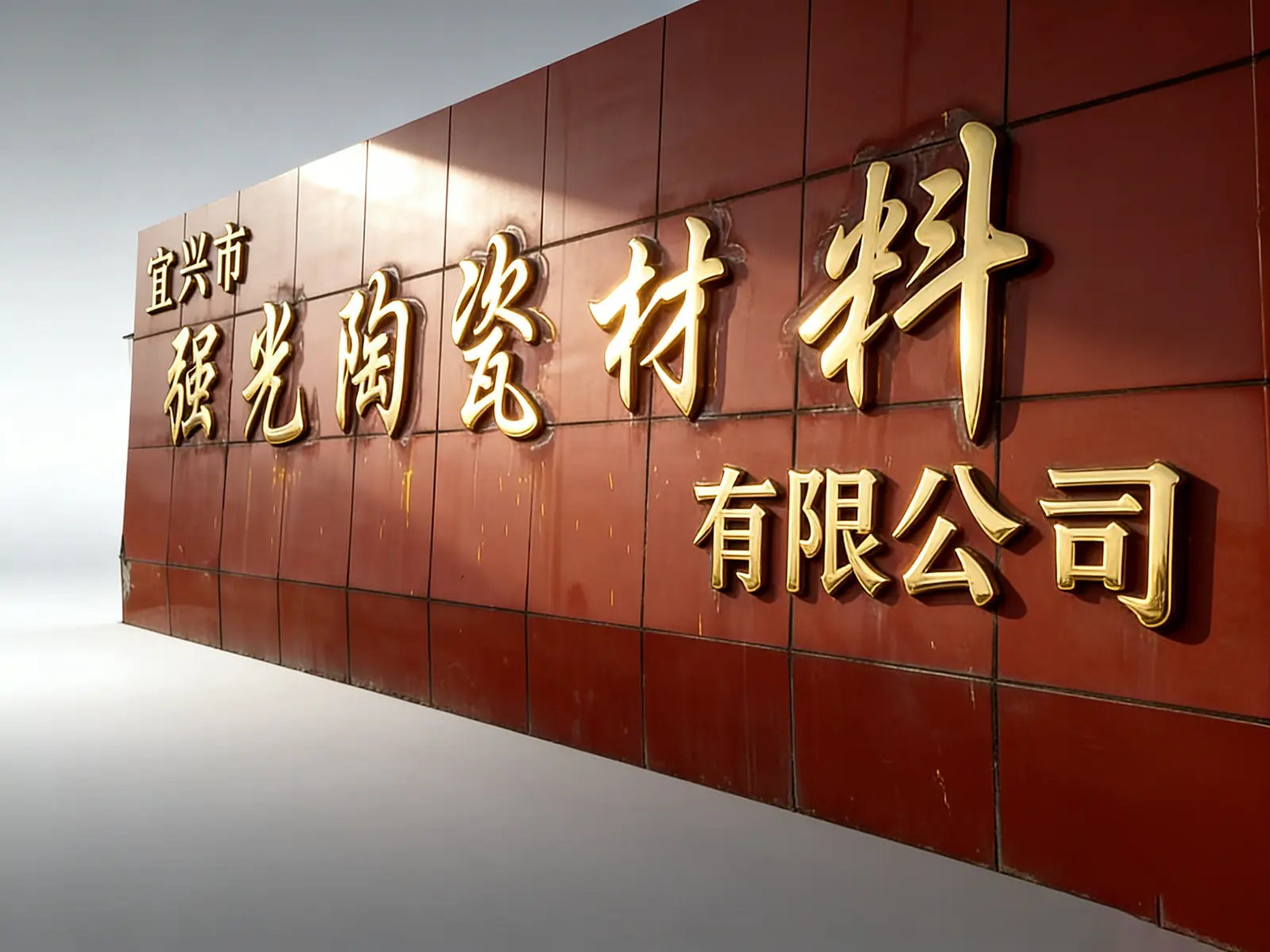
Founded in 2003, Yixing Qiangguang Ceramic Materials Co., Ltd. is a premier domestic enterprise possessing a fully integrated industrial chain for advanced technical ceramic materials.
Unlike suppliers relying on outsourced processing, Yixing Qiangguang controls every critical stage of production—from raw powder synthesis and slip preparation to dry pressing, tape casting, pressureless/vacuum sintering, high-precision CNC diamond grinding, laser scribing, and metallization.
Our complete industrial chain guarantees stringent batch-to-batch consistency, reduced lead times, and substantial cost efficiencies passed directly to global OEMs and Tier-1 system integrators.
Our product footprint spans beyond Aluminum Nitride to encompass Zirconia (ZrO₂), Yttria (Y₂O₃), Alumina (Al₂O₃), Magnesia (MgO), Boron Nitride (BN), Silicon Nitride (Si₃N₄), Silicon Carbide (SiC), and Aluminium Titanate ceramics.
Adhering to the core principle of "creating value for customers", Qiangguang provides customized, cost-efficient ceramic solutions tailored to specific engineering demands. We maintain a strict full-process tracking system and high-quality after-sales support.
Currently, our products are widely exported to international markets including Italy, the United Kingdom, Australia, Japan, Malaysia, Thailand, Hungary, and numerous other regions across Europe, the Americas, and Southeast Asia.
Meeting the strict quality benchmarks of global enterprise buyers through international compliance standards, precision machining, and local technical engineering support.
Our facilities strictly operate under ISO 9001:2015 quality management and ISO 14001 environmental standards. Every AlN batch undergoes laser flash thermal conductivity measurement (LFA), CMM dimensional verification, optical surface roughness analysis, and ultrasonic flaw detection.
We provide full OEM/ODM prototyping and mass production. Custom capabilities include precision lapping (surface roughness Ra < 0.05 µm), micro-hole laser drilling, thin-film/thick-film metallization (Mo-Mn, Ti-Pt-Au, DPC, DBC), and complex 3D shape diamond machining.
All products are 100% compliant with EU RoHS 3 and REACH directives, ensuring zero hazardous substance risks. We offer flexible international shipping protocols, customs clearance documentation, DDP delivery terms, and dedicated technical assistance in local time zones.
Key technological transformations shaping the demand for high-purity Aluminum Nitride materials over the next decade.
The rapid adoption of Gallium Nitride (GaN) and Silicon Carbide (SiC) in renewable energy inverters, smart grids, and high-frequency RF amplifiers is accelerating demand for high thermal conductivity substrates. AlN's thermal match with GaN epitaxial layers makes it the substrate of choice for next-generation power density architectures.
Generative AI model training requires extreme server hardware processing power. Heat flux densities at chip-level hot spots now exceed limits manageable by copper or aluminum heat sinks alone. AlN ceramic heat spreaders integrated directly into chip packaging are becoming standard design requirements.
Expert answers to common engineering, commercial, and technical sourcing inquiries regarding Aluminum Nitride ceramics.
Discover our wide array of technical ceramics designed for extreme wear, high temperature, and chemical exposure environments.