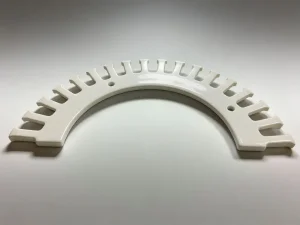
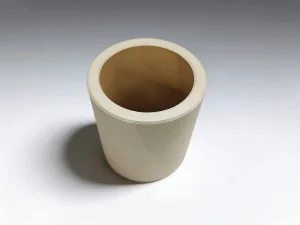
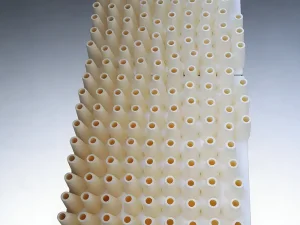
Explore our core engineered technical ceramics, precision zirconia components, oxide powders, and customized industrial material solutions.
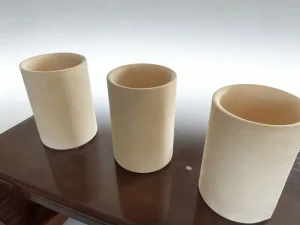
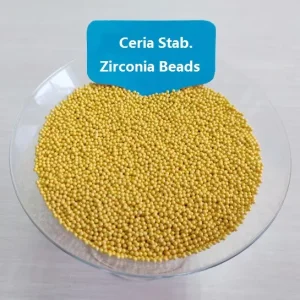
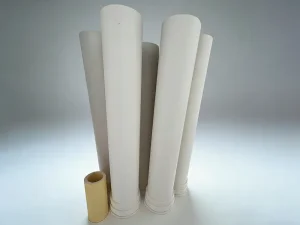
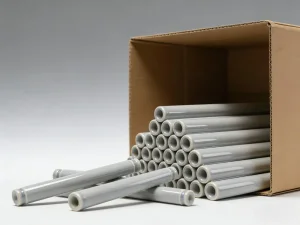
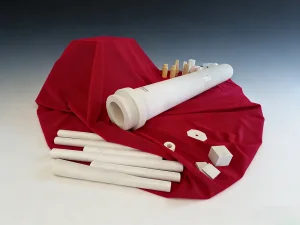
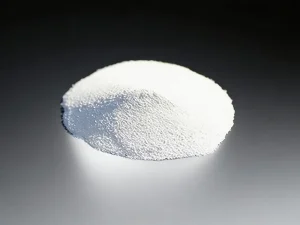
Analyzing the evolution of ceramic net structures, micro-porous mesh substrates, and high-purity inorganic material synthesis in modern industrial processing.
In modern high-temperature, highly corrosive, and high-stress industrial environments, conventional metal wire meshes and organic polymer nets rapidly undergo thermal degradation, mechanical creep, oxidation, or chemical breakdown. To solve these critical bottlenecks, global engineering industries have transitioned toward advanced inorganic non-metallic solutions—specifically engineered Ceramic Net assemblies, ceramic mesh lattices, micro-channel ceramic filters, and structural honeycomb matrices.
A Ceramic Net represents a specialized geometrical configuration constructed from high-purity technical ceramics such as Zirconia (ZrO2), Alumina (Al2O3), Silicon Nitride (Si3N4), Aluminum Nitride (AlN), Magnesium Oxide (MgO), and Aluminium Titanate (Al2TiO5). Engineered through ultra-precision forming techniques including tape casting, isopressing, extrusion, photo-curing additive manufacturing, and high-temperature vacuum sintering, these structural nets combine ultra-high mechanical hardness with exceptional thermal stability exceeding 1700°C.
As a prominent China Ceramic Net Manufacturer & Factory, Yixing Qiangguang Ceramic Materials Co., Ltd. has established an integrated research and manufacturing ecosystem. China's ceramic manufacturing landscape has undergone a major paradigm shift: moving beyond low-margin commoditized ceramics into ultra-precision, high-purity structural ceramic net components that meet stringent international standards (ASTM, ISO 9001, DIN, JIS).
Rigorous chemical purity, structural integrity, and thermal thresholds established by China's leading ceramic research laboratories.
Examining the structural supply chain advantages, process automation, raw material abundance, and economic efficiencies driving global B2B procurement toward Chinese suppliers.
Unlike regional machine shops that outsource sintering or powder synthesis, top-tier Chinese facilities maintain total ownership of the production cycle: from raw material calcination and nanoscale powder milling to green-state cold isostatic pressing (CIP), vacuum sintering, CNC diamond grinding, and laser quality assurance.
China commands the world's largest upstream refining network for Yttrium (Y2O3), Cerium (CeO2), Magnesium (MgO), and high-purity Bauxites/Aluminas. This geographical proximity lowers raw material procurement costs while guaranteeing consistent lot-to-lot chemical purity for zirconia lattice stabilization.
Through state-of-the-art CAD/CAM mold manufacturing and ceramic 3D stereolithography, Chinese factories reduce product development cycles for custom ceramic nets from months to days. Rapid iterations allow aerospace and semiconductor engineers to validate pore mesh geometries rapidly.
By pairing automated continuous tunnel kilns with high-volume production schedules, Chinese factories achieve economies of scale unmatched elsewhere. Global buyers benefit from a 30% to 50% reduction in procurement costs without compromising dimensional tolerances or structural reliability.
Leading Chinese ceramic manufacturers implement multi-stage quality gates, utilizing laser particle counters, coordinate measuring machines (CMM), scanning electron microscopy (SEM), and ultrasonic flaw detectors to inspect every single ceramic net batch before shipment.
With mature export infrastructure through Shanghai, Ningbo, and Shenzhen ports, Chinese ceramic manufacturers ensure compliant export packaging, custom tariff classification support, and door-to-door air/sea freight delivery worldwide.
Selecting the optimal technical ceramic formula for your application requirements.
| Material Classification | Chemical Composition | Max Operating Temp (°C) | Flexural Strength (MPa) | Thermal Conductivity (W/m·K) | Primary Industrial Advantages |
|---|---|---|---|---|---|
| Yttria-Stabilized Zirconia (Y-TZP) | ZrO2 + 3mol% Y2O3 | 1350°C | 900 - 1200 | 2.5 - 3.0 | Extreme fracture toughness, wear resistance, biomedical biocompatibility |
| Ceria-Stabilized Zirconia (Ce-TZP) | ZrO2 + CeO2 | 1400°C | 700 - 850 | 3.0 | Superior hydrothermal stability, zero aging degradation in moist environments |
| High-Purity Alumina (99.8% Al2O3) | Al2O3 (99.8%) | 1650°C | 350 - 450 | 30.0 | Excellent dielectric strength, corrosion resistance, high cost efficiency |
| Silicon Nitride (Si3N4) | Si3N4 | 1400°C | 800 - 1000 | 30 - 60 | Unmatched thermal shock resistance, low coefficient of friction, high toughness |
| Aluminum Nitride (AlN) | AlN | 1150°C (Inert) | 320 - 400 | 170 - 230 | Ultra-high thermal conductivity, electrical insulation, semiconductor compatible |
| Aluminium Titanate (Al2TiO5) | Al2O3 · TiO2 | 1600°C | 40 - 80 | 1.5 | Non-wetting by molten metals, near-zero thermal expansion coefficient |
| Magnesium Oxide Ceramic (MgO) | MgO (>99%) | 2000°C | 200 - 300 | 40 - 60 | Superb resistance to basic slag and molten metals, refractory substrate applications |
From semiconductor cleanrooms to molten alloy foundries, engineered ceramic meshes solve critical high-temperature and wear challenges.
High-purity Alumina and Aluminum Nitride ceramic nets are widely integrated into wafer chucks, susceptors, and lift pins. Their zero-outgassing properties, plasma erosion resistance, and precise thermal conductivity prevent particle contamination and ensure uniform wafer heating during chemical vapor deposition (CVD) and physical vapor deposition (PVD) processes.
In harsh chemical synthesis and petroleum cracking, ceramic micro-mesh structures serve as robust catalyst supports and high-efficiency gas/liquid separation filters. Unlike polymer membranes, ceramic nets resist aggressive organic solvents, strong acids (HCl, H2SO4), and caustic alkalis under continuous fluid pressure.
Zirconia and Aluminium Titanate cellular ceramic net filters are used during aluminum casting, iron founding, and superalloy metallurgy. They strain non-metallic inclusions, slag particles, and oxide skins from molten metal streams, reducing casting porosity and structural flaws in automotive engine blocks and turbine blades.
With the rise of electric vehicles, structural ceramic nets and porous ceramic insulation sheets act as critical thermal runaway barriers between lithium-ion battery modules. Capable of enduring direct flame exposure exceeding 1200°C without melting, they prevent thermal propagation across battery packs.
Advanced Silicon Nitride and Oxide ceramic net lattices are utilized in missile radomes, scramjet combustion chamber liners, and re-entry thermal tiles. Their low thermal expansion coefficient and high resistance to thermal shock prevent structural failure under extreme aero-heating.
Micro-porous Zirconia and Alumina ceramic nets are engineered as bio-inert bone replacement scaffolds. Their interconnected pore networks allow osteoblast cell adhesion, vascular ingrowth, and nutrient transport, making them ideal for orthopedics and dental restoration.
Key technological shifts defining the next decade of advanced structural ceramics engineering.
Traditional ceramic forming via pressing or machining struggles to produce internal micro-channels and complex geometric mesh networks. Advanced Chinese factories are rapidly deploying Digital Light Processing (DLP) and Selective Laser Sintering (SLS) 3D printers using ceramic-filled photopolymer resins. This allows zero-tooling manufacturing of custom ceramic nets with internal cooling passages and tailored pore gradient profiles.
While monolithic ceramics possess exceptional hardness, their susceptibility to brittle fracture remains a challenge. The integration of continuous Silicon Carbide (SiC) or Carbon fibers into ceramic net matrices produces fiber-reinforced CMCs. These hybrid structures exhibit pseudo-ductile fracture behavior, dramatically improving resistance to severe mechanical shock and ballistic impact.
By controlling raw material grain boundaries at the nanoscale (<100 nm), modern sintering processes produce superplastic ceramic nets capable of undergoing extensive deformation at elevated temperatures. These nano-engineered net structures provide unprecedented surface area for chemical catalysis and ultra-fine fluid separation down to sub-nanometer scales.
In response to global sustainability mandates, Chinese advanced ceramic producers are transitioning to microwave sintering, continuous spark plasma sintering (SPS), and green hydrogen-powered kilns. These eco-friendly production methods reduce sintering cycle times by up to 60% while decreasing carbon emissions per ton of ceramic net produced.
Pioneering high-performance technical ceramics with complete vertical integration and global export capabilities since 2003.
Founded in 2003, Yixing Qiangguang Ceramic Materials Co., Ltd. is a professional provider dedicated to the research and development (R&D), manufacturing, and application solutions of high-performance advanced ceramic materials. It is among the few enterprises in China that possess a complete industrial chain, covering key links from powder forming, sintering and precision machining to the provision of integrated application solutions.
The company is also a rare domestic manufacturer engaged in the R&D, production, and supply of a comprehensive portfolio of ceramic materials. Its product range covers zirconia, yttria, alumina, magnesia, aluminum nitride, boron nitride, silicon nitride, silicon carbide, aluminum titanate and other key ceramic materials for industrial use.
Benefiting from excellent product performance and stable quality, its products are extensively utilized in various high-end fields, such as food and medical industries, new energy vehicles, laser semiconductors, petrochemical engineering, powder metallurgy, national defense and military, as well as aerospace sectors.
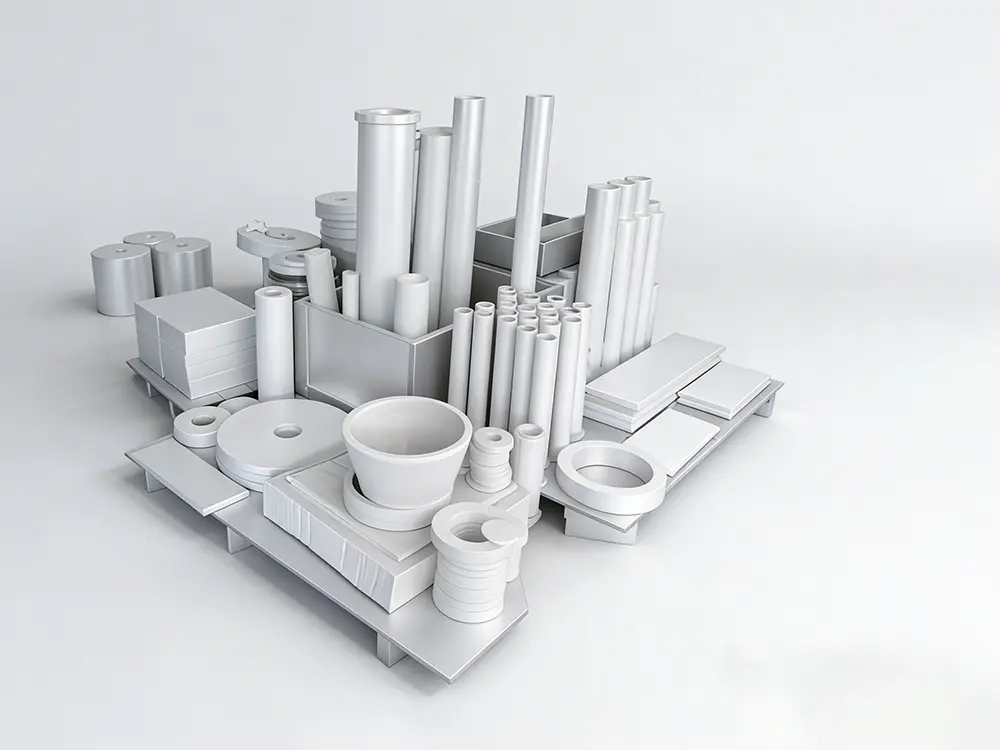
Adhering to the core principle of "creating value for customers", Qiangguang provides customized and cost-efficient advanced ceramic solutions tailored to the specific demands of different customers. It is supported by high-quality after-sales services and a strict full-process tracking system, which effectively enhances cooperation efficiency and promotes continuous quality improvement.
At present, the company's products are sold well across China and exported to Italy, the United Kingdom, Australia, Japan, Malaysia, Thailand, Hungary and other countries and regions. Committed to delivering high-quality products at reasonable prices, Qiangguang sincerely looks forward to establishing long-term and stable cooperative relations with global partners.
Direct technical answers to key questions asked by industrial procurement managers, process engineers, and global buyers.
Explore our specialized nitrides, stabilized zirconia powders, and severe-environment ceramic components.