Explore our premium product portfolio engineered for high-toughness, chemical resistance, and extreme thermal stability.
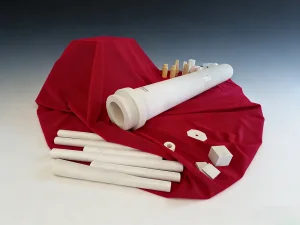
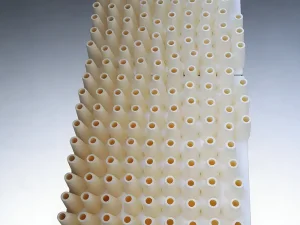
In modern high-tech industrial manufacturing, advanced powder ceramics serve as the foundational cornerstone for semiconductor fabrication, medical implants, automotive electrification, aerospace propulsion, and extreme chemical processing. Over the past two decades, China has evolved from a raw powder supplier into a global powerhouse for high-purity ceramic synthesis, precision green-body shaping, advanced vacuum sintering, and sub-micron diamond machining.
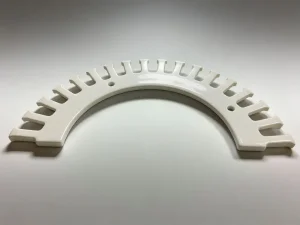
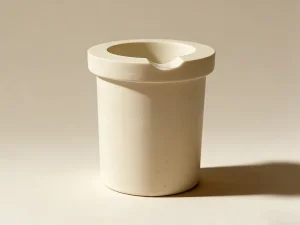
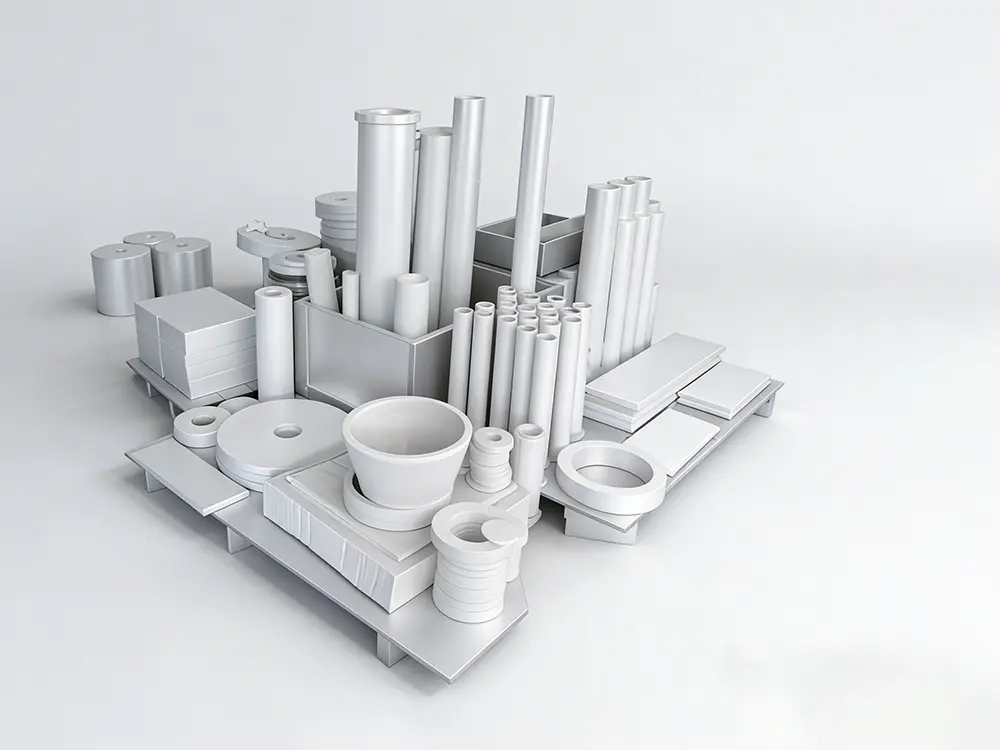
Founded in 2003, Yixing Qiangguang Ceramic Materials Co., Ltd. stands at the forefront of this technological evolution. As a premier manufacturer and integrated solution provider in China, Qiangguang represents one of the rare industrial facilities boasting an end-to-end manufacturing footprint. Our operational capabilities span raw chemical synthesis, spray drying, cold isostatic pressing (CIP), high-temperature sintering (pressureless, hot-pressed, and gas-pressure sintered), alongside ultra-precision CNC diamond grinding.
By mastering the entire value chain, China powder ceramic manufacturers provide global procurement teams with unprecedented batch-to-batch consistency, rigorous microstructural homogeneity, reduced lead times, and substantial total-cost-of-ownership (TCO) optimization. This comprehensive whitepaper serves as an authoritative procurement and engineering guide for evaluating, selecting, and integrating advanced ceramic powders and sintered components manufactured in China.
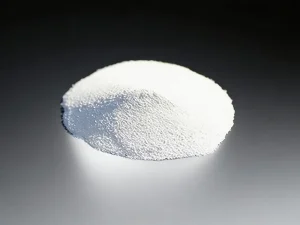
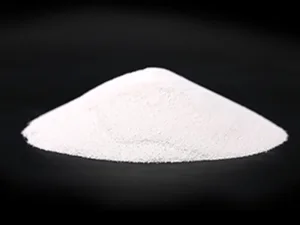
The versatility of advanced ceramics stems from their unique chemical bonding—predominantly covalent and ionic—which grants exceptional hardness, high-temperature stability, wear resistance, electrical insulation, and chemical inertness. Yixing Qiangguang Ceramic Materials Co., Ltd. synthesizes and processes a vast portfolio of advanced ceramic powders tailored for specific physical, thermal, and electrical performance vectors.
Doping: 3mol% Y2O3 (3TZP) to 8mol% Y2O3 (8YSZ). Engineered with Phase Transformation Toughening mechanism ($t \rightarrow m$ transformation) to arrest crack propagation. Offers flexural strength exceeding 1,200 MPa and fracture toughness up to $8-10 \, \text{MPa}\cdot\text{m}^{1/2}$. Ideal for structural components, dental prosthetics, pump plungers, and thermal barrier coatings (TBCs).
Purity Range: 99.5% to 99.999% (4N/5N). Features exceptional dielectric breakdown strength, extreme mechanical hardness, and high corrosion resistance. Widely specified for semiconductor wafer chucks, electrical insulators, sapphire crystal feedstocks, and medical wear rings.
Thermal Conductivity: 170 to 230 W/m·K. Combines high thermal dissipation with an electrical coefficient of thermal expansion (CTE) closely matching silicon ($4.5 \times 10^{-6}/K$). Crucial for high-power LED substrates, IGBT modules, and RF semiconductor packaging.
Phases: $\alpha$-$Si_3N_4$ and $\beta$-$Si_3N_4$. Boasts supreme thermal shock resistance, low friction coefficient, and outstanding fatigue strength. Perfect for ceramic bearing balls, turbocharger rotors, welding nozzles, and severe molten metal handling.
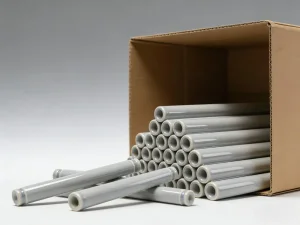
Thermal Expansion: Near-zero CTE ($<1.5 \times 10^{-6}/K$). Features unparalleled thermal shock immunity and non-wetting properties against molten aluminum. Ideal for port liners, riser tubes, and non-ferrous foundry casting spouts.
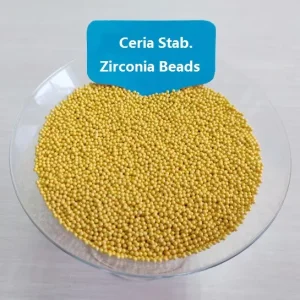
Properties: Excellent thermal barrier capability, high resistance to low-temperature degradation (hydrothermal aging), and high impact energy absorption. Preferred for high-shear ultra-fine bead grinding and thermal refractory shields.
| Material Type | Density ($g/cm^3$) | Flexural Strength (MPa) | Thermal Conductivity ($W/m\cdot K$) | Max Operating Temp (°C) | Primary Application |
|---|---|---|---|---|---|
| Yttria Stabilized Zirconia (3Y-TZP) | 6.05 | 1100 - 1300 | 2.5 - 3.0 | 1500 | Medical implants, Valve seats, Structural pins |
| High-Purity Alumina ($Al_2O_3$ 99.8%) | 3.92 | 380 - 450 | 30.0 | 1700 | Semiconductor rings, Wear liners, Insulators |
| Aluminum Nitride (AlN) | 3.26 | 320 - 400 | 170 - 220 | 1350 (Inert) | Power electronics, Heat sinks, LED substrates |
| Silicon Nitride ($Si_3N_4$) | 3.24 | 850 - 1000 | 30 - 80 | 1400 | High-speed bearings, Subsea pump valves |
| Aluminium Titanate ($Al_2TiO_5$) | 3.60 | 40 - 80 | 1.5 - 2.5 | 1450 | Low-pressure die casting riser tubes, Nozzles |
The global industrial landscape increasingly demands resilient, scalable, and cost-optimized supply chains for advanced technical ceramics. China's ceramic industrial clusters—particularly in Yixing, Jiangsu Province—offer unmatched structural advantages that enable premier manufacturers like Yixing Qiangguang to deliver elite engineering quality at competitive price points.
Unlike regional fabricators who outsource powder synthesis or green machining, Yixing Qiangguang maintains absolute internal control over chemical co-precipitation, spray drying, shaping, firing, and surface finishing. This eliminates intermediary markups and guarantees 100% material traceability.
Key pillars of China's technical ceramic supply chain advantage include:
To satisfy Tier-1 international buyers in North America, Western Europe, and East Asia, China's ceramic manufacturers adhere to stringent quality management frameworks and regulatory mandates. Engineering leadership at Yixing Qiangguang strictly enforces a comprehensive Quality Assurance (QA) protocol compliant with global standards:
Adhering to our core principle of "Creating Value for Customers", Qiangguang provides customized, cost-efficient ceramic solutions tailored to specific operating parameters. Supported by dedicated after-sales engineering support and transparent tracking systems, we ensure frictionless international collaboration.
Today, Qiangguang’s technical ceramics and powders are widely distributed across China and exported globally to premier manufacturing markets, including Italy, the United Kingdom, Australia, Japan, Malaysia, Thailand, Hungary, and numerous other regions worldwide. Our international logistics infrastructure supports flexible Incoterms (EXW, FOB, CIF, DDP) with custom protective packaging to prevent moisture absorption and shock damage during transit.
The technical ceramics sector is experiencing unprecedented innovation driven by next-generation industrial demands. Key technological shifts reshaping the industry include:
Development of ultra-fine, highly spherical ceramic powders with specialized binder systems designed for Stereolithography (SLA), Selective Laser Sintering (SLS), and Binder Jetting of complex ceramic geometries impossible to machine via traditional tooling.
Advancements in nano-powder synthesis allow sintering at reduced temperatures while yielding near-zero porosity and grain sizes below 100 nm, dramatically improving mechanical strength, wear resistance, and surface finish polishability.
Escalating demand for high-thermal-conductivity Aluminum Nitride (AlN) and Silicon Nitride ($Si_3N_4$) substrate sheets for 800V silicon carbide (SiC) inverter modules in next-generation electric vehicles.
Answer: 3Y-TZP contains 3 mol% Yttria, creating a metastable tetragonal crystalline phase that provides maximum mechanical strength and fracture toughness through stress-induced phase transformation. It is designed for high-stress structural parts. 8YSZ contains 8 mol% Yttria, fully stabilizing the zirconia into a cubic crystal structure with high oxygen ion conductivity, making it ideal for Solid Oxide Fuel Cell (SOFC) electrolytes and thermal barrier coatings (TBCs).
Answer: We strictly control raw precursor chemical purity, spray drying atomization pressure, slurry viscosity, and particle size distribution ($d_{10}, d_{50}, d_{90}$). Every spray-dried lot undergoes automated flow rate testing, hall flowmeter bulk density verification, and moisture content analysis prior to packaging.
Answer: Yes. We offer comprehensive OEM/ODM engineering services. Our technical team works directly with client STEP/IGES/DWG files, calculating precise volumetric shrinkage factors during cold isostatic pressing and green machining, followed by post-sinter CNC diamond grinding to achieve sub-micron tolerances.
Answer: Aluminium Titanate possesses an extraordinarily low thermal expansion coefficient and excellent resistance to thermal shock. Crucially, it exhibits complete non-wetting behavior toward molten aluminum and zinc alloys, drastically reducing skull build-up and extending component operational lifespans in die-casting riser tubes and spouts.
Discover our comprehensive inventory of raw ceramic powders, grinding media, and engineered component solutions.