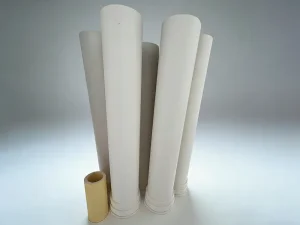
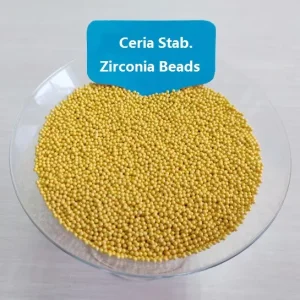
Direct factory supply of precision engineered Silicon Nitride, Zirconia, Alumina, and Aluminum Nitride ceramic components.
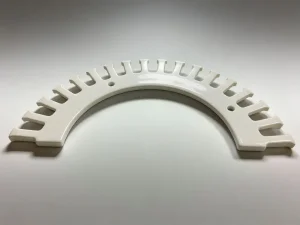
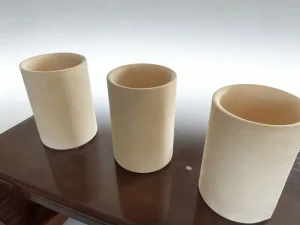
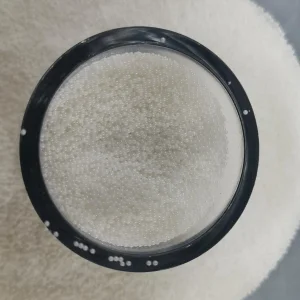
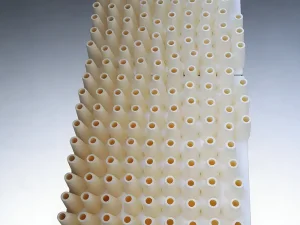
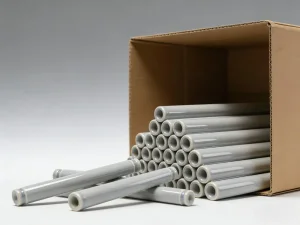
An authoritative technical analysis of chemical properties, sintering mechanisms, supply chain advantages, and procurement strategies.
Founded in 2003, Yixing Qiangguang Ceramic Materials Co., Ltd. is a professional provider dedicated to the research and development (R&D), manufacturing, and application solutions of high-performance advanced ceramic materials. It is among the few enterprises in China that possess a complete industrial chain, covering key links from powder forming, sintering and precision machining to the provision of integrated application solutions.
The company is also a rare domestic manufacturer engaged in the R&D, production, and supply of a comprehensive portfolio of ceramic materials. Its product range covers zirconia, yttria, alumina, magnesia, aluminum nitride, boron nitride, silicon nitride, silicon carbide, aluminum titanate and other key ceramic materials for industrial use.
Adhering to the core principle of "creating value for customers", Qiangguang provides customized and cost-efficient advanced ceramic solutions tailored to the specific demands of different customers. It is supported by high-quality after-sales services and a strict full-process tracking system, which effectively enhances cooperation efficiency and promotes continuous quality improvement.
Comparing SSiC, RBSiC, and RSiC variants across thermal, mechanical, and chemical dimensions.
Silicon Carbide ($\text{SiC}$) is a covalent compound formed by silicon and carbon atoms bonded together in a tetrahedral structure. Known for its extreme hardness, exceptionally high thermal conductivity, low thermal expansion coefficient, and superior chemical inertness, Silicon Carbide has transitioned from being primarily an abrasive grain into the premiere material for structural components operated under hostile operating parameters.
With thermal conductivity reaching up to 120–270 W/m·K (approaching metallic values and vastly surpassing traditional ceramics), SiC dissipates heat rapidly. Combined with a low thermal expansion coefficient ($4.0 \times 10^{-6}/\text{K}$), it offers unrivaled resistance to catastrophic thermal shock.
Exhibiting a Mohs hardness of 9.5 and a Vickers hardness exceeding 2200 HV, Sintered Silicon Carbide (SSiC) resists micro-abrasion, erosive slurry wear, and high-velocity friction better than tool steel, tungsten carbide, and alumina.
Silicon carbide forms a protective self-passivating silicon dioxide ($\text{SiO}_2$) layer when exposed to oxygen at elevated temperatures. It remains completely unreactive in strong acids (hydrochloric, hydrofluoric, nitric) and caustic alkalis up to 1600°C.
| Property Parameter | Sintered SiC (SSiC) | Reaction Bonded SiC (RBSiC) | Silicon Nitride ($\text{Si}_3\text{N}_4$) | Zirconia ($\text{ZrO}_2$) | Alumina ($\text{Al}_2\text{O}_3$ 99.5%) |
|---|---|---|---|---|---|
| Density ($\text{g/cm}^3$) | 3.10 - 3.15 | 3.02 - 3.08 | 3.20 - 3.25 | 6.05 | 3.92 |
| Vickers Hardness (HV) | 2400 - 2600 | 2000 - 2200 | 1500 - 1700 | 1200 - 1350 | 1600 |
| Flexural Strength ($\text{MPa}$) | 400 - 450 | 250 - 300 | 700 - 900 | 900 - 1200 | 350 - 400 |
| Thermal Conductivity ($\text{W/m}\cdot\text{K}$) | 120 - 140 | 150 - 200 | 30 - 40 | 2 - 3 | 30 |
| Max Operating Temp (°C) | 1600 | 1380 | 1400 | 1000 | 1700 |
| Thermal Expansion Coefficient ($10^{-6}/\text{K}$) | 4.0 | 4.3 | 3.2 | 10.5 | 8.0 |
How integrated industrial clusters deliver unprecedented cost-efficiency, rapid iteration, and high-volume scalability.
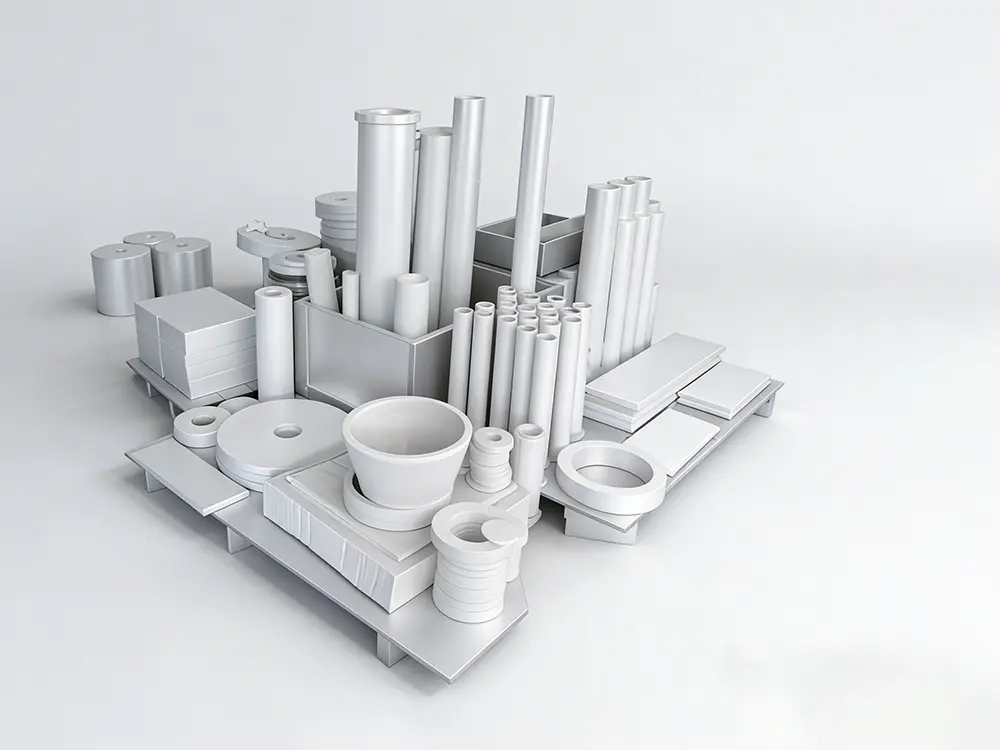
Benefiting from excellent product performance and stable quality, its products are extensively utilized in various high-end fields, such as food and medical industries, new energy vehicles, laser semiconductors, petrochemical engineering, powder metallurgy, national defense and military, as well as aerospace sectors.
Over the last two decades, China has established itself as the global epicenter for technical ceramic manufacturing. The efficiency model achieved by Chinese suppliers like Yixing Qiangguang Ceramic Materials Co., Ltd. is not merely based on competitive labor rates; it relies on complete vertical integration, advanced automation, continuous raw material synthesis, and dense regional industrial clusters.
Chinese manufacturing hubs handle raw powder preparation (spray drying, nanoscale synthesis), cold isostatic pressing (CIP), complex CNC green-body machining, high-temperature vacuum sintering furnaces (up to 2200°C), and sub-micron diamond grinding under one roof.
Tooling and mold lead times for custom SiC components in China are 50% to 70% shorter than in Western markets. Engineering design changes can be validated via rapid green-state machining within days rather than months.
Continuous kiln operations and high-volume raw material procurement reduce unit production costs substantially. B2B clients receive premium grade SSiC components at competitive pricing without compromising quality compliance.
How specialized industries utilize SiC components to withstand extreme stress, corrosion, and extreme temperatures.
In wafer fabrication equipment, Silicon Carbide is used for semiconductor wafer boats, dummy wafers, susceptibility rings, and chemical vapor deposition (CVD) components. SiC’s high thermal conductivity ensures minimal thermal distortion across thousands of heating cycles, while its high purity prevents trace metallic contamination in sub-5nm chip manufacturing processes.
Mechanical seal rings, magnetic pump bearings, and slurry valve seats fabricated from pressureless sintered Silicon Carbide (SSiC) run dry or submerged under aggressive acids, alkalis, and slurry suspensions. They show virtually zero micro-fretting or chemical erosion over thousands of operational hours.
Beyond broad industrial uses, SiC substrate ceramic plates serve in 800V EV traction inverters and power modules. Furthermore, ultra-hard SiC grinding media are essential for nano-scale milling of lithium iron phosphate ($\text{LiFePO}_4$) and high-nickel cathode/anode slurry powders.
SiC exhibits high sonic velocity and hardness, making it an elite material for lightweight ceramic body armor plates and vehicle armor. In aerospace engineering, SiC optical mirrors are chosen for satellite telescopes due to zero dimensional creep under ambient cosmic thermal swings.
Reaction Bonded Silicon Carbide (RBSiC) beams, burner nozzles, cooling tubes, and saggers are utilized in tunnel kilns and roller kilns operating up to 1380°C. They carry high structural loads without bending or warping, yielding exceptional energy savings due to thin wall profiles.
Flue gas desulfurization (FGD) spray nozzles manufactured from RBSiC are deployed in thermal power stations and waste incineration facilities. They withstand extreme droplet erosion and acidic slurry impingement, extending component lifespans tenfold compared to alloy metals.
Trusted by international industrial OEMs across Europe, Asia-Pacific, and Americas.
At present, the company's products are sold well across the country and exported to Italy, the United Kingdom, Australia, Japan, Malaysia, Thailand, Hungary and other countries and regions. Committed to delivering high-quality products at reasonable prices, Qiangguang sincerely looks forward to establishing long-term and stable cooperative relations with global partners.
Key criteria for selecting and auditing China Silicon Carbide ceramic suppliers.
Ensure the supplier utilizes sub-micron alpha-phase ($\alpha\text{-SiC}$) powder with tight particle size distribution. Purity levels above 99% are mandatory to eliminate localized stress points and thermal cracking during high-temperature operations.
Verify whether the factory utilizes Cold Isostatic Pressing (CIP), Slip Casting, or Dry Pressing. CIP guarantees isotropic physical properties and uniform density distribution for complex 3D industrial components.
Check post-sintering finish tolerances. Leading factories offer diamond wheel CNC grinding, ultrasonic machining, and lapping to achieve surface roughness down to $Ra < 0.1 \mu\text{m}$ and tight geometric tolerances within $\pm 0.002\text{mm}$.
Technological innovations shaping the future of industrial structural ceramics.
Stereolithography (SLA) and Selective Laser Sintering (SLS) of Silicon Carbide ceramic slurries allow the production of highly complex internal cooling channels for aerospace nozzles and semiconductor components previously impossible with conventional tooling.
As chip node geometry shrinks, demand for ultra-high purity SSiC (impurity levels below 5 ppm) is accelerating to eliminate metallic ion migration during chemical vapor deposition (CVD) and atomic layer deposition (ALD).
Continuous SiC fiber-reinforced SiC matrix composites (SiC/SiC composites) are emerging as pivotal structural materials for nuclear fusion cladding and ultra-high-efficiency gas turbines due to radiation tolerance and extreme thermal capability.
In-depth expert answers addressing technical specification, customization, sintering, and logistics.
SSiC is pressureless sintered at ~2100°C without free silicon, offering higher purity, maximum hardness, and continuous chemical resistance up to 1600°C. RBSiC (or SiSiC) infiltrates carbon preforms with liquid silicon at ~1500°C; it contains 8-12% free metallic silicon, making it easier to fabricate large structural beams but limiting its operational temperature to 1380°C and reducing acid resistance.
Yixing Qiangguang integrates complete powder-to-part production capabilities established since 2003. Sourcing directly from a China factory provides access to rapid prototype iterations, significantly lower tooling costs, strict quality tracking, and a comprehensive material portfolio (including SiC, Si3N4, AlN, ZrO2, Al2O3).
Yes. We specialize in custom OEM and ODM manufacturing. Utilizing green-body CNC machining followed by post-sintering diamond grinding, components can be crafted to tight geometric tolerances of $\pm 0.005\text{mm}$ or better based on client STEP, IGES, or DWG CAD files.
Silicon Carbide features a low thermal expansion coefficient ($4.0 \times 10^{-6}/\text{K}$) and high thermal conductivity ($120\text{--}200\text{ W/m}\cdot\text{K}$), giving it superior resistance to thermal stress cracking compared to alumina and zirconia during rapid heating and cooling cycles.
Through multi-stage diamond flat lapping and polishing, our facility achieves surface finishes of $Ra \le 0.05 \mu\text{m}$ ($2 \mu\text{in}$) with optical flatness measured within 1 to 2 light bands, ensuring leak-free performance in high-pressure mechanical pumps.
Our advanced ceramic solutions are exported worldwide, with established client partnerships across Italy, the United Kingdom, Australia, Japan, Malaysia, Thailand, Hungary, and North America.
Silicon Carbide is harder (Mohs 9.5 vs 9.0) and offers higher thermal conductivity, making it preferred for sliding abrasion and extreme temperatures. Silicon Nitride, however, offers higher flexural strength ($800+\text{ MPa}$) and fracture toughness, making it better suited for extreme mechanical impact and high-speed bearing balls.
Every batch undergoes rigorous quality assurance including ultrasonic flaw detection (NDT), coordinate measuring machine (CMM) dimensional verification, density testing via Archimedes method, surface roughness profilometry, and thermal shock validation.
Premium factory solutions for harsh chemical, high thermal, and wear-resistant applications.