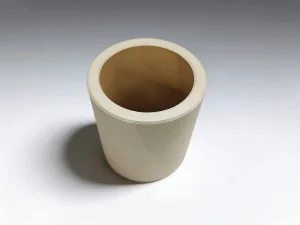
In modern industrial engineering, advanced structural ceramics have surpassed traditional metal alloys and refractories in extreme-environment applications. Among these, Silicon Nitride (Si3N4) tubes represent the pinnacle of thermomechanical stability, wear resistance, and chemical inertness. As global manufacturing transitions toward higher processing temperatures, stricter purity controls, and energy-efficient operations, the global demand for high-grade silicon nitride tubing has experienced exponential growth across non-ferrous foundry systems, semiconductor processing, photovoltaic crystal growth, and petrochemical refining.
Silicon Nitride exhibits a unique covalent bonding architecture, yielding crystalline phases (primarily α-Si3N4 and β-Si3N4) that deliver an unprecedented combination of high fracture toughness (7 to 9 MPa·m1/2), exceptional thermal shock resistance (temperature delta exceeding 800°C without catastrophic failure), and non-wetting properties against molten non-ferrous metals like aluminum, zinc, and magnesium. Unlike traditional ceramics such as alumina (Al2O3) or quartz, silicon nitride tubes maintain exceptional mechanical strength up to 1400°C in reducing or inert atmospheres.
Procurement officers and chief metallurgical engineers globally are systematically replacing metallic thermocouple protection sheaths, graphite riser tubes, and quartz furnace liners with precision-engineered silicon nitride tubes. The economic justification is clear: while the initial material investment is higher, the service lifespan of Si3N4 components is frequently 10 to 30 times longer than metallic or silicon carbide alternatives, drastically reducing furnace downtime, maintenance labor, and melt contamination risk.
China has emerged as the global epicenter for the advanced manufacturing and precision processing of technical structural ceramics. Sourcing China Silicon Nitride Tubes offers global original equipment manufacturers (OEMs) and industrial end-users unmatched competitive advantages in quality consistency, technological agility, and scalable cost-efficiency.
From raw sub-micron alpha-phase powder synthesis to advanced green-state cold isostatic pressing (CIP) and precision 5-axis diamond grinding, leading Chinese factories control the entire production chain, eliminating multi-tier vendor markups and ensuring strict batch traceability.
Tier-1 Chinese suppliers utilize state-of-the-art Gas Pressure Sintering (GPS) furnaces (up to 10-100 bar N2 pressure) and Hot Isostatic Pressing (HIP). This achieves relative densities exceeding 99.5%, eliminating micro-porosity and maximizing mechanical reliability.
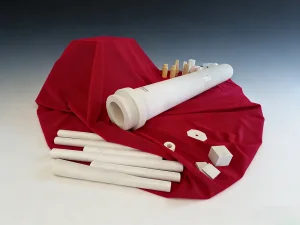
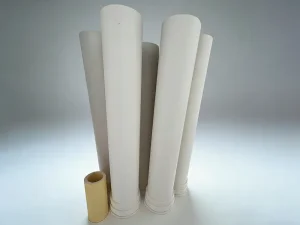
Chinese technical ceramic facilities specialize in complex geometry manufacturing, including ultra-thin wall tubes, multi-bore protection sleeves, threaded end-connectors, and custom flange integrations designed precisely to client engineering drawings.
The efficiency of Chinese manufacturing hubs is further enhanced by robust industrial clusters, where raw material suppliers, sintering equipment innovators, and precision diamond machining facilities reside in close proximity. This geographic density drastically reduces lead times for prototype development and mass-production orders, giving international clients a distinct speed-to-market advantage.
Silicon nitride tubes serve critical functions across diverse high-tech industries. Below is an engineering evaluation of key application environments where Si3N4 ceramic tubing provides definitive operating advantages over legacy materials:
In aluminum foundry operations, riser tubes (or stalk tubes) are continuously submerged in molten aluminum alloys at temperatures ranging from 680°C to 750°C under periodic pneumatic pressure. Traditional iron or cast steel tubes suffer from heavy iron dissolution into the aluminum melt, degrading the structural integrity of automotive wheels and aerospace castings. Silicon Nitride riser tubes are completely non-wetting to aluminum and zinc alloys, preventing slag adhesion, ensuring non-contaminating melt purity, and offering service life exceeding 12 to 24 months of continuous operation.
Accurate temperature monitoring in corrosive gases, molten salts, and liquid metals requires protection sheaths that can withstand extreme thermal shock during insertion and removal. Si3N4 thermocouple protection tubes boast a thermal expansion coefficient of just 3.0 × 10⁻⁶/K, making them virtually immune to thermal stress cracking. They are heavily utilized in incinerators, steel manufacturing, glass melting, and chemical reactors.
In the manufacture of solar-grade polysilicon and semiconductor silicon wafers, process equipment must operate under high temperatures without leaching metallic impurities. Gas Pressure Sintered Silicon Nitride (GPS-Si3N4) burner tubes, radiant heating tubes, and gas distribution pipes prevent sodium, iron, and heavy metal cross-contamination, ensuring pristine semiconductor-grade chemical vapor deposition (CVD) conditions.
For hydrogen removal and purification in non-ferrous refining, gas injection tubes made of silicon nitride withstand severe cavitation and liquid metal erosion. Additionally, in powder metallurgy gas atomization units, Si3N4 melt delivery tubes provide stable orifice dimensions, resisting thermal shocking when high-pressure inert gas streams contact liquid metals.
To assist material engineers and procurement specialists in selecting the optimal advanced ceramic, the table below provides a comprehensive physical and mechanical property comparison between Gas-Pressure Sintered Silicon Nitride (Si3N4), Alumina (Al2O3), Silicon Carbide (SiC), and Yttria-Stabilized Zirconia (YSZ):
| Material Property | Silicon Nitride (Si3N4) | Alumina (Al2O3 99.5%) | Silicon Carbide (SSiC) | Zirconia (3Y-TZP) |
|---|---|---|---|---|
| Density (g/cm³) | 3.20 - 3.25 | 3.90 - 3.95 | 3.10 - 3.15 | 6.00 - 6.05 |
| Flexural Strength (MPa) | 800 - 950 | 350 - 450 | 400 - 450 | 900 - 1200 |
| Fracture Toughness (MPa·m½) | 6.5 - 8.5 | 3.5 - 4.5 | 3.0 - 4.0 | 5.0 - 10.0 |
| Thermal Shock Resistance (ΔT °C) | 800 - 1000 | 200 - 250 | 350 - 400 | 250 - 300 |
| Thermal Conductivity (W/m·K) | 25 - 35 (Up to 90 for Hi-TC) | 25 - 30 | 70 - 110 | 2.5 - 3.0 |
| Coef. of Thermal Expansion (10−&sup6;/K) | 3.0 - 3.2 | 7.2 - 8.0 | 4.0 - 4.5 | 10.0 - 10.5 |
| Molten Metal Corrosion Resistance | Outstanding (Non-wetting) | Moderate | Fair (Oxidizes) | Good |
The advanced structural ceramics landscape is evolving rapidly, driven by demands from the electric vehicle (EV) semiconductor sector, aerospace propulsion, and green hydrogen production. Modern R&D centers in China are focusing on several key breakthroughs for next-generation silicon nitride tube manufacturing:
Traditional Si3N4 exhibits thermal conductivity around 30 W/m·K. Modern lattice engineering and grain boundary phase tailing (using Y2O3-MgO sinter aids) have enabled industrial production of high-thermal-conductivity Si3N4 exceeding 90 to 120 W/m·K, combining high strength with rapid heat dissipation.
Stereolithography (SLA) and Selective Laser Sintering (SLS) are now utilized to produce complex Silicon Nitride tubes featuring internal cooling channels, helical fluid pathways, and integrated mounting geometry impossible with traditional extrusion or CIP processing.
Incorporating carbon nanotubes (CNTs) or silicon carbide whiskers into the silicon nitride matrix enhances micro-crack deflection, boosting fracture toughness beyond 10 MPa·m1/2 for ultra-high-stress mechanical sleeve applications.
Founded in 2003, Yixing Qiangguang Ceramic Materials Co., Ltd. is a professional provider dedicated to the research and development (R&D), manufacturing, and application solutions of high-performance advanced ceramic materials. It is among the few enterprises in China that possess a complete industrial chain, covering key links from powder forming, sintering and precision machining to the provision of integrated application solutions.
The company is also a rare domestic manufacturer engaged in the R&D, production, and supply of a comprehensive portfolio of ceramic materials. Its product range covers zirconia, yttria, alumina, magnesia, aluminum nitride, boron nitride, silicon nitride, silicon carbide, aluminum titanate and other key ceramic materials for industrial use.
Benefiting from excellent product performance and stable quality, its products are extensively utilized in various high-end fields, such as food and medical industries, new energy vehicles, laser semiconductors, petrochemical engineering, powder metallurgy, national defense and military, as well as aerospace sectors.
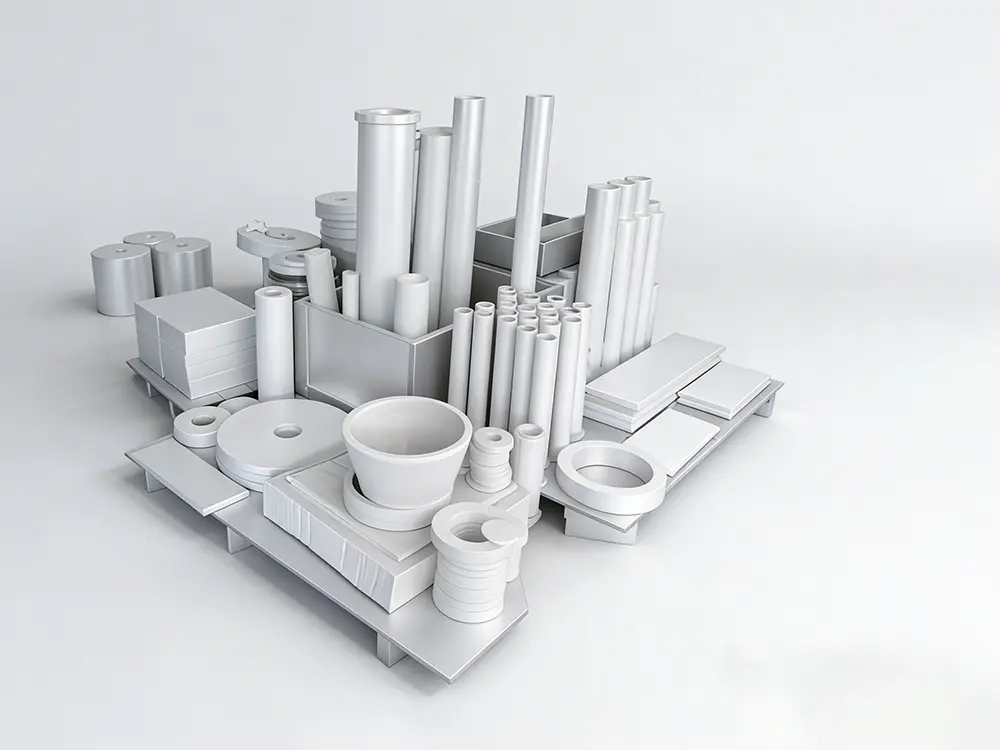
Adhering to the core principle of "creating value for customers", Qiangguang provides customized and cost-efficient advanced ceramic solutions tailored to the specific demands of different customers. It is supported by high-quality after-sales services and a strict full-process tracking system, which effectively enhances cooperation efficiency and promotes continuous quality improvement.
At present, the company's products are sold well across the country and exported to Italy, the United Kingdom, Australia, Japan, Malaysia, Thailand, Hungary and other countries and regions. Committed to delivering high-quality products at reasonable prices, Qiangguang sincerely looks forward to establishing long-term and stable cooperative relations with global partners.