Engineering Technical Whitepaper & Industrial Procurement Guide

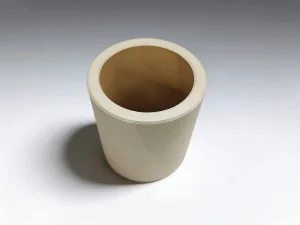
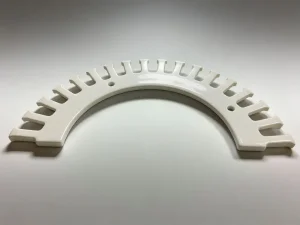
Wholesale Alumina Keramik Manufacturer & Factory

High-Purity Alpha-Alumina ($\alpha\text{-Al}_2\text{O}_3$), Precision Sintered Technical Ceramics, and Advanced Material Solutions for Semiconductor, Aerospace, Energy, and Industrial OEM/ODM Applications.

99.8%
Alpha Phase Purity
380+ MPa
Flexural Strength
1700°C
Thermal Stability
ISO 9001/13485
Certified Manufacturing
Technical Whitepaper & Material Fundamentals

Understanding High-Purity Alumina Keramik: Microstructure & Performance Dynamics

Alumina Keramik (Aluminum Oxide Ceramic, $\text{Al}_2\text{O}_3$) stands as the premier workhorse material of modern technical ceramics. Valued for its extraordinary combination of mechanical hardness, electrical insulation, chemical inertness, and thermal stability, Alumina Keramik operates reliably in extreme industrial environments where metals and polymers fail.

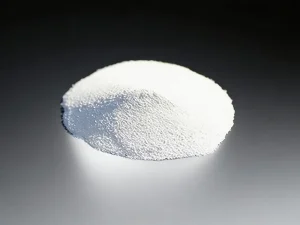
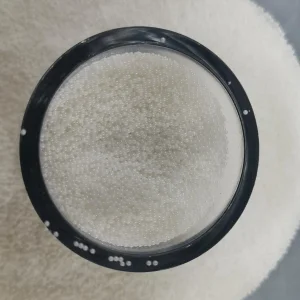
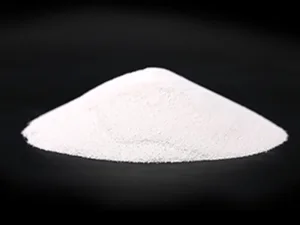
The crystal structure of technical-grade Alumina is overwhelmingly dominated by the hex-close-packed $\alpha\text{-Al}_2\text{O}_3$ (Corundum) phase. This tightly bound ionic-covalent atomic framework gives high-purity Alumina its exceptionally high Young's Modulus (up to $380 \text{ GPa}$) and high Mohs hardness of $9$. As a global wholesale manufacturer and OEM engineering factory, our production processes rigorously control grain boundary physics, raw powder particle size distribution ($D_{50} = 0.3 - 0.8 \, \mu\text{m}$), and sintering additives to maximize density and eliminate micro-porosity.

Dielectric & Electrical Strength
With an electrical resistivity exceeding $10^{14} \, \Omega\cdot\text{cm}$ and dielectric strength reaching $18-25 \text{ kV/mm}$, high-purity Alumina Keramik serves as critical substrate material in high-voltage vacuum feedthroughs, power electronics, and semiconductor processing equipment.
Extreme Thermal Resistance
Exhibiting continuous operating temperatures up to $1650^\circ\text{C}$ to $1700^\circ\text{C}$ under oxidizing and reducing atmospheres, Alumina maintains structural integrity, high creep resistance, and low thermal expansion ($\alpha = 8.0 \times 10^{-6}/\text{K}$).
Chemical Inertness & Corrosion
Alumina Keramik is virtually immune to acid and alkali attack, remaining stable when exposed to hydrofluoric acid alternatives, strong molten metals, organic solvents, and corrosive plasma environments encountered in microchip fabrication.

Depending on the end-user intent and operational demands, Alumina Keramik is synthesized into different purity thresholds:

  • 95% - 96% Alumina ($\text{Al}_2\text{O}_3$): Blended with silica and flux glass phases to improve machinability and lower sintering temperatures. Widely used for standard wear plates, spark plug insulators, electrical spacers, and fluid seals.
  • 99.0% - 99.5% Alumina ($\text{Al}_2\text{O}_3$): High-density engineered ceramic designed for high-stress mechanical components, chemical pump plungers, laser cavity tubes, and severe grinding environments.
  • 99.8% - 99.9% Ultra-High Purity Alumina (HPA): Sub-micron grain architecture produced via Cold Isostatic Pressing (CIP) and specialized vacuum sintering. Essential for semiconductor wafer handling tools, plasma etch rings, and optical-transparent window components.
Full Industrial Value Chain

Integrated OEM/ODM Ceramic Manufacturing Infrastructure

Founded in 2003, Yixing Qiangguang Ceramic Materials Co., Ltd. is a professional provider dedicated to the research and development (R&D), manufacturing, and application solutions of high-performance advanced ceramic materials. It is among the few enterprises in China that possess a complete industrial chain, covering key links from powder synthesis, spray drying, forming, high-temperature sintering, and precision CNC diamond machining to integrated application engineering solutions.

The company is also a rare domestic manufacturer engaged in the R&D, production, and supply of a comprehensive portfolio of advanced ceramic materials. Its product range spans zirconia, yttria, alumina, magnesia, aluminum nitride, boron nitride, silicon nitride, silicon carbide, aluminum titanate, and other key structural and functional ceramics for industrial use.

Adhering to the core principle of "creating value for customers", Qiangguang provides customized and cost-efficient advanced ceramic solutions tailored to the specific technical demands of global customers. Supported by high-quality after-sales engineering and a strict full-process tracking system, we effectively enhance project cooperation efficiency and promote continuous quality improvement.
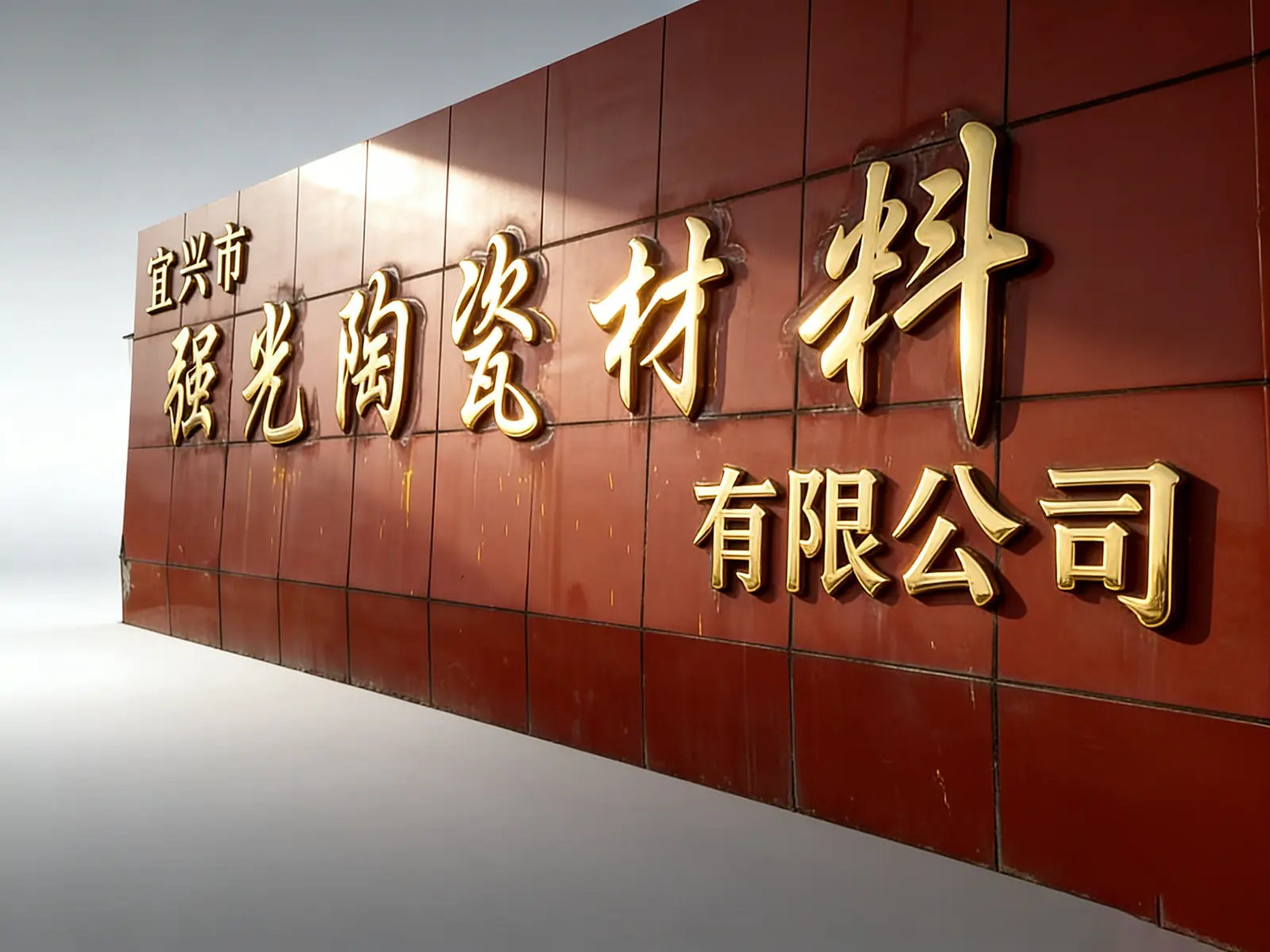
Yixing Qiangguang Ceramic Materials Manufacturing Facility
Global Footprint & Compliance

International Reach and Strict Compliance Protocols

Benefiting from excellent product performance and stable quality, Qiangguang's products are extensively utilized in various high-end fields, such as food and medical industries, new energy vehicles (NEVs), laser semiconductors, petrochemical engineering, powder metallurgy, national defense and military, as well as aerospace sectors.

At present, the company's products are sold well across China and exported to Italy, the United Kingdom, Australia, Japan, Malaysia, Thailand, Hungary, and other countries and regions. Committed to delivering high-quality products at reasonable direct-factory prices, Qiangguang sincerely looks forward to establishing long-term, strategic cooperative relations with global partners.
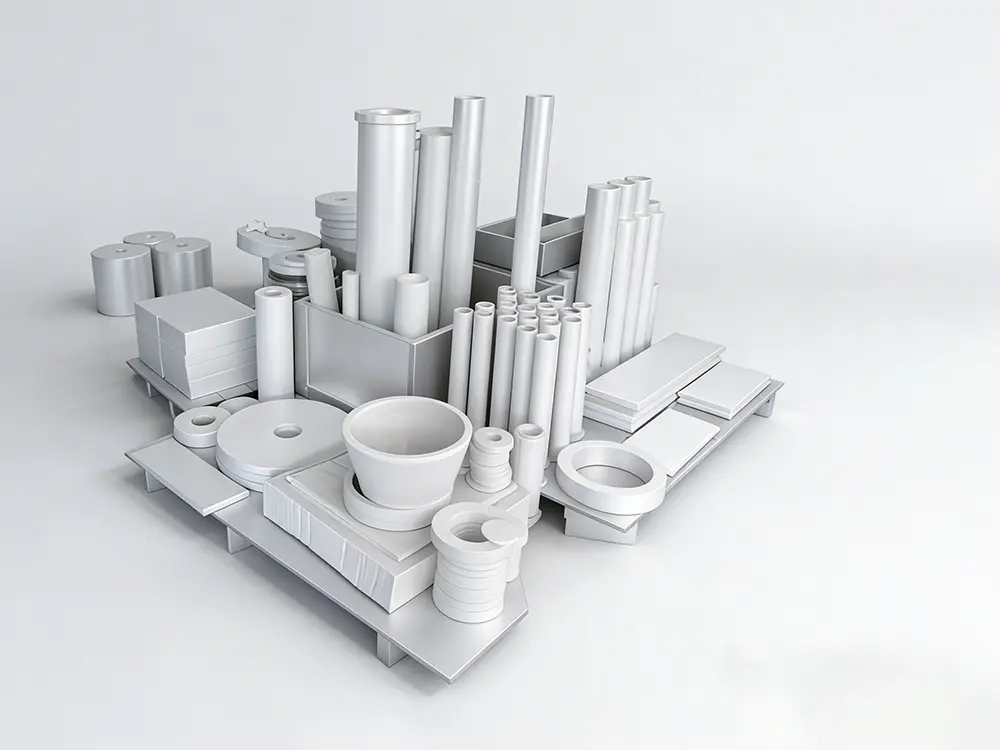
Precision Ceramic Component Testing and Inspection
Material Specification Benchmarking

Comparative Property Matrix: Alumina vs. Engineering Ceramic Alternates

Selecting the optimal technical ceramic requires balancing mechanical strength, thermal conductivity, fracture toughness, and cost efficiency. The matrix below benchmarks key parameters across our primary ceramic material lines:

Material Type Density (g/cm³) Flexural Strength (MPa) Thermal Conductivity (W/m·K) Max Service Temp (°C) Dielectric Strength (kV/mm)
Alumina ($\text{Al}_2\text{O}_3$ 95%) 3.65 330 18 - 22 1500 16
Alumina ($\text{Al}_2\text{O}_3$ 99.8%) 3.92 - 3.96 380 - 420 30 - 35 1700 22
Yttria Stabilized Zirconia (YSZ) 6.05 1000 - 1200 2.5 - 3.0 1200 10
Silicon Nitride ($\text{Si}_3\text{N}_4$) 3.25 850 - 950 30 - 35 1400 15
Aluminum Nitride (AlN) 3.30 320 - 350 170 - 200 1150 20
Silicon Carbide (SiC) 3.10 - 3.15 450 - 550 120 - 140 1600 --
Industry-Specific Applications

Wholesale Alumina Keramik: Engineering Solutions Across Global Sectors

Our custom-machined Alumina Keramik and advanced composite ceramics are key components for high-reliability systems worldwide. Through precision diamond grinding, CNC ultrasonic milling, and laser micro-drilling, we meet strict drawing tolerances up to $\pm 0.002 \, \text{mm}$.

Semiconductor & Vacuum Equipment
Used extensively in plasma etch processing, CVD deposition chambers, and wafer alignment tools. High-purity Alumina components ($\ge 99.8\%$) resist aggressive fluorine and chlorine plasma chemistry while maintaining zero outgassing under ultra-high vacuum conditions.
New Energy Vehicles & Battery Tech
Alumina Keramik insulators and arc-chutes provide high electrical isolation and thermal shock management in high-voltage EV power relays, DC fast-charging stations, and lithium-battery cathode slurry wet grinding systems.
Medical & Hygienic Fluid Handling
In compliance with FDA and ISO 13485 standards, our bio-inert ceramic metering plungers, volumetric dosing pistons, and ceramic valve seals deliver zero-contamination fluid control for pharmaceutical filling and diagnostic device pumps.
Petrochemical & Heavy Wear Solutions
Alumina-lined hydrocyclones, choke valves, mud pump sleeves, and slurry nozzles withstand severe solid particle erosion in oil drilling, mining slurry transport, and chemical process engineering.
Aerospace & Defense Subsystems
Providing lightweight armor tiles, high-frequency radar transparent radomes, laser cavity reflectors, and heat-resistant thermal shields engineered to operate under continuous severe vibration and high thermal gradients.
Advanced Powder Metallurgy
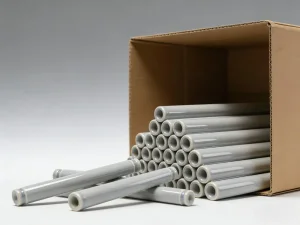
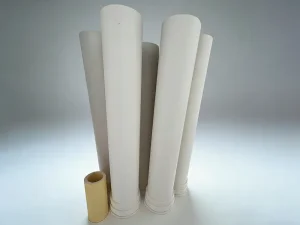
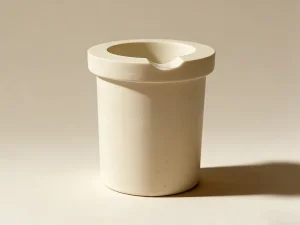
Sintering trays, pusher plates, crucibles, and thermal insulation tubes manufactured with pure Alumina and Magnesium Oxide matrix prevent cross-contamination during high-temperature metal powder synthesis.
Technology Roadmap

Next-Generation Ceramic Innovations & Manufacturing Outlook (2025–2030)

As industrial technology advances toward sub-nanometer semiconductor nodes, ultra-high voltage electrification, and extreme space exploration, Yixing Qiangguang ceramic research focuses on several technical developments:

1. Ceramic Additive Manufacturing (3D Printing)
Integrating Lithography-based Ceramic Manufacturing (LCM) and Stereolithography (SLA) to produce complex internal cooling channels, lightweight honeycombs, and custom non-standard Alumina geometries without requiring expensive diamond tooling.
2. Nano-Composite Microstructures
Developing Zirconia-Toughened Alumina (ZTA) and Alumina-Matrix Nanocomposites ($Al_2O_3/SiC$) that double the fracture toughness ($K_{IC} > 6.5 \text{ MPa}\cdot\text{m}^{1/2}$) while preserving original hardness and chemical inertness.
3. AI-Assisted Optical Defect Detection
Deploying high-speed machine vision vision systems combined with acoustic resonant spectroscopy to conduct 100% automated non-destructive evaluation (NDE) for sub-surface micro-cracks and density gradients before shipment.
Frequently Asked Questions

Technical Procurement & Engineering FAQ

Comprehensive responses to key technical, operational, and commercial questions asked by design engineers, procurement specialists, and global distributors.

Q1: How do I select between 95%, 99%, and 99.8% Alumina Keramik for my component application?
Selection depends primarily on mechanical wear, dielectric load, operating temperature, and budget constraints. 95% Alumina offers the best cost-to-performance ratio for general mechanical wear plates, low-voltage electrical spacers, and structural supports. 99% Alumina is chosen for high-wear mechanical seals, chemical pumps, and high-stress industrial components. 99.8%+ Ultra-High Purity Alumina is mandatory for semiconductor plasma chambers, medical implants, and high-frequency optical applications where zero glass phase impurity and maximum chemical inertness are required.
Q2: How does Yixing Qiangguang control volumetric dimensional shrinkage during high-temperature sintering?
Advanced Alumina ceramics undergo 15% to 22% volumetric shrinkage during high-temperature sintering (1650°C–1750°C). We achieve precise dimensional stability through uniform spray-dried powder grain control, high-pressure Cold Isostatic Pressing (CIP at >200 MPa) for consistent green density, customized sintering thermal profiles, and final high-precision CNC diamond grinding, lapping, and polishing to achieve tight tolerances up to $\pm 0.002 \, \text{mm}$.
Q3: What customized OEM/ODM options, drawing formats, and prototyping lead times are supported?
We accept standard 3D CAD step files (STEP, IGES, SolidWorks) and 2D technical drawings (DWG, DXF, PDF). Prototype tooling and green-state machining enable rapid sample delivery in 2 to 3 weeks, while full production tooling cycles take 4 to 6 weeks depending on component complexity and secondary grinding requirements.
Q4: What makes Alumina Keramik preferable over metallic alloys or engineering plastics?
Compared to metals like stainless steel or titanium, Alumina Keramik exhibits far higher hardness (Mohs 9 vs Mohs 5-6), zero oxidation, superior electrical isolation, and vastly superior resistance to abrasive wear. Compared to high-performance polymers (PEEK, PTFE), Alumina operates at temperatures well exceeding 1000°C without mechanical softening, degradation, or thermal expansion distortion.
Q5: What quality assurance certifications and testing procedures back international export orders?
Yixing Qiangguang operates under ISO 9001:2015 quality management and ISO 13485 medical device quality systems. All products comply with REACH and RoHS standard regulations. Prior to shipping, parts undergo 100% optical dimension verification via coordinate measuring machines (CMM), surface roughness measuring ($Ra \le 0.05 \, \mu\text{m}$ upon request), and ultrasonic micro-crack scanning.