Explore our precision-engineered ceramic powders, substrates, and grinding media tailored for ultra-high temperature, electronic, and corrosive applications.

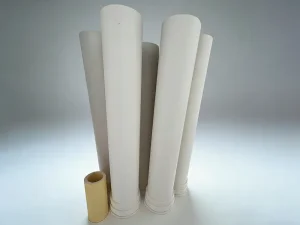
Understanding why Aluminum Nitride (AlN) is replacing traditional substrate materials in next-generation high-density power electronics, semiconductor processing, and optoelectronic packaging.
Aluminum Nitride (AlN) is a covalent technical ceramic crystallizing in the hexagonal wurtzite crystal structure (space group P63mc). Unlike metals where heat conduction is driven by free electrons, thermal conduction in non-metallic AlN occurs via quantized lattice vibrations known as phonons.
The theoretically predicted room-temperature thermal conductivity of single-crystal AlN reaches approximately 319 W/m·K. However, in polycrystalline industrial ceramics, phonon scattering at grain boundaries, mass defects, and oxygen impurity substitutes (where oxygen atoms replace nitrogen atoms, creating aluminum vacancies) reduce practical thermal conductivity to between 170 W/m·K and 230 W/m·K. Achieving maximum thermal conductivity requires precise stoichiometry and sintering additives like Yttria (Y₂O₃) to purge oxygen from the AlN lattice.
A critical limitation of traditional Alumina (Al₂O₃) substrates in high-power semiconductor modules is CTE mismatch. Silicon (Si) has a CTE of ~2.6–3.5 x 10⁻⁶/K, and Gallium Nitride (GaN) exhibits ~4.5 x 10⁻⁶/K. Alumina's higher CTE (~7.2 x 10⁻⁶/K) induces severe thermal stresses, leading to solder fatigue, micro-cracking, and premature device failure under cyclic thermal loads.
Aluminum Nitride provides a CTE of 4.5 x 10⁻⁶/K (between 20°C and 400°C), perfectly matching wide-bandgap semiconductor materials such as GaN and Silicon Carbide (SiC). This thermal expansion compatibility minimizes interfacial shear stress, enabling long-term operational reliability in automotive EV inverters, 5G RF transmitters, and aerospace power conversion systems.
The following multi-property comparative data table provides structural design engineers and B2B procurement managers with verified physical, electrical, and thermal metrics to make informed material selection decisions.
| Material Property | Aluminum Nitride (AlN) | Alumina (Al₂O₃ 96%) | Beryllium Oxide (BeO) | Silicon Nitride (Si₃N₄) | Silicon Carbide (SiC) |
|---|---|---|---|---|---|
| Thermal Conductivity (W/m·K) | 170 – 230 | 24 – 30 | 250 – 280 | 80 – 90 | 120 – 270 |
| CTE (x10⁻⁶/K, 20-400°C) | 4.5 | 7.2 | 8.0 | 3.2 | 4.0 |
| Electrical Resistivity (Ω·cm) | > 10¹⁴ | ">> 10¹⁴ ">> 10¹⁴ ">> 10¹³10² – 10⁶ | |||
| Dielectric Constant (1 MHz) | 8.5 – 9.0 | 9.8 | 6.7 | 7.8 | ~ 10.0 |
| Dielectric Loss (tan δ, 1 MHz) | < 0.0005 | 0.0003 | 0.0004 | 0.001 | 0.005 |
| Flexural Strength (MPa) | 300 – 400 | 330 | 230 | 700 – 900 | 450 |
| Toxicity / Environmental Risk | Non-Toxic / Safe | Non-Toxic / Safe | Highly Toxic (Berylliosis) | Non-Toxic / Safe | Non-Toxic / Safe |
A detailed examination of mechanical integrity, electrical insulation, dielectric breakdown behavior, and chemical resistance under extreme operating conditions.
Aluminum Nitride boasts exceptional volume resistivity (>10¹⁴ Ω·cm) at room temperature, which remains exceptionally high even at elevated temperatures up to 500°C. Its dielectric breakdown strength exceeds 15–20 kV/mm, rendering it ideal for high-voltage power electronics module substrates (IGBTs, MOSFETs) where severe voltage gradients occur across minimal thickness layers.
With a stable dielectric constant (k ≈ 8.5–9.0) across radio frequencies extending into the millimeter-wave spectrum (up to 40 GHz) and an ultra-low dielectric loss tangent (tan δ < 0.0005), AlN minimizes signal attenuation, parasitic capacitance, and electromagnetic absorption in high-frequency wireless communications, radar systems, and RF power amplifiers.
AlN is chemically inert against many molten metals including aluminum, copper, lithium, and gallium. It resists corrosion by halide plasma gases (fluorine and chlorine-based plasmas) used during semiconductor plasma etching and chemical vapor deposition (CVD), making AlN the material of choice for electrostatic chucks (ESC) and semiconductor chamber heaters.
An analysis of raw material synthesis routes, wholesale pricing dynamics, regional manufacturing centers, and key growth drivers across the semiconductor and energy sectors.
The performance of sintered AlN components heavily relies on the initial powder synthesis method. Two dominant industrial routes exist:
The global Aluminum Nitride market is projected to expand at a compound annual growth rate (CAGR) exceeding 8.4% through 2032, driven by three major industrial megatrends:
Detailed integration scenarios of Aluminum Nitride across North American, European, and Asian high-tech manufacturing ecosystems.
In North America, AlN is heavily utilized in defense radar systems (AESA radars), satellite communication payloads, and high-frequency military avionics. The high thermal stability allows RF power amplifiers (GaN-on-SiC or GaN-on-AlN) to operate reliably at extreme power densities without thermal throttling.
European automotive OEMs and Tier-1 suppliers integrate AlN Direct Bonded Copper (DBC) and Active Metal Brazed (AMB) substrates into EV traction inverters and wind-turbine power converters. AlN's mechanical strength combined with high conductivity extends module lifespan under intense thermal cycling.
In East Asia (China, Japan, South Korea, Taiwan), AlN is vital for high-density semiconductor fabrication lines. Applications include AlN electrostatic chucks (ESC) for 300mm wafer processing, high-power LED packaging for automotive lighting, and consumer electronics thermal interface fillers.
Bridging raw AlN ceramic substrates with functional electric circuitry through cutting-edge metal bonding processes.
To connect electrical circuitry to raw AlN ceramic plates, advanced metallization techniques are implemented:
Due to AlN's hardness (Mohs ~8-9, Vickers ~11-12 GPa), precision post-sintering operations are required:
Yixing Qiangguang Ceramic Materials Co., Ltd. delivers end-to-end engineered ceramic solutions across raw powder processing, sintering, and high-precision diamond machining.
Founded in 2003, Yixing Qiangguang Ceramic Materials Co., Ltd. is a professional provider dedicated to the research and development (R&D), manufacturing, and application solutions of high-performance advanced ceramic materials. It is among the few enterprises in China that possess a complete industrial chain, covering key links from powder forming, sintering and precision machining to the provision of integrated application solutions.
The company is also a rare domestic manufacturer engaged in the R&D, production, and supply of a comprehensive portfolio of ceramic materials. Its product range covers zirconia, yttria, alumina, magnesia, aluminum nitride, boron nitride, silicon nitride, silicon carbide, aluminum titanate and other key ceramic materials for industrial use.
Benefiting from excellent product performance and stable quality, its products are extensively utilized in various high-end fields, such as food and medical industries, new energy vehicles, laser semiconductors, petrochemical engineering, powder metallurgy, national defense and military, as well as aerospace sectors.
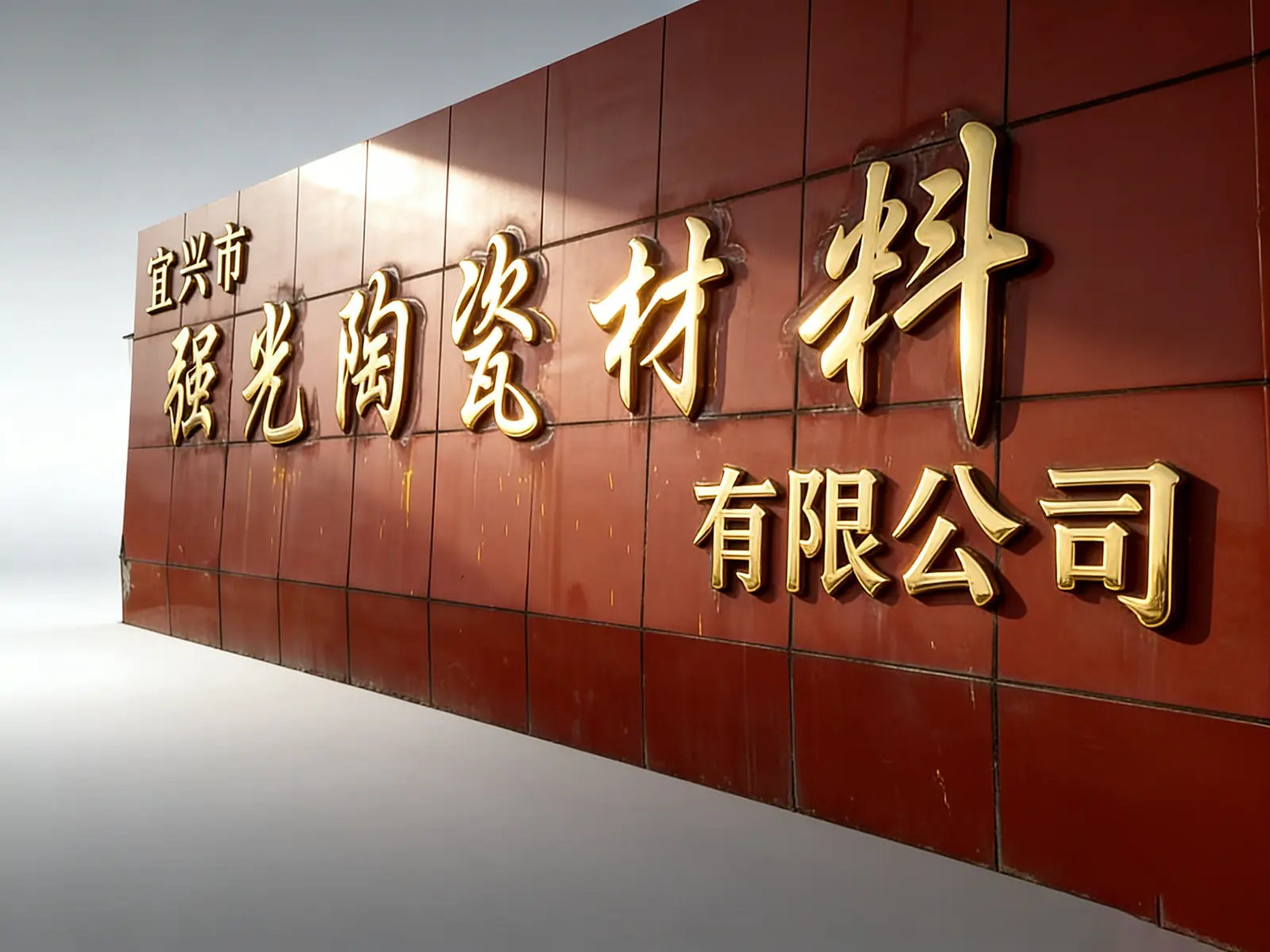
Our Principle: Adhering to the core principle of "creating value for customers", Qiangguang provides customized and cost-efficient advanced ceramic solutions tailored to the specific demands of different customers. It is supported by high-quality after-sales services and a strict full-process tracking system, which effectively enhances cooperation efficiency and promotes continuous quality improvement.
Global Presence: At present, the company's products are sold well across the country and exported to Italy, the United Kingdom, Australia, Japan, Malaysia, Thailand, Hungary and other countries and regions. Committed to delivering high-quality products at reasonable prices, Qiangguang sincerely looks forward to establishing long-term and stable cooperative relations with global partners.
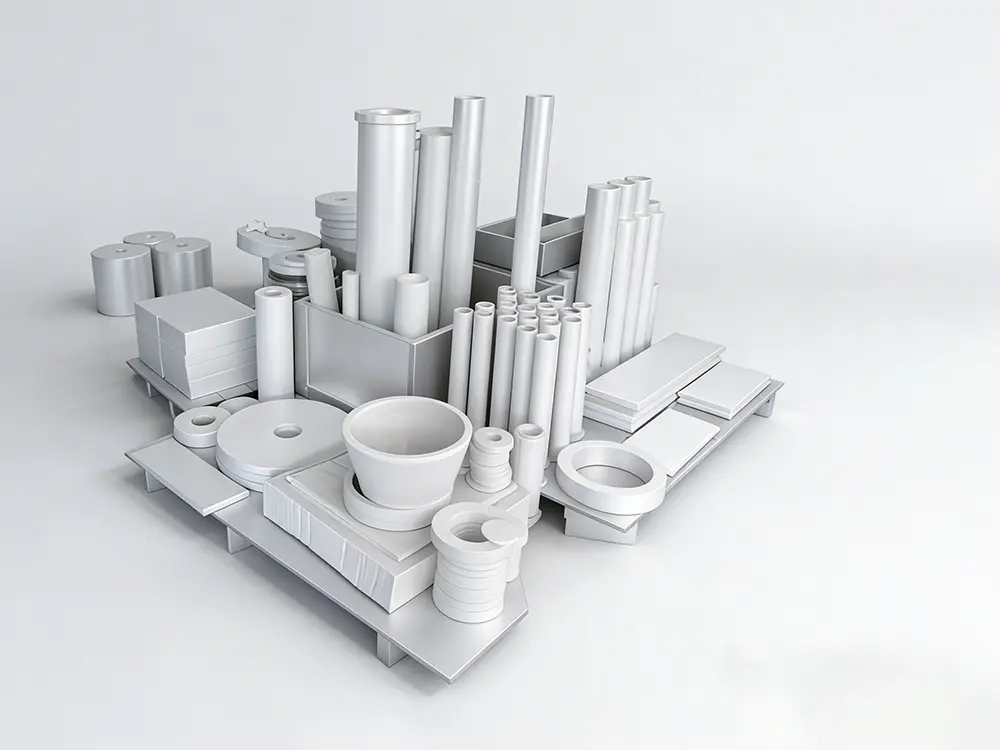
Engineers and procurement experts frequently ask the following questions regarding material choice, thermal limits, surface processing, and custom manufacturing.
Browse our full range of structural, electrical, and thermal ceramic materials engineered for global industrial OEMs.