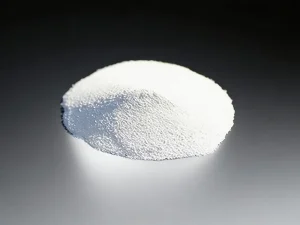
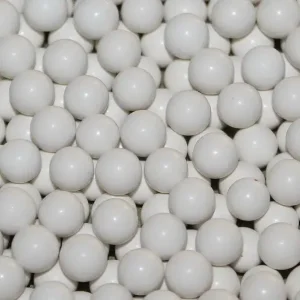
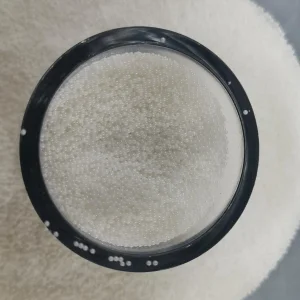
Explore our factory-direct precision-engineered ceramic chemicals, high-purity powders, and structural ceramic components formulated for high wear, thermal shock, and severe chemical environments.
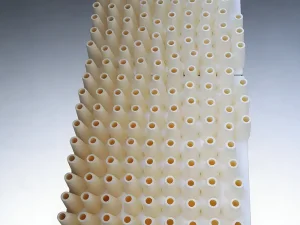
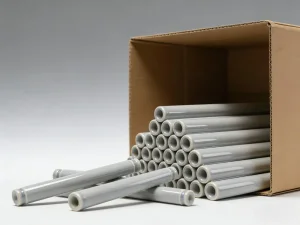
In the contemporary landscape of global industrial manufacturing, pottery chemicals and advanced ceramic formulations serve as the foundational backbone for high-tech, high-temperature, and wear-intensive applications. Far beyond traditional clay processing and structural tableware, the modern chemical engineering of ceramic materials encompasses sub-micron powder synthesis, inorganic phase stabilization, slip rheology modifiers, specialty glazes, sintering aids, and high-purity metal oxide precursors.
China has established itself as the world’s most robust epicentre for pottery chemical innovation, raw material purification, and end-to-end component fabrication. Powered by scalable supply chains, advanced thermal sintering techniques (such as Spark Plasma Sintering and Hot Isostatic Pressing), and rigorous international quality control, top-tier Chinese manufacturers empower global enterprises to achieve unprecedented thermal stability, corrosion immunity, and dielectric isolation.
The industry term "Pottery Chemicals" spans a comprehensive spectrum of inorganic material additives, synthesized chemical compounds, and technical ceramic powders. Modern procurement requires understanding the stoichiometric precision required in Yttria-Stabilized Zirconia (3YSZ, 5YSZ, 8YSZ), Magnesium-Stabilized Zirconia (MSZ), Silicon Nitride ($Si_3N_4$), and Aluminium Titanate ($Al_2TiO_5$) to prevent phase transition failure under extreme operational stress.
Founded in 2003, Yixing Qiangguang Ceramic Materials Co., Ltd. is a professional provider dedicated to the research and development (R&D), manufacturing, and application solutions of high-performance advanced ceramic materials. It is among the few enterprises in China that possess a complete industrial chain, covering key links from powder forming, sintering and precision machining to the provision of integrated application solutions.
The company stands out as a rare domestic manufacturer engaged in the R&D, production, and supply of a comprehensive portfolio of ceramic materials. Its product range covers zirconia, yttria, alumina, magnesia, aluminum nitride, boron nitride, silicon nitride, silicon carbide, aluminum titanate and other key ceramic materials for industrial use.
Adhering to the core principle of "creating value for customers", Qiangguang provides customized and cost-efficient advanced ceramic solutions tailored to the specific demands of different customers. It is supported by high-quality after-sales services and a strict full-process tracking system, which effectively enhances cooperation efficiency and promotes continuous quality improvement.
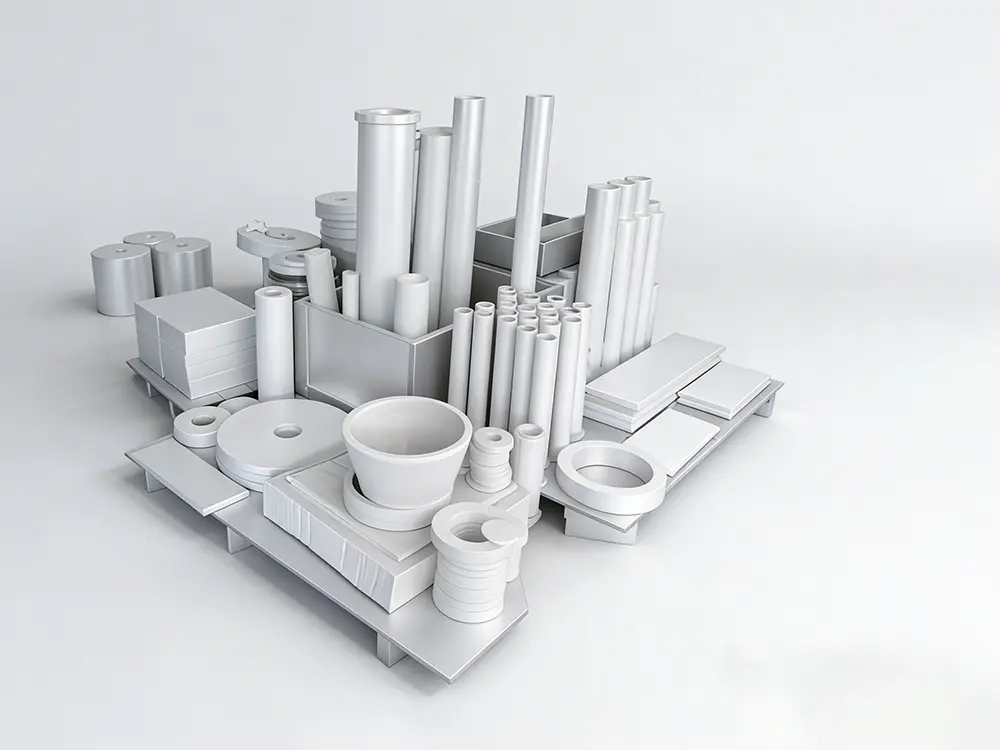
Benefiting from excellent product performance and stable quality, its products are extensively utilized in various high-end fields, such as food and medical industries, new energy vehicles, laser semiconductors, petrochemical engineering, powder metallurgy, national defense and military, as well as aerospace sectors.
At present, the company's products are sold well across China and exported to Italy, the United Kingdom, Australia, Japan, Malaysia, Thailand, Hungary and other countries and regions. Committed to delivering high-quality products at reasonable prices, Qiangguang sincerely looks forward to establishing long-term and stable cooperative relations with global partners.
Understanding the precise chemistry and thermomechanical boundaries of oxide and non-oxide ceramics is paramount for high-reliability engineering applications.
| Material Family | Chemical Formula | Purity / Dopant Level | Max Temp (°C) | Key Physical Attributes | Primary Industrial Domain |
|---|---|---|---|---|---|
| High-Purity Alumina | $Al_2O_3$ | 99.5% – 99.99% | 1650 - 1750 | Dielectric strength, extreme hardness, chemical wear resistance | Semiconductors, Electrical Insulators, Grinding Media |
| Yttria-Stabilized Zirconia (YSZ) | $ZrO_2 + Y_2O_3$ | 3 mol% – 8 mol% $Y_2O_3$ | 1500 - 2400 | Stress-induced transformation toughening, zero porosity | Biomedical Implants, Precision Valves, Structural Components |
| Magnesia-Stabilized Zirconia (MSZ) | $ZrO_2 + MgO$ | 3.5 wt% - 4.5 wt% $MgO$ | 1400 - 1800 | High thermal shock resistance, coarse grain toughness | Molten Metal Handling, Extrusion Dies, Refractories |
| Calcium-Stabilized Zirconia (CSZ) | $ZrO_2 + CaO$ | 4 wt% - 6 wt% $CaO$ | 1500 - 2200 | Cost-efficient stabilization, severe slag resistance | Metallurgical Sensors, Foundry Refractory Lining |
| Silicon Nitride | $Si_3N_4$ | High $\alpha$-phase powder | 1400 - 1650 | Ultra-low coefficient of friction, high thermal conductivity | EV Bearings, Machining Inserts, Turbocharger Rotors |
| Aluminium Titanate | $Al_2TiO_5$ | Stoichiometric blend | 1000 - 1400 | Near-zero thermal expansion, non-wetting by molten aluminium | Non-Ferrous Die Casting, Low-Pressure Foundry Riser Tubes |
Yttria-Stabilized Zirconia utilizes tetragonal-to-monoclinic phase transformations under crack tip stress. This volumetric expansion creates localized compressive forces that actively retard crack propagation, yielding superior fracture toughness up to 12.5 $MPa\cdot m^{1/2}$.
The performance of advanced pottery chemical powders relies on controlled spray drying. By optimizing dispersants, binders, and defoamers, our ceramic slurries achieve narrow particle size distributions ($D_{50} = 0.4 - 0.8 \mu m$) and optimal green density during pressing.
Utilizing high-precision atmosphere kilns, thermal sintering regimes are engineered to eliminate micro-voids. Sintering additive control prevents abnormal grain growth, ensuring high density (>99.5% theoretical density) and zero fluid micro-leakage.
Pioneering the next decade of ceramic chemistry: low-carbon synthesis, smart coating functionalization, and additive manufacturing feedstock development.
Future regulatory environments mandate the phase-out of toxic heavy-metal fluxes. Chemical engineering efforts are focused on zero-lead, low-barium, and zero-cadmium inorganic formulations. By utilizing alkali-aluminosilicate glass matrices and rare-earth colorants, next-generation pottery chemical glazes achieve brilliant optics while lowering firing temperatures by 120°C, drastically reducing industrial carbon emissions.
The revolution in ceramic 3D printing (Stereolithography, Selective Laser Sintering, Binder Jetting) requires custom pottery chemical slurries with specialized UV-curable resins and non-Newtonian flow behavior. China's chemical research is pioneering sub-micron ceramics loaded into low-viscosity monomer solutions, enabling complex lattice structures and unmachinable geometries with zero stress risers.
Integrating photocatalytic titanium dioxide ($TiO_2$) nanoparticles and silver nano-zeolites directly into the glaze slurry produces multifunctional ceramic surfaces. These coatings continuously degrade organic compounds and pathogens under ambient light while exhibiting super-hydrophobic surface angles (>150°), making them ideal for healthcare and high-hygiene food processing facilities.
High-Entropy Ceramics representing multi-component solid solutions (containing five or more principal cations in equal atomic proportions) offer extreme thermal isolation and mechanical robustness. Chemical synthesis of HEO powders opens unprecedented performance limits for aerospace heat shields, hypersonic radomes, and next-gen nuclear cladding.
Tailored material formulations engineered to resolve extreme stress, severe chemical corrosion, and critical electrical isolation challenges.
Ultra-pure Alumina (99.99%) and Aluminum Nitride ($AlN$) substrates provide unmatched thermal dissipation ($\ge 180 W/m\cdot K$) while maintaining complete electrical resistance. Used extensively in wafer chucks, plasma etching chambers, and high-frequency IC packaging.
Zirconia ceramic beads provide contamination-free ultrafine milling of cathode materials ($LFP$, $NMC$). Silicon Nitride ceramic balls form the core of high-speed EV motor bearings, eliminating electrical fluting and expanding drivetrain longevity.
High-purity Yttria-Stabilized Zirconia (3YSZ-SD) meets strict ISO 13356 standards for surgical implants, hip joint prosthetics, and dental CAD/CAM blocks, offering non-allergic biocompatibility, high flexural strength (>1200 MPa), and permanent aesthetic opacity.
Corrosion-proof ceramic valve trims, metering pumps, and hydrocyclone liners fabricated from Magnesia-Stabilized Zirconia withstand aggressive acids, alkaline slurries, and high-velocity abrasive particulate flows without degradation.
Silicon Carbide ($SiC$) and Silicon Nitride ($Si_3N_4$) components deliver unmatched strength-to-weight ratios under thermal shock environments exceeding 1400°C, utilized in rocket nozzle inserts, turbine seals, and armor plating.
Aluminium Titanate riser tubes and stalk tubes deliver non-wetting performance when in direct contact with molten aluminium alloys. Thermal shock resistance ensures zero structural spalling over thousands of casting cycles.
Combining fully automated ceramic powder synthesis, AI-monitored kiln firing, and raw material cluster integration to ensure uncompromised quality and cost efficiencies.
Unlike isolated component assemblers, leading Chinese manufacturers operate complete industrial chains: chemical precipitation, spray-drying atomization, Cold Isostatic Pressing (CIP), 5-axis CNC green machining, high-temperature sintering, and diamond surface grinding.
Modern Industry 4.0 kilns utilize continuous closed-loop infrared sensor arrays and automated atmosphere control. Firing profiles are continuously adjusted to eliminate thermal gradients, guaranteeing microstructural uniformity across large volume production runs.
Located in Yixing—the world-renowned ceramic capital of China—our operations leverage hyper-localized supply chains for raw rare-earth oxides, specialized chemical additives, precision tooling, and fast export logistics through Shanghai Port.
Navigating technical specifications, quality control validation, and international shipping protocols for high-value pottery chemical and ceramic imports.
Global B2B buyers require detailed Material Data Sheets (MDS) outlining exact stoichiometric ratios, chemical purity ($Al_2O_3 \ge 99.7\%$, $ZrO_2 + Y_2O_3 \ge 99.5\%$), grain size ($D_{10}, D_{50}, D_{90}$), bulk density, flexural strength ($MPa$), and thermal expansion coefficient ($10^{-6}/K$). Quality assurance protocols include batch X-Ray Diffraction (XRD) and Scanning Electron Microscopy (SEM) analysis.
Engineered ceramic components demand precise tolerances ($\pm 0.005 mm$). Sourcing partners must offer rapid green-machining prototyping, custom slip preparation, mold tooling design, and finite element analysis (FEA) thermal stress simulation before mass production.
Enterprise procurement relies on tight statistical process controls ($C_{pk} \ge 1.67$). Sintering shrinkage rates (typically 15-22%) must be precisely offset during powder compaction and green-state machining to guarantee 100% dimensional adherence.
Given the brittle nature of advanced ceramics and the moisture sensitivity of chemical powders, export shipments must utilize vacuum-sealed moisture barrier bags, shock-absorbing custom EVA foam cutouts, robust wooden crates, and ISPM-15 compliant pallets for transit safety.
Navigating cross-border regulatory frameworks is essential for seamless international procurement. Our products and chemical manufacturing operations fully align with major global environmental and safety standards:
All pottery chemical additives, oxides, and glazes are free from restricted Substances of Very High Concern (SVHC), complying fully with European REACH and RoHS directives for chemical safety.
Facilities maintain triple ISO certifications: ISO 9001 (Quality Management), ISO 14001 (Environmental Management), and ISO 45001 (Occupational Health & Safety).
Dedicated multi-lingual technical engineering teams in Europe, North America, and Southeast Asia provide localized design consulting, material selection support, and rapid RMA handling.
Expert answers to common engineering, chemical formulation, and international supply chain queries.
Yttria-Stabilized Zirconia (YSZ, typically 3mol% $Y_2O_3$) exhibits sub-micron grain size, extremely high flexural strength (900–1200 MPa), and room-temperature fracture toughness, making it ideal for precision mechanical seals, medical implants, and structural components. Magnesia-Stabilized Zirconia (MSZ), however, possesses a coarser grain structure with superior resistance to thermal shock and thermal cycling environments above 1000°C. MSZ is preferred for molten metal casting, extrusion dies, and heavy-duty industrial valves.
Alumina ($Al_2O_3$) performance directly scales with chemical purity. 95% Alumina contains glassy phase silica boundaries, offering economical wear resistance for general industrial tiles and grinding media. 99.7% High-Purity Alumina eliminates silica boundaries, offering exceptional dielectric strength and high-temperature mechanical load resistance. 99.99% Ultra-High Purity Alumina is mandatory for semiconductor plasma processing components, wafer carriers, and optical sapphire substrates where micro-contamination is strictly unacceptable.
Silicon Nitride ($Si_3N_4$) possesses a density roughly 40% that of bearing steel, reducing centrifugal forces at extreme RPMs. It exhibits an extremely low friction coefficient, high thermal conductivity, and complete dielectric insulation. This prevents electrical pitting (fluting) caused by stray electrical currents in EV electric motors and high-frequency machine tool spindles.
Yes. Yixing Qiangguang operates in-house powder synthesis and slurry rheology laboratories. We formulate custom pottery chemical slurries tailored to specific slip casting, tape casting, spray drying, or 3D printing requirements, adjusting binder systems, solid loading ratios, dispersant chemistry, and $D_{50}$ particle sizes.
Ceramic green bodies shrink between 15% and 22% during sintering. We utilize high-precision dilatometry analysis to calculate accurate linear shrinkage factors. Combined with Cold Isostatic Pressing (CIP) for uniform green density and multi-axis CNC green-machining, final sintered dimensions maintain strict tolerances ($\pm 0.5\%$ standard, down to $\pm 0.005 mm$ following diamond grinding).
Aluminium Titanate features a unique micro-cracked crystal structure that yields an extremely low coefficient of thermal expansion ($\approx 1 \times 10^{-6}/K$). Chemically, it exhibits negligible chemical affinity for molten aluminium, zinc, and magnesium alloys. Molten metal cannot adhere to or wet the ceramic surface, making it the industry benchmark for low-pressure die-casting riser tubes and dosing spouts.
Standard stock powders and grinding media have low MOQs starting at 25 kg. Custom component engineering orders typically feature a 2 to 3-week lead time for green-machined prototypes and 4 to 6 weeks for full production runs, including custom tooling creation and diamond grinding processes.
Every shipment is accompanied by a comprehensive Certificate of Analysis (COA) specifying chemical composition, X-ray diffraction phase analysis, laser diffraction particle size metrics, and mechanical hardness test results for complete quality verification.
Select from our standard inventory of high-performance zirconia powders, stabilized ceramic oxides, titanates, and grinding media.