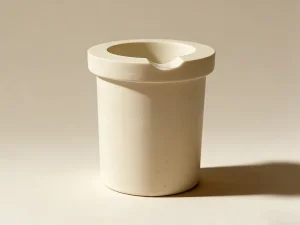
Explore our engineered industrial ceramic components and micronized dispersion media manufactured to sub-micron tolerances for extreme thermal, wear, and corrosive environments.
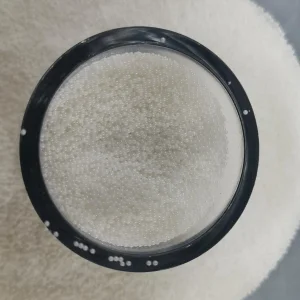
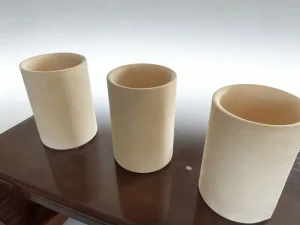
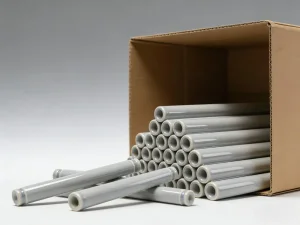
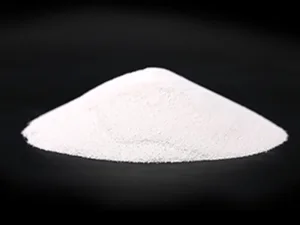
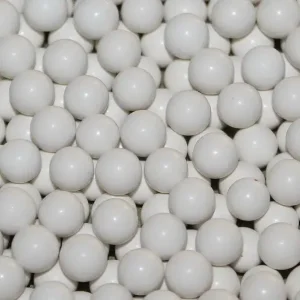
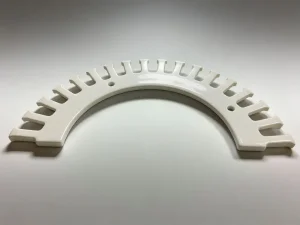
Understanding the paradigm shift toward extreme-temperature, ultra-wear-resistant, and chemically inert structural materials across global advanced manufacturing supply chains.
Modern industrial applications in aerospace, semiconductor fabrication, and deep-sea energy exploration operate beyond the mechanical limits of traditional metals and polymers. Advanced technical ceramics provide zero thermal expansion drift, exceptional dielectric breakdown strength, and immunity to acid-alkali corrosion.
Global original equipment manufacturers (OEMs) require dimensional tolerances down to $\pm 0.001\text{ mm}$ ($1\text{ }\mu\text{m}$) and surface roughness finishes of $Ra < 0.005\text{ }\mu\text{m}$. High-precision Chinese factories utilize multi-axis CNC diamond grinding and Hot Isostatic Pressing (HIP) to deliver structural integrity without micro-cracking.
By replacing rapidly degrading alloy sleeves, bearings, and nozzles with custom-formulated Zirconia ($ZrO_2$) or Silicon Nitride ($Si_3N_4$) components, industrial enterprises reduce plant downtime by up to 600%, drastically reducing lifecycle maintenance overhead.
A complete end-to-end ecosystem spanning chemical synthesis, precision powder forming, high-temperature sintering, and sub-micron diamond finishing.
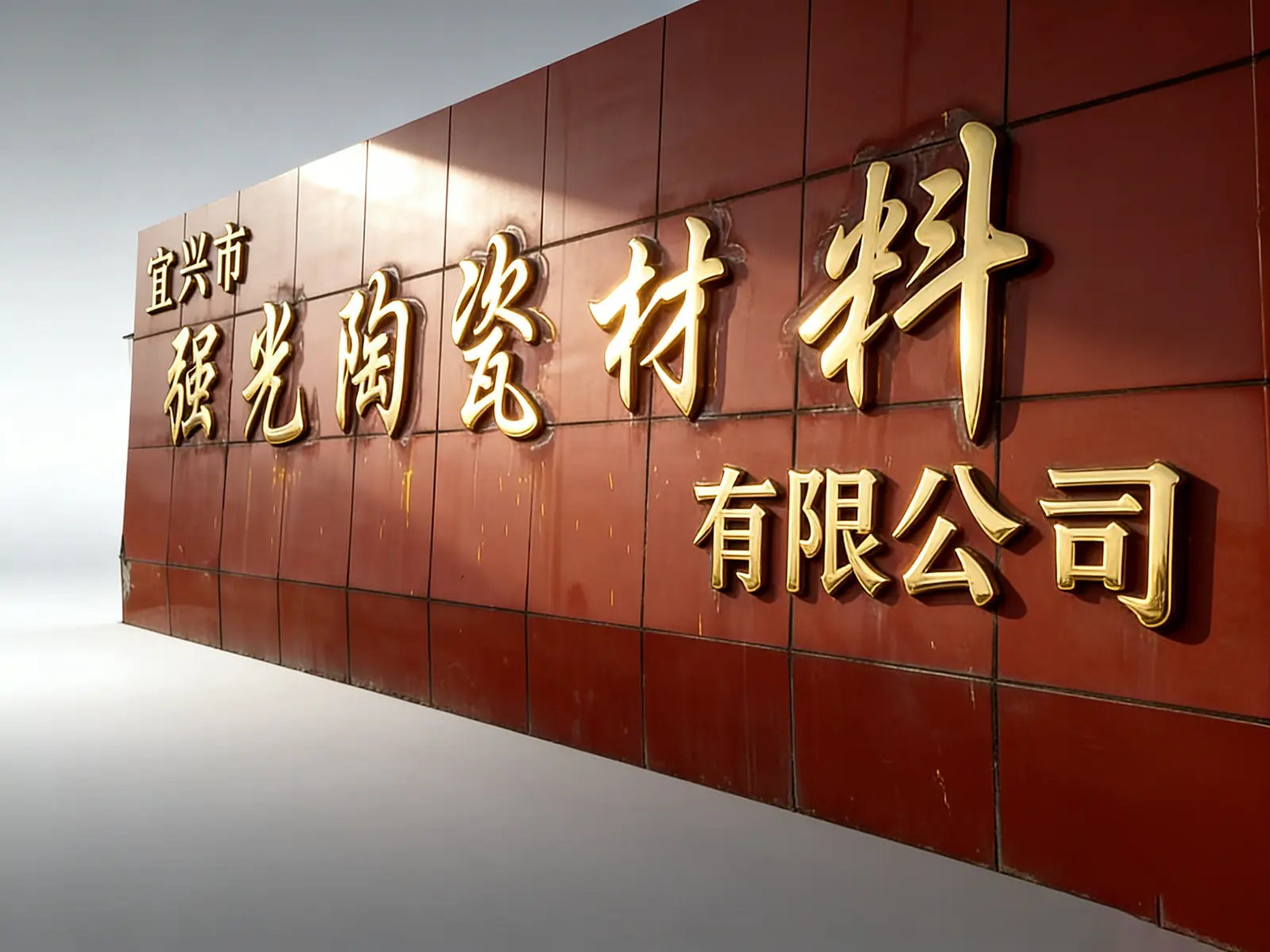
Founded in 2003, Yixing Qiangguang Ceramic Materials Co., Ltd. is a professional provider dedicated to the research and development (R&D), manufacturing, and application solutions of high-performance advanced ceramic materials. It is among the few enterprises in China that possess a complete industrial chain, covering key links from powder forming, sintering and precision machining to the provision of integrated application solutions.
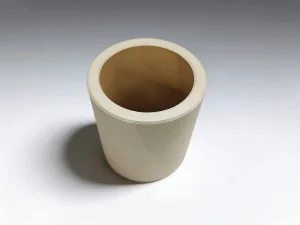
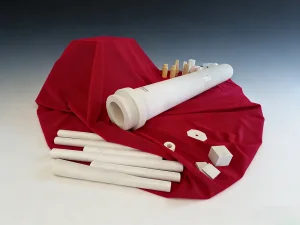
The company is also a rare domestic manufacturer engaged in the R&D, production, and supply of a comprehensive portfolio of ceramic materials. Its product range covers zirconia, yttria, alumina, magnesia, aluminum nitride, boron nitride, silicon nitride, silicon carbide, aluminum titanate and other key ceramic materials for industrial use.
Benefiting from excellent product performance and stable quality, its products are extensively utilized in various high-end fields, such as food and medical industries, new energy vehicles, laser semiconductors, petrochemical engineering, powder metallurgy, national defense and military, as well as aerospace sectors.
From raw material nano-scale co-precipitation to gas-pressure sintering, eliminating vendor intermediary variance.
Tailored phase stabilization (YSZ, MSZ, CSZ) formulated to meet exact operational friction, impact, and thermal parameters.
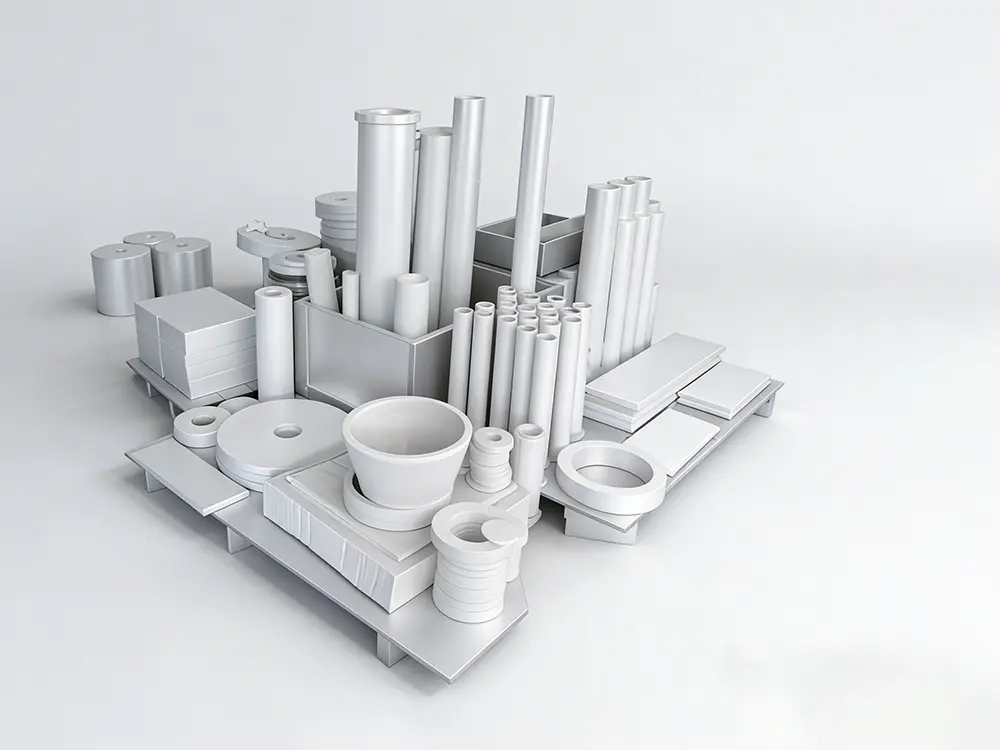
Adhering to the core principle of "creating value for customers", Qiangguang provides customized and cost-efficient advanced ceramic solutions tailored to the specific demands of different customers. It is supported by high-quality after-sales services and a strict full-process tracking system, which effectively enhances cooperation efficiency and promotes continuous quality improvement.
At present, the company's products are sold well across the country and exported to Italy, the United Kingdom, Australia, Japan, Malaysia, Thailand, Hungary and other countries and regions. Committed to delivering high-quality products at reasonable prices, Qiangguang sincerely looks forward to establishing long-term and stable cooperative relations with global partners.
A detailed technical breakdown of crystal structures, mechanical properties, and functional performance profiles designed for extreme OEM industrial operations.
Yttria-Stabilized Zirconia (3Y-TZP) & Magnesia-Stabilized (MSZ): Known as "Ceramic Steel," stabilized zirconia exhibits stress-induced phase transformation toughening (tetragonal to monoclinic). This mechanism absorbs crack propagation energy, delivering fracture toughness ($K_{IC}$) up to $8\text{--}10\text{ MPa}\cdot\text{m}^{1/2}$ and flexural strength exceeding $1200\text{ MPa}$.
Gas-Pressure Sintered Silicon Nitride (GPSN) offers unparalleled thermal shock resistance ($\Delta T = 850^\circ\text{C}$), low coefficient of friction, and high dynamic load capacity. It is the premier material for high-speed ceramic bearing balls, molten metal handling valves, and turbocharger rotors in automotive and aerospace propulsion.
Providing exceptional thermal conductivity ($170\text{--}230\text{ W/m}\cdot\text{K}$) combined with high electrical resistivity and a thermal expansion coefficient closely matching Silicon ($Si$), AlN substrates are critical for high-power IGBT modules, laser diode heat sinks, and semiconductor processing chucks.
Synthesized at purity levels up to $99.99\%$ (4N), high-purity alumina offers exceptional dielectric strength, high hard-wear durability, and supreme economic efficiency. Used widely in electrical insulators, pump plungers, sandblasting nozzles, and high-efficiency chemical grinding media.
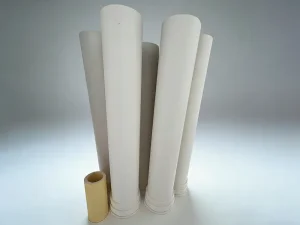
Exhibiting ultra-low thermal expansion and excellent non-wetting properties against molten non-ferrous metals (such as aluminum alloys), aluminum titanate is the ultimate technical ceramic for riser tubes, port liners, and casting nozzles in low-pressure die casting foundries.
Featuring extreme temperature endurance (up to $2400^\circ\text{C}$ in inert conditions), high thermal conductivity, and chemical stability against basic slag, MgO ceramics serve as essential crucible containers for rare earth sintering and nuclear fuel processing.
Analyzing the systemic structural, technological, and supply chain efficiencies that position Chinese high-precision manufacturers at the forefront of international trade.
Leveraging fully integrated tooling and CAD-to-sintering workflows, Chinese manufacturers reduce sample prototype lead times from months to as few as 10 to 14 business days, accelerating global client R&D cycles.
China commands over 70% of global refined zircon sand, rare earth oxides (Yttrium, Cerium), and high-purity alumina raw material processing, insulating global buyers from supply disruptions and price volatility.
Implementation of 3D Optical CMM measurement, ultrasonic flaw detection, and laser diffraction particle size analysis guarantees strict ISO 9001 and IATF 16949 international compliance across batch outputs.
Whether producing micro-dispersion beads under $0.1\text{ mm}$ or massive $1500\text{ mm}$ semiconductor chamber rings, Chinese production lines adapt seamlessly to low-volume high-mix or high-volume standard runs.
From semiconductor lithography cleanrooms to ultra-fine nano-dispersion wet mills, discover how precision ceramics drive multi-industry performance.
Aluminum Nitride (AlN) substrates and Silicon Carbide (SiC) vacuum chucks provide ultra-flat, particle-free environments for wafer handling, plasma etching, and high-power laser diode thermal dissipation.
Yttria-Stabilized Zirconia (YSZ) implants, dental blanks, and joint prostheses deliver biocompatibility, zero metallic ion release, and fracture toughness suitable for decades of in-vivo bodily loading.
Ultra-fine Zirconia grinding beads down to $0.05\text{ mm}$ enable sub-micron dispersion of Lithium Iron Phosphate ($LiFePO_4$) cathode slurries and solid-state battery electrolyte powders without metallic contamination.
Silicon Nitride turbine components, missile radomes, and lightweight Boron Carbide ceramic body armor plates withstand extreme ballistic impact and hyper-velocity atmospheric friction.
Ceramic valve balls, seats, and pump plungers engineered from alumina and zirconia handle highly abrasive slurries, hot concentrated acids, and high-pressure throttling without cavitation erosion.
High-density zirconia grinding media provides high mechanical energy transfer for nanometer dispersion of titanium dioxide, automotive paints, ink-jet pigments, and pharmaceutical formulations.
Essential quality control parameters and audit criteria international buyers must evaluate when selecting high-precision Chinese OEM partners.
Ensure theoretical density targets are met (e.g., $ZrO_2 \ge 6.0\text{ g/cm}^3$, $Si_3N_4 \ge 3.2\text{ g/cm}^3$). Low density indicates residual micro-porosity, leading to premature mechanical fatigue and dielectric breakdown.
Require X-ray Diffraction (XRD) certification to confirm phase stability (e.g., uniform monoclinic-to-tetragonal ratio in YSZ) ensuring high fracture toughness under cyclic thermal or mechanical load.
Audit vendor surface roughness capabilities. For dynamic seals and bearing contact zones, surface roughness ($Ra$) must be verified by white-light interferometry down to nanometer levels ($Ra < 0.01\text{ }\mu\text{m}$).
Emerging innovations in additive manufacturing, green sintering, and ultra-nanometer grinding media defining the next decade of advanced material manufacturing.
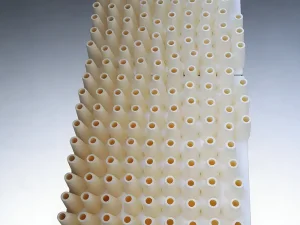
Stereolithography (SLA) and Digital Light Processing (DLP) of ceramic slurries allow creation of complex internal cooling channels and lattice structures impossible with traditional tooling.
Transitioning from fossil fuel heating to microwave sintering and hydrogen electric kilns lowers energy consumption by 40% while achieving higher grain boundary uniform densification.
Demand for sub-30 nanometer battery slurry dispersion is driving production of micro-zirconia beads of $0.03\text{ mm}$ diameter with tight sphericity thresholds ($>98\%$).
Expert answers regarding ceramic selection, manufacturing lead times, customization capabilities, and international delivery protocols.
Select from our certified range of high-temperature ceramics, thermal management substrates, and high-density grinding media manufactured in China.